
Japanese persimmon
Diospyros kaki L. f.
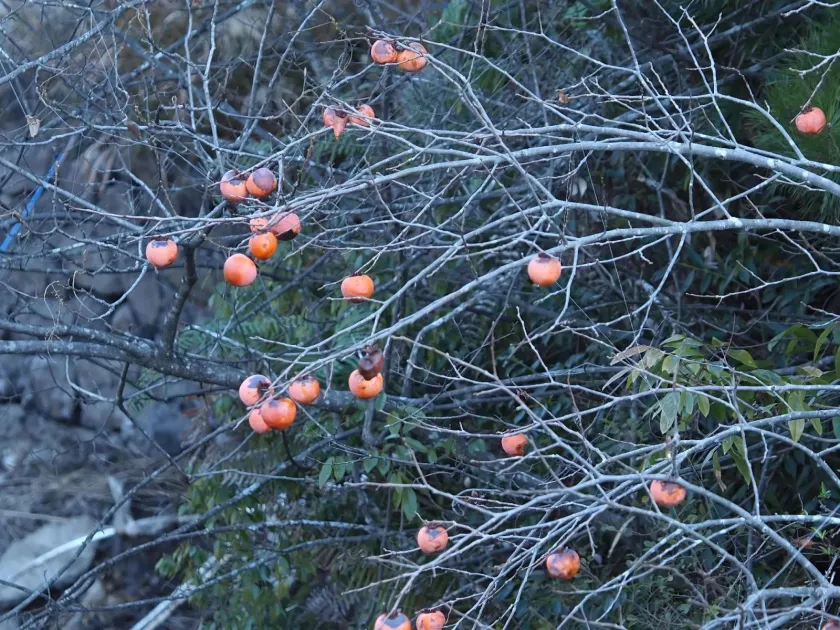
Description
Growing requirements
Japanese persimmon (Diospyros kaki) is a deciduous fruit tree belonging to the Ebenaceae family. Native to East Asia, it thrives in temperate to subtropical climates that provide a long, warm growing season for proper fruit development.
The tree requires full sun exposure to ensure high sugar content in the fruits and prevent excessive shading of the inner canopy. Protection from strong, drying winds is essential, as the branches can be brittle, especially when laden with a heavy crop.
Soil requirements include deep, fertile, and well-drained loam. While the tree can tolerate a variety of soil types, it is highly sensitive to waterlogging. Poor drainage often leads to root rot, which is a common cause of premature decline in persimmon orchards.
Temperature management is critical, especially for younger trees. While mature trees can withstand mild frosts, they require a location that minimizes the risk of late spring frosts, which can destroy early blooms and significantly reduce the potential yield.
Agricultural management involves routine pruning to maintain an open vase structure. This allows light penetration and airflow, which are crucial for minimizing humidity-related diseases and improving the overall health of the tree structure.
Yield
Persimmon trees typically reach their productive stage within 3 to 5 years after planting. The fruit is highly valued for its nutritional profile, containing significant amounts of antioxidants, dietary fiber, vitamins A and C, and potassium.
Yield varies based on the variety and management practices. Some varieties are astringent and require specific post-harvest treatment to remove tannins, while others are non-astringent and can be consumed directly from the tree when firm.
Optimal yields are achieved through balanced fertilization, ensuring adequate levels of potassium to support fruit quality. Excessive nitrogen application should be avoided, as it encourages excessive vegetative growth at the expense of fruit production.
Many commercial orchards utilize grafted cultivars to ensure consistency in fruit quality and yield. Selecting self-pollinating or compatible varieties is essential, particularly in regions where environmental conditions are marginal for fruit set.
Regular monitoring of moisture levels during the peak development phase is necessary. Proper hydration prevents fruit drop and ensures that the tree has sufficient resources to support both the current crop and the development of next year's buds.
Main diseases and pests
Powdery mildew is a common fungal disease affecting the foliage of Diospyros kaki, particularly in regions with high humidity. Proper canopy management and regular thinning are the best preventive measures to maintain air circulation.
Scale insects and mealybugs are among the most persistent pests, feeding on the bark and leaves. These pests weaken the tree and excrete honeydew, which can lead to the development of sooty mold, affecting the plant's photosynthetic capacity.
Bacterial blight can cause necrotic spots on leaves and premature twig dieback. Sanitary practices, such as removing and destroying affected branches during the dormant season, are vital to preventing the spread of the pathogen.
Crown gall is another potential threat, caused by soil-borne bacteria. Ensuring healthy rootstock and avoiding mechanical damage to the trunk during cultivation are standard practices for managing this risk in the orchard.
Root rot, caused by various soil pathogens, remains a primary concern in heavy, poorly drained soils. The use of resistant rootstocks and careful selection of planting sites significantly mitigate the risks associated with soil-borne infections.
Harvesting
Harvesting usually begins in late autumn when the fruit reaches the desired color and size. For non-astringent varieties, harvest occurs when the fruit is firm and sweet, whereas astringent types may require further ripening off the tree.
Fruit should be harvested using sharp shears, leaving the calyx attached. The calyx plays a crucial role in preventing moisture loss and protecting the fruit from rot during the post-harvest storage period.
Careful handling is required during collection to prevent bruising. Even minor skin punctures can lead to rapid fungal decay, making the fruit unsuitable for fresh market sales or long-distance transport.
Post-harvest conditioning includes storing fruits in cool, well-ventilated conditions. Some growers use ethylene gas treatments to standardize the ripening process of astringent varieties, ensuring consistent quality for consumers.
For long-term storage, persimmons can be air-dried or dehydrated. Traditional dried persimmon production involves peeling the fruits and hanging them in a dry, breezy environment, resulting in a shelf-stable product with concentrated sweetness.