
Japanese chestnut
Castanea crenata Siebold & Zucc.
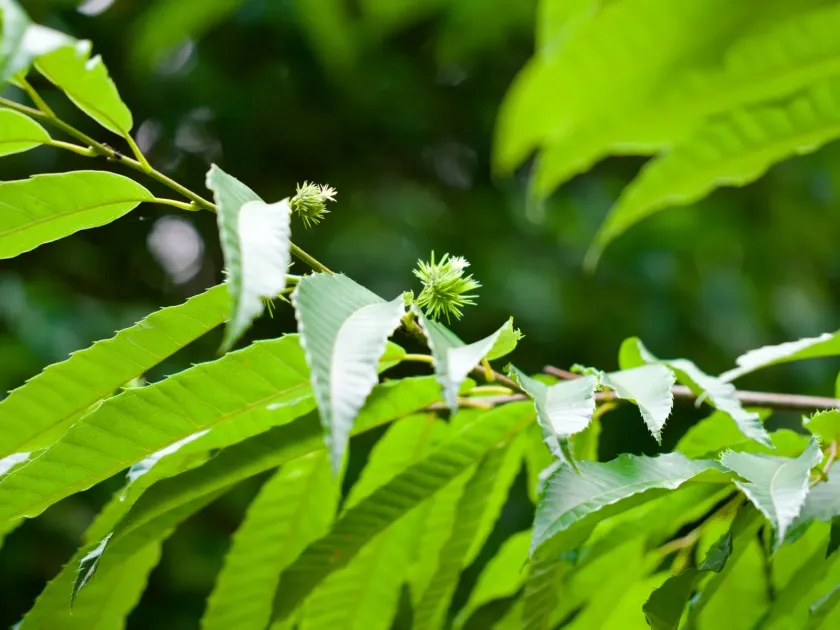
Description
Growing requirements
Japanese chestnut (Castanea crenata) is a prominent nut-bearing tree species belonging to the Fagaceae family. It is native to East Asia, primarily cultivated in Japan, Korea, and China, where it is valued for its nutritional profile and commercial yield.
The tree thrives in temperate climates and prefers well-drained, slightly acidic soils. It is notably adaptable but requires specific environmental conditions to reach its full productive potential, particularly avoiding areas prone to waterlogging.
Proper site selection is crucial for the success of an orchard. The trees require substantial sunlight and protection from heavy winds to ensure healthy growth and successful pollination, which directly influences the quality of the nuts.
Agronomic practices for this culture include consistent soil nutrient management and regular pruning. Pruning is essential for shaping the tree, enhancing airflow within the canopy, and ensuring that sunlight reaches the inner fruit-bearing branches.
Adequate irrigation is necessary during the establishment phase and during drought periods. Because the tree is relatively fast-growing, it requires balanced fertilization to support its high metabolic demand during the growing season.
Yield
The primary economic focus of Japanese chestnut production is the harvesting of edible nuts, which are a staple ingredient in various culinary applications, ranging from traditional snacks to gourmet confectionery products.
Yield capacity varies based on orchard management practices, tree age, and environmental factors. Grafted trees generally demonstrate earlier maturation, often providing significant harvests within five to seven years after planting.
Mature trees are known for their consistent production levels when managed optimally. The nuts of Castanea crenata are typically larger than those of other chestnut species, making them highly desirable for both domestic and commercial markets.
Beyond fruit production, the wood of the Japanese chestnut is highly regarded in construction and furniture making due to its inherent resistance to decay. This provides an additional revenue stream for chestnut producers.
Modern intensive cultivation techniques, such as the use of high-density planting and advanced fertigation systems, have allowed producers to significantly increase the volume of output per hectare, maximizing economic efficiency.
Main diseases and pests
The most severe biological threat to the Japanese chestnut is the chestnut blight, a fungal disease caused by Cryphonectria parasitica. This pathogen affects the bark and can be devastating to orchard health if not managed promptly.
The oriental chestnut gall wasp is a primary insect pest, characterized by the formation of galls on young shoots. This infestation can significantly reduce nut yield and cause physiological stress to the tree, hindering its overall growth.
Management strategies focus on a combination of chemical controls, biological control agents, and the selection of resistant cultivars. Early detection through regular orchard monitoring is vital for containing any potential outbreaks.
Sanitation practices, including the careful removal and destruction of infected twigs and leaf litter, are essential steps in reducing the inoculum pressure in the environment. This helps preserve the integrity of the orchard.
The use of certified, disease-free planting material is the foundation of sustainable management. Long-term success in Japanese chestnut production depends heavily on proactive monitoring and adherence to integrated pest management protocols.