
Turkey tail
Trametes versicolor Lloyd
Description
Sowing dates
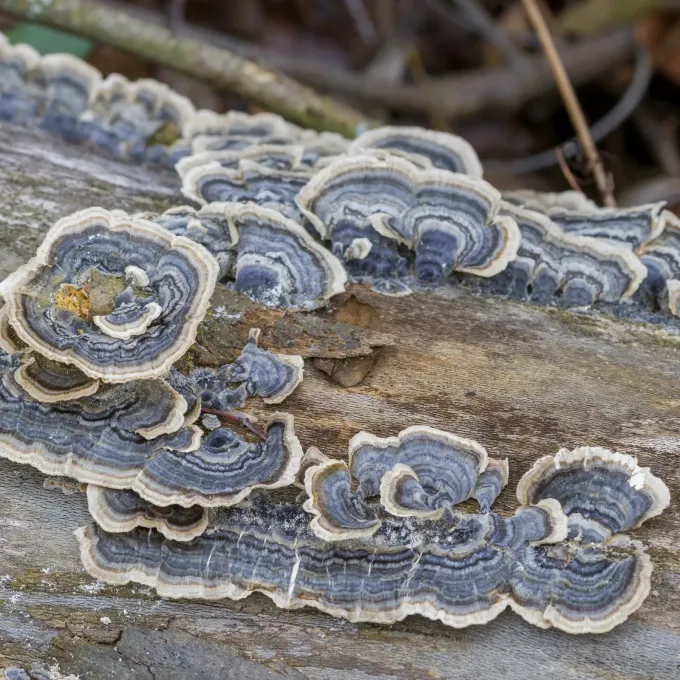
Trametes versicolor, commonly known as turkey tail, is a polypore mushroom that thrives on decaying wood. In a controlled agricultural setting, the process begins with inoculating a sterilized substrate with a high-quality spawn.
The preferred substrate consists of hardwood sawdust supplemented with nitrogen sources like wheat bran, which provides the necessary nutrients for vigorous mycelial growth.
Inoculation is performed in a clean-room environment to minimize the risk of contamination from airborne pathogens or competing fungi.
After inoculation, the substrate blocks are placed in an incubation room where temperatures are maintained between 22 and 26 degrees Celsius to allow for full colonization.
Once the mycelium has completely permeated the substrate, the blocks are transferred to a fruiting chamber where environmental triggers induce the development of the mushrooms.
Growing requirements
Turkey tail mushrooms require a high relative humidity, typically between 85% and 90%, to ensure proper development of the colorful caps and prevent them from drying out.
Ambient light is a physiological requirement for this species; providing 8 to 12 hours of diffuse light per day is essential for triggering the fruiting process and ensuring proper pigmentation.
A stable temperature range of 18–20 degrees Celsius is optimal for the fruiting stage, which encourages the growth of dense, healthy mushroom specimens.
Good air exchange is vital to prevent the accumulation of CO2, which can result in stunted growth and the development of bacterial infections on the surface of the fungi.
The substrate pH should be monitored and maintained within the 5.0 to 6.5 range to support the enzymatic activity of the fungus during the decomposition of organic matter.
Yield
The yield of Turkey tail depends on the efficiency of the substrate formulation and the precise control of climate conditions within the cultivation area.
Experienced growers can typically expect a yield of 200 to 250 grams of dried fruiting bodies per kilogram of wet substrate under optimized conditions.
The fungus produces multiple flushes or crops over a period of 3 to 5 months, with rest intervals between each harvest wave to allow for recovery.
Selecting superior fungal strains is crucial for maximizing biological efficiency and achieving consistent output throughout the cultivation cycle.
Avoiding moisture stress and temperature fluctuations is key to maintaining a high-yielding environment and ensuring the structural integrity of the mushrooms.
Main diseases and pests
Contamination by mold, specifically Trichoderma species, represents the most significant threat to the culture during both the incubation and fruiting phases.
Poor ventilation combined with high humidity levels creates an environment susceptible to bacterial blotch, which can quickly ruin a whole batch of mushrooms.
Insects like fungus gnats can cause physical damage to the caps and act as vectors for various pathogens, necessitating strict screening of the cultivation facilities.
Integrated pest management, including regular sanitation protocols and the use of air filtration systems, is necessary to mitigate these risks effectively.
Prompt removal of any substrate blocks showing signs of infection is mandatory to prevent the spread of diseases within the grow room.
Harvesting
Harvesting is performed by hand when the mushrooms are fully developed but before significant sporulation occurs, which preserves the quality of the product.
Fruiting bodies are carefully harvested by cutting them at the base to ensure that the mycelial network remains intact for subsequent flushes.
Immediate post-harvest processing involves drying the mushrooms at temperatures below 50 degrees Celsius to prevent degradation and ensure a long shelf life.
Once dried, the mushrooms are stored in airtight containers in a cool, dry place to maintain their bioactive compound concentration for medicinal use.
Turkey tail is highly valued in the global supplement market for its immune-modulating properties, making standardized drying and storage protocols critical.