
Paecilomyces tenuipes
Paecilomyces tenuipes (Peck) Samson
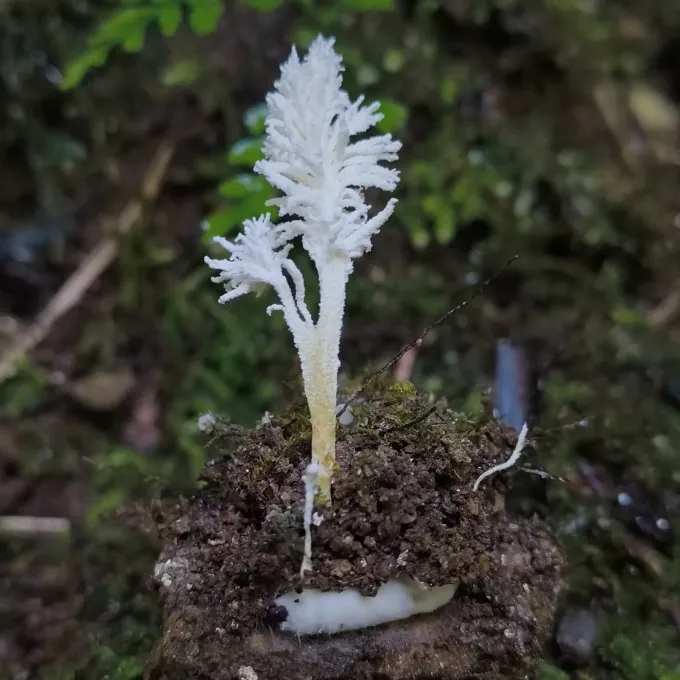
Description
Growing requirements
Paecilomyces tenuipes (syn. Isaria tenuipes) is an entomopathogenic fungus belonging to the Cordycipitaceae family. This species is naturally found in forest ecosystems where it parasitizes various insects, primarily lepidopteran larvae, effectively regulating their populations.
Cultivation requires specific environmental conditions, with the temperature maintained consistently between 22°C and 26°C. High levels of atmospheric humidity, typically above 80%, are essential for successful mycelial expansion and the subsequent production of infectious conidia.
The nutritional substrate must be optimized to support rapid growth, usually involving grain-based media or complex agar formulations supplemented with chitin-rich sources. Maintaining a pH level between 5.5 and 6.5 is critical for optimal fungal development and enzyme production.
Light exposure must be strictly controlled, as ultraviolet radiation is detrimental to the spores. Industrial propagation facilities utilize dark chambers to ensure the viability and virulence of the fungal culture throughout the fermentation cycle.
The primary agricultural use of this culture is the production of bio-insecticides. It is highly valued in greenhouse management and open-field agriculture for its ability to target pests like whiteflies and mites, offering a sustainable alternative to chemical pesticides.
Main diseases and pests
Contamination by opportunistic fungi, such as Aspergillus and Penicillium species, remains the most significant threat to culture purity. Stringent aseptic techniques are mandatory during the inoculation and incubation phases.
Bacterial contamination can also compromise the yield, often resulting from improper sterilization of the agricultural substrate. Regular screening and quality control measures are necessary to identify and eliminate contaminated batches promptly.