
Hypsizygus marmoreus
Hypsizygus marmoreus (Peck.) Bigelow
Description
Sowing dates
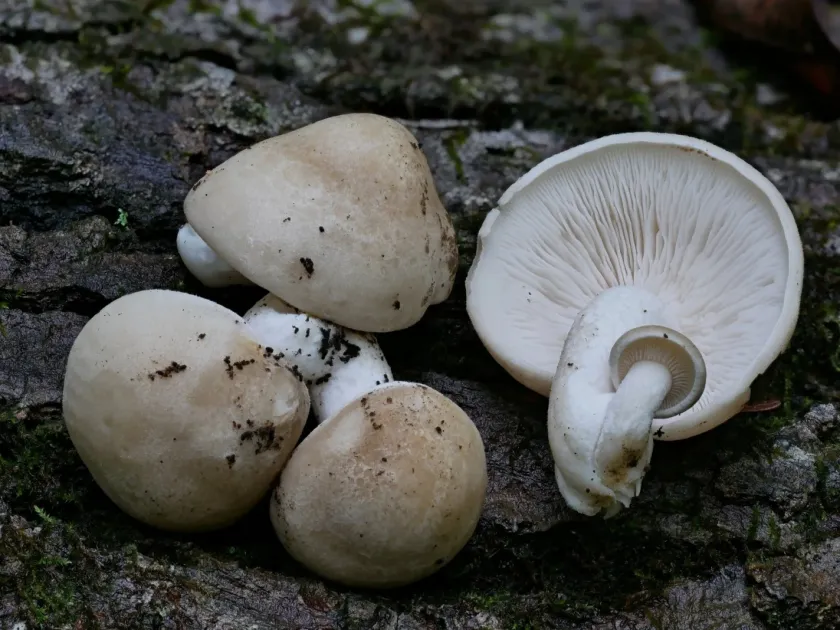
Hypsizygus marmoreus, commonly known as the beech mushroom, is an edible gilled fungus that belongs to the Lyophyllaceae family and is widely cultivated in controlled environments.
Cultivation begins with the inoculation of a sterilized substrate, typically consisting of hardwood sawdust enriched with bran to provide essential nutrients for mycelial expansion.
The inoculation process requires high sanitary standards to prevent contamination, as the mushroom mycelium must be the only organism colonizing the substrate blocks.
Incubation takes place in complete darkness for 20 to 30 days until the mycelium completely blankets the substrate, resulting in a firm, white colonized block.
After colonization, the blocks undergo a triggering phase where changes in temperature and humidity stimulate the formation of dense, cluster-like primordia.
Growing requirements
Successful growth of Hypsizygus marmoreus depends on strict environmental parameters: incubation thrives at 20–24°C, while fruiting requires cooler temperatures of 14–18°C.
High relative humidity, typically between 85% and 90%, is mandatory during the fruiting phase to prevent the delicate caps from drying out or becoming deformed.
Fresh air exchange is critical as high carbon dioxide concentrations can lead to leggy, thin-stemmed mushrooms that lack market appeal and nutritional quality.
Diffuse lighting (approx. 500–1000 lux) is necessary during the final stages of fruiting to ensure the development of the characteristic marble-like pigment on the mushroom caps.
The substrate pH should be monitored closely, generally maintained in the slightly acidic range, to ensure optimal enzymatic activity for the fungus to decompose lignin and cellulose.
Yield
Productivity is highly dependent on the quality of the spawn and the nutrient balance of the substrate, with expected yields ranging from 20% to 30% of the substrate mass.
Production occurs in rhythmic flushes, with the first flush typically yielding the highest quantity and best quality of the marbled fruit bodies.
Effective cluster management allows for high-density planting on vertical racks, maximizing the total economic yield per square meter of the facility.
Professional growers focus on optimizing the nutrient density of the substrate to increase the robustness and shelf-life of the harvested clusters.
Consistent environmental monitoring allows for precise scheduling of harvests, which is essential for maintaining a constant supply for restaurant and retail markets.
Main diseases and pests
The primary threats to this culture are green molds like Trichoderma, which can aggressively overtake the substrate if sterilization is incomplete or if there is stagnant water.
Bacterial blotch, caused by Pseudomonas species, is a common issue resulting from excess humidity or water droplets remaining on the caps for too long.
Fungal gnats and phorid flies are significant pests, as they not only damage the fruiting bodies directly but also act as vectors for various pathogenic spores.
Integrated pest management strategies involve the use of air filtration systems, routine disinfection of the growing area, and the use of sticky traps for monitoring insect populations.
Maintaining a clean facility and implementing rigorous hygiene practices among personnel are the best defenses against widespread outbreaks of common mushroom diseases.
Harvesting
Harvesting should be timed precisely before the mushroom caps fully flatten and open, as this preserves the crisp texture and superior taste associated with the species.
The clusters are typically harvested by cutting them cleanly at the base, ensuring minimal damage to the remaining mycelial surface to allow for potential secondary flushes.
Post-harvest handling requires immediate cooling to 2–4°C to decelerate the respiration rate of the mushrooms and maintain their commercial quality during transit.
Quality grading is based on the size of the cap and the thickness of the stem, with superior clusters being packaged for premium market segments.
Proper ventilation during storage is essential to prevent moisture accumulation, which can lead to rapid deterioration of the mushrooms before they reach the consumer.