
Houttuynia cordata
Houttuynia cordata Thunb.
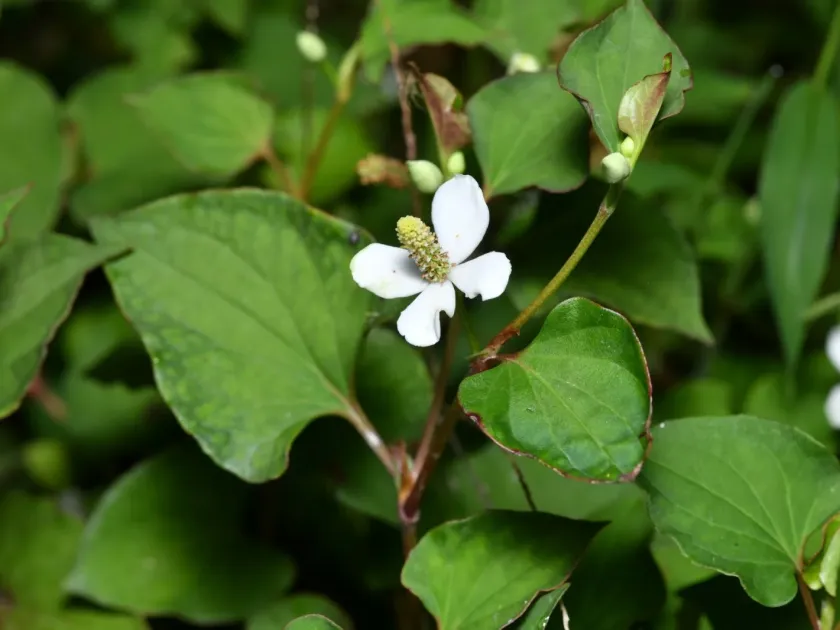
Description
Sowing dates
Houttuynia cordata is a perennial herbaceous plant belonging to the Saururaceae family. In temperate climates, seeds can be sown indoors in late winter to establish healthy seedlings before the outdoor season begins.
Vegetative propagation is the most practical and common method of cultivation. Dividing the rhizomes in early spring allows for rapid establishment and creates uniform stands of the plant.
When transplanting into the field, ensure a spacing of at least 25-30 centimeters between plants. This allowance accommodates the plant's aggressive growth habit through its spreading rhizomes.
Soil preparation should be completed before planting by incorporating organic matter and clearing away perennial weeds. A clean, nutrient-rich seedbed significantly boosts early vegetative growth.
Maintaining proper irrigation during the first month after planting is critical for successful establishment. Once rooted, the plants become much more resilient to environmental stressors.
Growing requirements
This crop thrives in moist or even waterlogged soils. It is naturally adapted to boggy conditions, riparian zones, and areas with high water tables, making it ideal for marshy ground.
The preferred soil pH for optimal Houttuynia growth ranges between 5.5 and 7.0. It requires a substrate rich in humus and organic content to sustain its rapid biomass production.
While it tolerates full sun, the plant performs best in partial shade, especially in regions with intense summer heat. Excessive sunlight may lead to leaf scorch and reduced aromatic quality.
The plant is hardy in moderate zones, but in regions with harsh winters, mulching is essential to protect the underground rhizomes from freezing and ensure regrowth in the spring.
Regular maintenance involves light weeding and occasional nitrogen-based fertilization. Because it spreads through underground runners, simple containment strategies are often required.
Yield
The primary economic output is the fresh foliage, prized for its unique citrusy and cilantro-like aroma. It is widely used in Asian cuisine for both cooked dishes and fresh salads.
Yield potential is high, especially under conditions of consistent moisture. Multiple harvests can be obtained throughout the growing season by practicing selective stem cutting.
The roots and leaves are also harvested for the pharmaceutical industry, as they contain significant amounts of flavonoids, quercetin, and essential oils used in traditional medicine.
Standardizing yields requires careful attention to the density of the crop. Overcrowded patches might produce more biomass but may lead to smaller, less vigorous leaves over time.
Industrial harvest cycles are calibrated to the intended final use, whether for fresh market distribution, drying for teas, or extraction of bioactive compounds for skincare.
Main diseases and pests
Fungal pathogens such as leaf spot and various rots are the most common issues, particularly in humid, poorly ventilated areas where moisture lingers on the foliage for extended periods.
While generally pest-resistant due to its pungent essential oils, the plant can occasionally suffer from infestations of slugs and snails, which can cause significant aesthetic damage to the leaves.
Prevention is the best strategy for disease management. Thinning out the plants to increase airflow and avoiding overhead irrigation can significantly reduce the incidence of fungal issues.
Chemical intervention is rarely recommended for this crop. Instead, focus on integrated pest management practices, such as manually removing slugs or maintaining clean field borders.
During the dormant winter season, ensure that the fields are not waterlogged to the point of freezing solid, which could damage the root structures and weaken the spring growth.
Harvesting
Harvesting for culinary use is usually done by hand, cutting stems when they reach roughly 20 centimeters. This method promotes branching and increases the total seasonal yield.
Freshly harvested Houttuynia has a limited shelf life and should be handled with care. Cooling the product immediately after harvest helps preserve its volatile aromatic compounds.
For processing into dried herbal products, the leaves are dehydrated in climate-controlled dryers at low temperatures to ensure the retention of medicinal properties and color.
Harvesting rhizomes requires mechanical equipment to lift the roots from the moist soil. This is best done in late autumn when the plant's metabolic activity slows down.
Post-harvest processing of roots includes thorough washing, trimming of fibrous secondary roots, and drying. Proper storage in light-proof containers is necessary to maintain quality.