
Cladosiphon okamuranus
Cladosiphon okamuranus Tokida
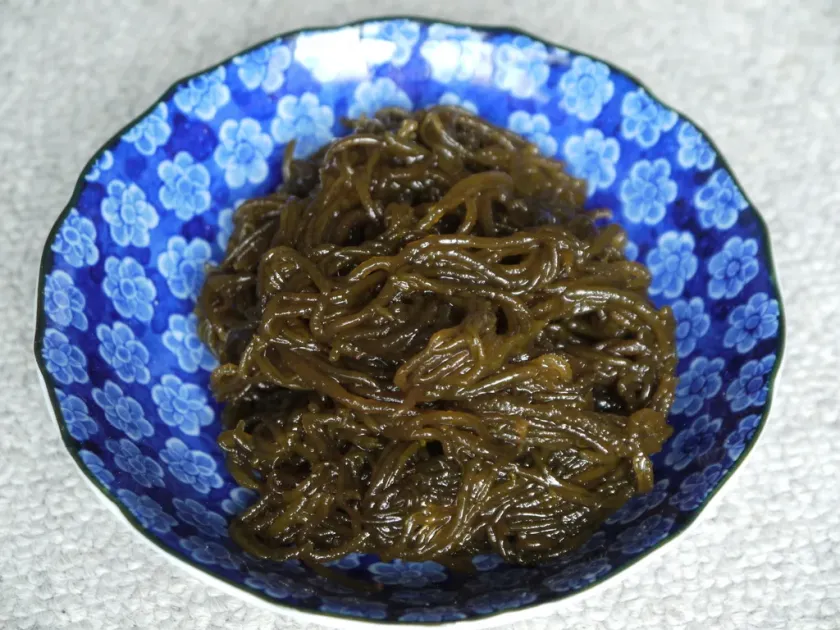
Description
Sowing dates
Cultivation of Cladosiphon okamuranus begins with laboratory-controlled seedling production, where spores are attached to synthetic net substrates.
These seeded nets are meticulously prepared to ensure high attachment density, which is essential for the subsequent rapid growth phase in open water.
Deployment of the nets into the sea occurs during specific seasonal windows, typically when water temperatures are optimal for the early development of the algae.
Farmers anchor these nets in shallow, protected coastal areas, ensuring that the alignment allows for uniform water flow and appropriate depth management.
Successful sowing requires precise monitoring of the local marine climate to ensure that the fragile seedlings are not damaged by high energy currents or thermal fluctuations.
Growing requirements
Cladosiphon okamuranus belongs to the Chordariaceae family and thrives in clean, nutrient-rich coastal waters with moderate tidal movement.
The culture requires an ideal temperature range of 15 to 25 degrees Celsius, as extreme deviations can lead to metabolic stress or detachment of the thalli.
High water quality is a non-negotiable requirement; the presence of heavy metals or industrial pollutants renders the harvest unsuitable for commercial food use.
Sufficient solar irradiance is critical for photosynthesis, which facilitates the accumulation of fucoidan, a primary target compound in this seaweed species.
The site selection must prioritize areas with consistent salinity levels, as sudden changes due to rainfall or runoff can severely impact the crop's physiological state.
Yield
Modern offshore farming practices have significantly boosted the yield potential of Cladosiphon okamuranus, turning it into a commercially viable marine crop.
The annual yield is heavily dependent on the efficiency of maintenance routines, such as cleaning the nets from unwanted algae or marine debris.
Yield metrics are closely monitored to optimize the timing of the harvest, ensuring that the seaweed is collected at its peak nutritional density.
Advances in genetic research and selective breeding continue to provide farmers with improved strains that exhibit faster growth rates and better resilience.
Effective space utilization on marine farms allows for substantial outputs, meeting the growing global demand for high-quality seaweed products.
Main diseases and pests
The most common threats include epiphytic algae that compete for light and nutrients, significantly reducing the growth rate of the main culture.
Bacterial diseases, often exacerbated by rising water temperatures or poor circulation, can cause the thalli to soften and eventually decompose.
Grazing animals, particularly sea urchins and certain species of fish, can devastate entire farm plots if effective exclusion methods are not in place.
Physical damage from extreme weather events, such as strong typhoons or storms, poses a constant risk to the net structures and the moored crops.
Pollution-induced contamination remains a critical threat, potentially leading to the loss of entire harvest batches if safety standards are not met.
Harvesting
The harvesting process involves the mechanical retrieval of the nets from the sea, typically conducted during the spring or early summer months.
Once retrieved, the seaweed is carefully separated from the netting, ensuring the characteristic viscous texture is preserved for processing.
Immediate primary processing, including thorough cleaning and salt-preservation, is required to maintain the high quality and shelf life of the product.
The use of specialized harvesting vessels helps to streamline the operation and reduce the time elapsed between collection and cold storage.
Quality control at the point of harvest is vital, as the product is destined for high-end food markets and pharmaceutical industries seeking premium fucoidan.