
Polyspora axillaris
Polyspora axillaris
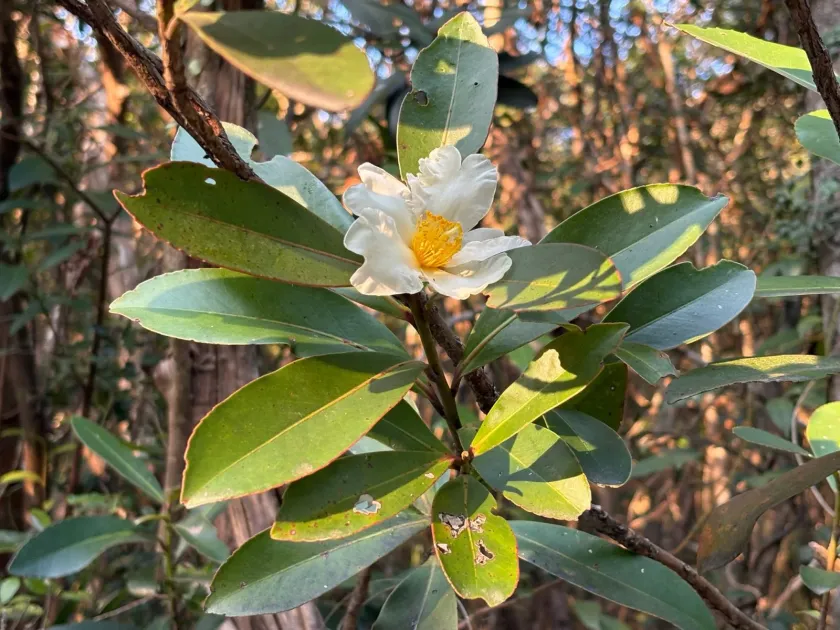
Description
Sowing dates
Polyspora axillaris, a member of the Theaceae family, is typically propagated through semi-hardwood cuttings or seeds. Seed propagation requires stratification to break dormancy and ensure high germination rates.
Cuttings are preferred for maintaining the genetic purity of specific cultivars. Rooting should be performed in a well-draining, sterile substrate under high humidity conditions to prevent desiccation.
Transplanting to the permanent site is best done in early spring or autumn, allowing the plant to establish its root system during periods of moderate temperatures.
Adequate spacing is crucial to ensure proper air circulation, which helps in preventing fungal infections and promoting uniform growth of the shrub’s canopy.
Initial care for young plants involves regular irrigation and protection from intense wind, ensuring they adapt well to the external environment.
Growing requirements
This species demands acidic, well-draining soil rich in organic matter. Alkaline substrates can inhibit nutrient uptake, leading to chlorosis and stunted development.
Polyspora axillaris thrives in mild climates and is sensitive to severe frost. Providing a sheltered position, especially during winter, is vital for the survival of the plant in cooler regions.
A location with partial shade is ideal, as direct, scorching sunlight can damage the leaves, while deep shade may significantly reduce the intensity of flowering.
Consistency in moisture levels is essential; the soil should remain damp but never waterlogged, as excessive water retention can lead to fatal root rot.
Regular mulching with pine needles or similar acidic organic materials helps maintain soil acidity and provides protection for the shallow root system.
Main diseases and pests
Fungal diseases, particularly root rots and leaf spots, are the primary threats, usually triggered by poor drainage or excessive atmospheric humidity.
Spider mites and scale insects can become problematic if the plant is grown in low-humidity environments or lacks proper ventilation between branches.
Iron deficiency, often misidentified as a disease, leads to yellowing foliage on alkaline soils, necessitating the application of chelated iron or soil acidifiers.
Integrated pest management strategies, including the manual removal of affected leaves and the use of targeted biological controls, are highly recommended.
Sanitary pruning is a fundamental practice to remove infected plant material and improve airflow, which drastically decreases the incidence of common pathogens.
Harvesting
As an ornamental plant, Polyspora axillaris is not harvested for agricultural produce; its value lies in its aesthetic contribution to landscape design.
The main objective for the gardener is to manage the flowering cycle, which serves as the peak performance indicator of the plant's health and maintenance.
Formative pruning should be carried out after the flowering period concludes to maintain the desired shape and stimulate vigorous growth for the next season.
Seed collection is possible if desired; however, it requires vigilance to harvest the pods at the exact stage of maturity before they naturally disperse.
Effective landscape management involves seasonal monitoring and adjustments, ensuring that the plant remains a prominent feature in garden arrangements.