
Prince Albert's yew
Saxegothaea conspicua
Description
Growing requirements
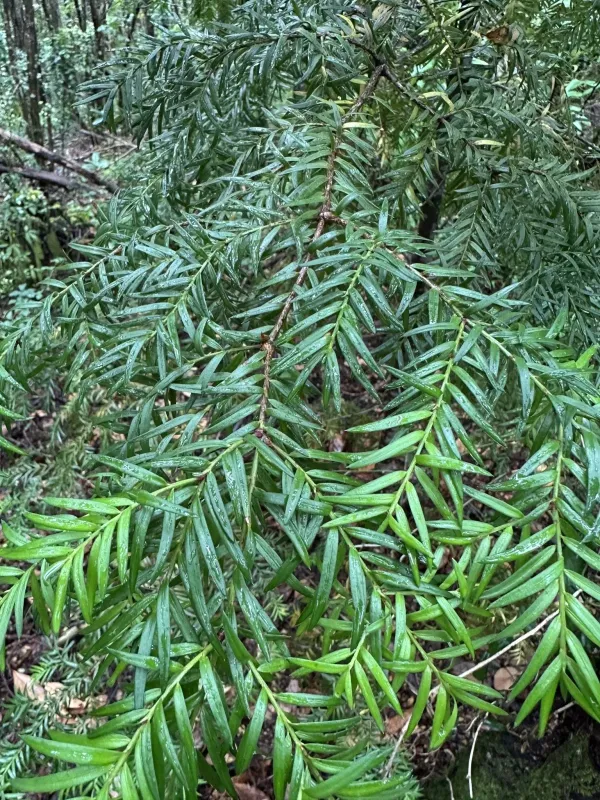
Prince Albert's yew (Saxegothaea conspicua) is an evergreen coniferous tree belonging to the Podocarpaceae family. It is native to the temperate rainforests of Chile and Argentina, where it thrives in high-humidity environments and moderate temperatures.
Cultivation of this species requires a climate that avoids extreme temperature fluctuations. It performs best in regions with mild winters and cool, humid summers, making it highly sensitive to dry heat and moisture-deficient air, which can cause significant physiological stress.
The soil requirements are strict: the medium must be well-drained, acidic, and rich in organic matter. While the tree tolerates a variety of soil textures, stagnant water is lethal. Therefore, sites with high water tables must be treated with artificial drainage systems before planting.
In terms of management, the species is characterized by a very slow growth rate, especially during its juvenile stage. Regular mulching is recommended to maintain stable soil temperature and moisture levels, which are critical for root health in young specimens.
Economically, the wood of Saxegothaea conspicua is highly valued for its durability and grain quality. Beyond forestry, the tree is primarily used in botanical collections and high-end landscape architecture due to its unique appearance and rarity in international markets.
Main diseases and pests
The tree shows strong natural resistance to many common conifer pathogens. However, the most significant threat to its health is root rot, typically caused by waterlogged soil conditions that favor anaerobic fungal growth.
In certain environments, needle blight may occur if airflow is poor and humidity remains consistently at extreme levels without adequate ventilation. Ensuring proper spacing between trees helps mitigate these risks.
Pests are generally not a major concern, though scale insects or aphids can occasionally colonize young trees that are already suffering from poor site selection or improper cultural practices.
Proactive monitoring of soil pH is vital, as micronutrient deficiencies caused by alkaline soil conditions can lead to chlorosis and general weakening of the tree's immune system.
For sustainable maintenance, cultural practices should prioritize sanitation, such as removing fallen debris and dead twigs, to minimize the reservoir of potential fungal spores near the tree base.