
Retrophyllum rospigliosii
Retrophyllum rospigliosi
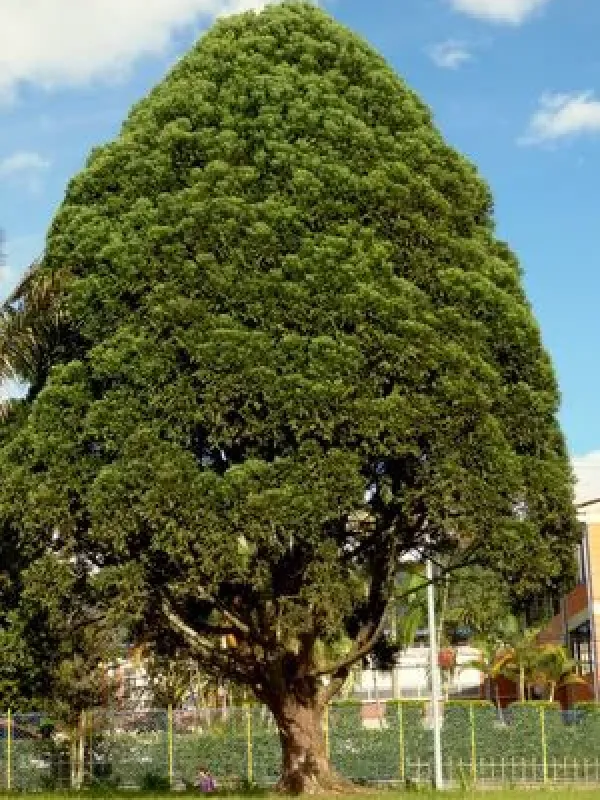
Description
Growing requirements
Retrophyllum rospigliosii is a significant evergreen coniferous species belonging to the Podocarpaceae family. It is native to the tropical montane forests of South America, with its distribution primarily focused in the Andean regions of Venezuela, Colombia, Ecuador, and Peru.
The species thrives in high-altitude environments, typically found at elevations ranging from 600 to 2,500 meters above sea level. It requires a humid climate with consistent precipitation and protection from extreme temperature fluctuations.
Regarding soil requirements, the culture prefers well-drained, acidic to slightly acidic soils enriched with organic matter. Proper soil aeration is crucial, as the root system is highly sensitive to waterlogging, which can lead to rapid decline in plant health.
Botanically, Retrophyllum rospigliosii is distinguished by its relatively broad, flat needles compared to other conifers. This anatomical adaptation allows the tree to maximize photosynthetic efficiency in the low-light conditions prevalent in the dense understory of tropical forests.
Agronomic management involves careful monitoring of light levels. While the trees require substantial light as they mature, young saplings in nursery conditions benefit from partial shade to establish their root systems and prevent dehydration during the initial growth phase.
Yield
The primary economic value of Retrophyllum rospigliosii lies in its high-quality timber. The wood is highly prized for its fine texture, durability, and resistance to decay, making it an excellent material for high-end carpentry and furniture manufacturing.
In addition to timber production, the tree serves a critical function in agroforestry systems. It is effectively utilized in hillside reforestation projects to stabilize topsoil, prevent erosion, and maintain the structural integrity of sensitive mountain slopes.
The species contributes significantly to biodiversity conservation by providing structural complexity and habitat for various avian and mammalian species within the tropical montane forest ecosystem.
Harvesting strategies are subject to local environmental regulations, focusing on sustainable management to ensure that the ecological benefits are preserved while providing a long-term supply of premium wood products.
Yield cycles for this species are long-term, requiring patient investment and careful management of plantations to achieve the density and wood quality necessary for market-grade commercial lumber.
Main diseases and pests
The most significant threats to the natural population of Retrophyllum rospigliosii include widespread deforestation and the conversion of forest land into agricultural plots, which destroys the native habitat required for the tree to thrive.
Pathological risks include fungal root rot, which typically develops when the soil drainage is compromised or when trees are stressed by adverse environmental conditions, such as improper moisture levels.
Pests, particularly wood-boring insects and leaf-feeding larvae, can weaken young trees in nurseries and newly established plantations, hindering their growth and reducing the potential quality of the timber.
Climate instability, characterized by shifting rainfall patterns and prolonged droughts, poses an increasing challenge for the recruitment and survival of young trees that rely on steady moisture levels.
Integrated pest management and rigorous nursery hygiene are essential strategies for mitigating these risks, ensuring that plantations remain productive without relying on excessive chemical interventions that could disturb the fragile forest soil microbiome.