
Manoao colensoi
Manoao colensoi
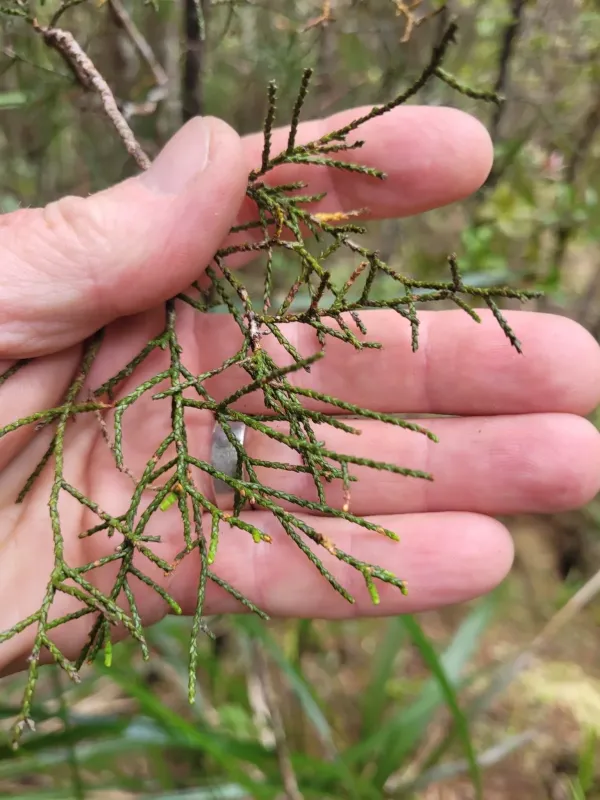
Description
Growing requirements
Manoao colensoi, commonly known as Silver pine, is a unique coniferous tree belonging to the Podocarpaceae family. It is native to the forests of New Zealand, specifically distributed across the North and South Islands in diverse mountainous habitats.
This slow-growing species thrives in cool, humid oceanic climates. It is highly sensitive to atmospheric moisture levels and cannot withstand prolonged drought or extreme temperature fluctuations common in continental regions.
Successful cultivation requires well-drained but consistently moist acidic soils. While the plant can tolerate relatively nutrient-poor substrates, it shows superior vigor when established in humus-rich forest soils.
From an agronomic perspective, Manoao colensoi is not a mainstream crop and is primarily managed within specialized forestry nurseries. Propagation is mainly achieved through seeds, which require specific stratification processes to break dormancy.
Young plants exhibit high shade tolerance, making them suitable for multi-layered forestry systems. Growers must account for the remarkably slow biomass accumulation, which necessitates long-term planning for any plantation efforts.
Harvesting
The economic value of Manoao colensoi wood is historical and traditional, primarily prized in fine woodworking and joinery. The timber is characterized by high density, strength, and exceptional resistance to decay.
Due to its conservation status and slow natural recovery rate, industrial logging is strictly regulated. Today, the focus has shifted towards the preservation of the species and its use in ecological restoration projects.
In ornamental horticulture, the species is valued for its distinct morphological changes, with foliage transitioning from juvenile needle-like forms to mature scale-like leaves. This makes it an interesting subject for botanical collections.
Seed collection for reforestation nurseries is conducted manually in late autumn when the modified cones reach maturity. Precision is required during the collection process to protect future reproductive buds and ensure the health of parent trees.
Maintenance practices involve minimal sanitary pruning to encourage straight stem development. However, intervention must be kept to a minimum to avoid exposing the wood to potential fungal pathogens.