
Lodgepole pine
Pinus contorta Douglas ex Loudon var. murrayana (Balf.) Engelm.
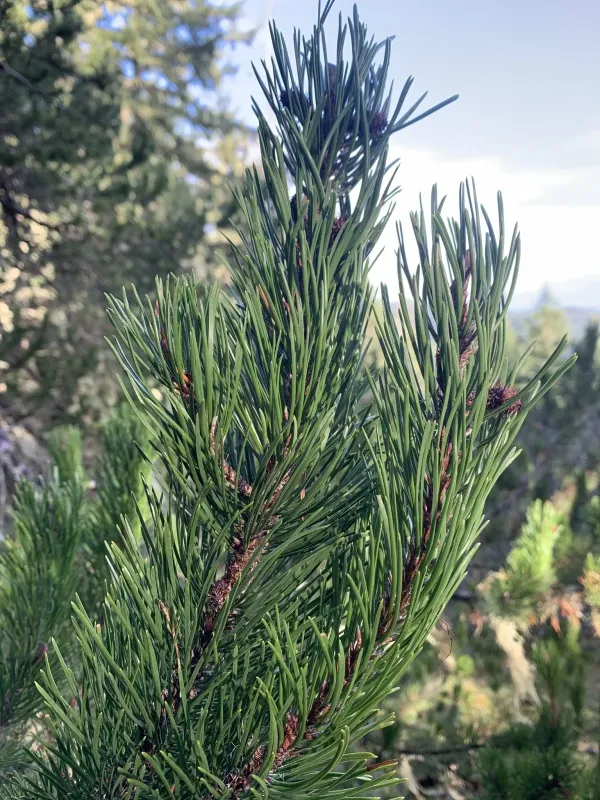
Description
Sowing dates
Sowing seeds of the lodgepole pine typically takes place in the spring after a stratification period, which ranges from 30 to 60 days in cold, moist conditions to ensure uniform germination.
The optimal planting time for nursery-grown seedlings is early spring when the soil has thawed and provides adequate moisture levels for the successful establishment of root systems.
In the wild, the species reproduces through seeds released from cones that are serotinous, often requiring the intense heat of wildfires to melt the resin and trigger the release.
For commercial forestry, containerized seedlings are often preferred as they significantly improve survival rates and early growth performance compared to bare-root stock.
Planting density in forest plantations varies based on management objectives, usually ranging from 2,000 to 3,500 trees per hectare to encourage straight trunk development and reduce branchiness.
Growing requirements
This variety, a member of the Pinaceae family, originates from the western regions of North America and is naturally adapted to diverse mountainous environments.
The species exhibits remarkable ecological plasticity, thriving in a variety of soil conditions including thin, rocky soils, sands, and even poorly drained sites with low nutrient levels.
It requires ample solar radiation for optimal development, as it is relatively shade-intolerant and may suffer reduced growth or mortality when suppressed by more dominant canopy species.
The climate preferences include moderately cold winters and cool summers, making it well-suited for high-altitude subalpine zones and temperate forest regions.
Adequate soil aeration is important for vigor, although the tree shows a high tolerance for varying moisture levels, including temporary periods of saturation or drought.
Yield
The productivity of the lodgepole pine is measured by its high volume of biomass production, which makes it a preferred species for reforestation and timber harvesting programs.
The tree is characterized by rapid early-stage growth, enabling it to reach commercial maturity within a relatively short rotation cycle compared to other conifers.
Economic uses for its timber include high-quality lumber for construction, framing, utility poles, and an important source of fiber for the pulp and paper industry.
Intensive silvicultural management, including thinning operations, allows for the maximization of timber output and the production of clean, high-grade logs.
Harvest yields are contingent upon the site index, management intensity, and the specific silvicultural regime applied throughout the lifetime of the stand.
Main diseases and pests
Major threats include outbreaks of bark beetles, which can cause large-scale mortality across stands when environmental conditions stress the trees or populations explode.
Fungal pathogens such as needle casts, rusts, and various heart rots pose significant risks, especially in stagnant, overly dense stands with poor airflow.
In its native range, the mountain pine beetle remains the most destructive biological agent, capable of devastating extensive forest areas in very short timeframes.
Forest health management requires consistent monitoring and prompt removal of infested material to maintain the overall resilience and productivity of the lodgepole pine forest.
- Routine forest health inspections.
- Sanitation harvesting of infested trees.
- Strategic thinning to promote stand vigor.