
Maritime pine
Pinus pinaster Aiton
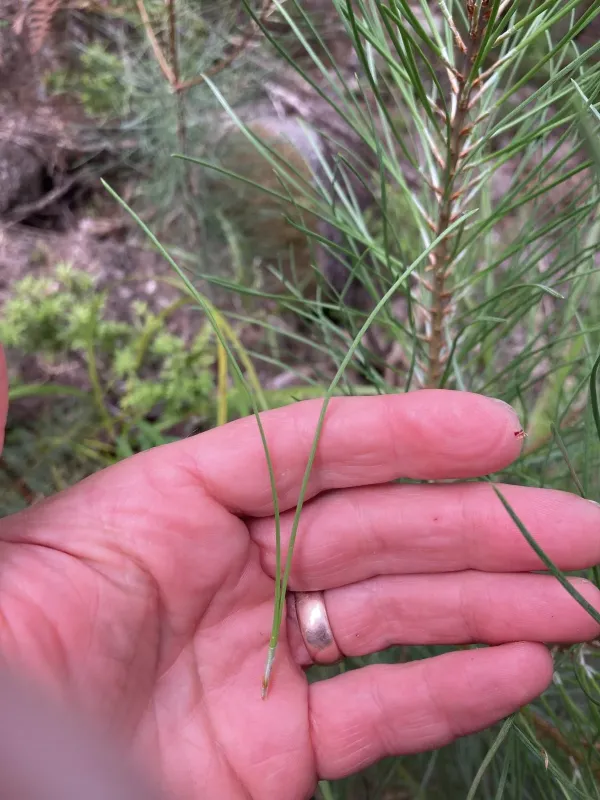
Description
Sowing dates
Sowing of Maritime pine is typically conducted in the spring when soil temperatures reach 10–12 degrees Celsius. Seeds require a month of stratification to enhance germination energy and uniformity of emergence.
In industrial reforestation, seeds are sown in prepared nurseries or containers with a well-drained substrate. The seeding depth is 1.5–2 centimeters, which is optimal for ensuring oxygen and moisture access to the embryo.
Seeding density is adjusted based on the cultivation goals: for high-quality timber production, a wider spacing scheme is practiced. This minimizes competition between young seedlings for nutrients and sunlight.
Young sprouts require regular watering during the root system formation stage. It is crucial to prevent waterlogging, as seedlings are sensitive to fungal infections under high-humidity conditions.
Transplanting to the permanent growing site is performed at the age of two to three years. During this period, seedlings possess sufficient resilience to temperature fluctuations and are capable of successfully adapting to new soil conditions.
Growing requirements
Maritime pine belongs to the Pinaceae family and is an important forest-forming species in the Mediterranean region. It prefers sandy, well-drained soils, often appearing on coastal dunes and limestone substrates.
The crop is characterized by high light requirements and cannot tolerate even partial shading at an early age. In regions with a cloudy climate, tree development slows down, negatively affecting stem quality.
The optimal climate for this species is Mediterranean, characterized by mild, wet winters and dry, hot summers. The plant has moderate frost tolerance and struggles with prolonged severe winters involving deep soil freezing.
The tree demonstrates high drought resistance due to the structure of its needles and a deep taproot system. This allows the crop to successfully thrive in nutrient-poor areas inaccessible to other tree species.
Agronomic maintenance includes regular thinning of stands to optimize growing space. In industrial scales, mineral fertilization is also practiced if the soil exhibits a critical deficiency in nitrogen or phosphorus.
Yield
The productivity of Maritime pine is measured by the volume of wood mass obtained per hectare over a full harvest rotation cycle. Under favorable conditions, wood increment can reach 10–15 cubic meters per hectare annually.
Besides timber, resin is a significant product obtained through tapping. This crop has historically been the primary source of turpentine oil and rosin in Europe.
The bark of the Maritime pine also finds application in medicine and gardening. Specifically, it is processed into mulch for decorative gardening, valued for its durability and aesthetic properties.
Wood from this species is widely used in the pulp and paper industry and in the production of construction materials. Due to its high density, it is well-suited for manufacturing structural components and furniture.
A stable harvest is ensured by proper forest stand rotation and timely sanitary logging. Modern forestry management technologies significantly increase the yield of merchantable timber per unit area.
Main diseases and pests
The main pest of the crop is the pine processionary moth, which can cause the death of vast forest areas during mass outbreaks. Regular monitoring of canopy health allows for the early detection of infestation hotspots.
Pests such as the pine bark beetle and various species of wood-boring beetles often attack weakened trees. Their activity disrupts sap flow and creates entry points for secondary fungal infections.
Fungal diseases, including needle rust, pose a serious threat to young seedlings in nurseries. High humidity and poor ventilation significantly accelerate the spread of pathogen spores.
Root rot represents a danger to mature stands, especially in soils with low lime content. Affected areas require immediate sanitary felling to prevent the infection of neighboring trees.
- Pine processionary moth (Thaumetopoea pityocampa)
- Root rot (Heterobasidion annosum)
- Pine stem rust (Cronartium flaccidum)
- Buprestid beetles (Buprestidae)
- Bark beetles (Scolytinae)
Harvesting
Harvesting or wood logging is carried out when the tree reaches technical maturity, which typically occurs at 40–60 years. This timeframe depends on the intended use: earlier for pulpwood, later for sawlogs.
The logging process is mechanized and includes felling, delimbing, and bucking into assortments directly at the site. Modern logging equipment minimizes damage to the forest floor and soil structure.
In the case of tapping, resin collection is carried out throughout the growing season. The method involves making specific incisions on the trunk, along which the resin flows into collection containers.
An important aspect is compliance with environmental standards during clear-cutting. Foresters leave seed trees to ensure natural regeneration of the area in the following years.
After logging is completed, the timber is sorted and sent to processing facilities. Efficient logistics minimize losses during the transport of raw materials from the harvesting site to the warehouse.