
Longleaf pine
Pinus palustris Mill.
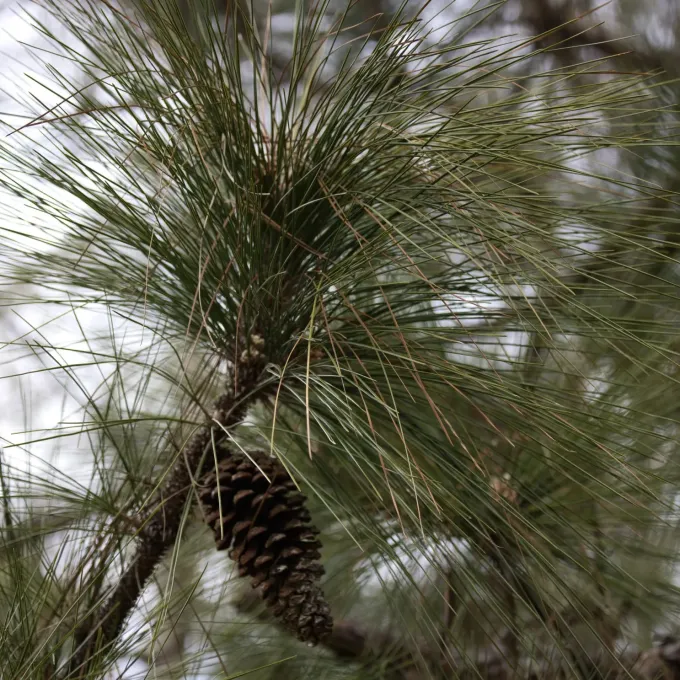
Description
Sowing dates
The longleaf pine (Pinus palustris Mill.) is a prominent conifer of the Pinaceae family, native to the southeastern United States, where it thrives in coastal plain ecosystems.
Sowing should ideally occur in the early spring, following the final frost, ensuring the soil has warmed sufficiently to trigger the germination process.
Using high-quality, stratified seeds is crucial for success, as it improves the uniformity of seedlings and reduces the risk of loss during the initial growth phase.
The seeds must be planted at a shallow depth of approximately 1-2 centimeters in well-drained sandy substrates to prevent fungal growth caused by excess moisture.
In modern silviculture, container-grown seedlings are preferred over direct seeding, as they provide better protection against environmental stressors and pests.
Growing requirements
Longleaf pine is a shade-intolerant species, requiring full sun exposure for survival and development, especially during its distinctive "grass stage" in early youth.
The tree thrives in acidic, nutrient-poor, sandy soils that provide excellent drainage, which is a signature characteristic of its native habitat.
It is well-adapted to subtropical climates, requiring a long growing season with high precipitation levels to support its massive root and crown development.
This species possesses a unique biological fire resistance, allowing it to withstand frequent, low-intensity surface fires that maintain the ecosystem's health.
Proper spacing is essential; trees should be planted with sufficient distance to avoid crown competition, which can otherwise stunt growth and reduce long-term vitality.
Yield
This species is highly valued for its dense, high-quality timber, which is exceptionally durable and widely used in construction, flooring, and heavy-duty structural applications.
Historically, longleaf pine was the primary source for naval stores, including resin, turpentine, and rosin, extracted through sustainable tapping processes.
Productivity per hectare is optimized through careful forest management, including periodic prescribed burning and thinning to promote straight stem development.
The rotation age for harvesting timber typically ranges from 60 to 80 years, depending on the specific product goals and the site quality index.
Advancements in silviculture now allow for faster growth rates through the selection of superior genetic stock, increasing the total biomass output over time.
Main diseases and pests
Brown-spot needle blight, caused by the fungus Scirrhia acicola, is the primary threat to young seedlings and can devastate entire plantations if left untreated.
Pine beetles pose a significant risk to mature trees, attacking the inner bark and vascular system, often leading to rapid mortality across large forest stands.
Poor site management, such as the suppression of natural fire cycles, can lead to increased competition from invasive woody plants that threaten longleaf pine regeneration.
Integrated pest management strategies involve monitoring for insect activity and utilizing thinning practices to reduce tree stress, which inherently improves resistance to attacks.
Regular sanitation of the plantation, including the removal of dead or diseased wood, is critical to preventing the spread of fungal and insect-borne diseases.
Harvesting
The harvest strategy involves either selective thinning or clear-cutting at the end of the rotation, strictly governed by sustainable forestry management plans.
Sustainable tapping for resin extraction may precede the final timber harvest, allowing for dual income streams from the same forest stand over several decades.
Harvesting operations are typically conducted in the winter months to avoid damage to the soil and minimize the impact on the local environment during logging.
Post-harvest management is crucial, including the preparation of the site for natural or artificial reforestation to ensure the continuity of the ecosystem.
Modern logging equipment ensures that timber is transported efficiently, preserving the quality of the logs and preventing degradation during storage and transit.