
Sugar pine
Pinus lambertiana Douglas
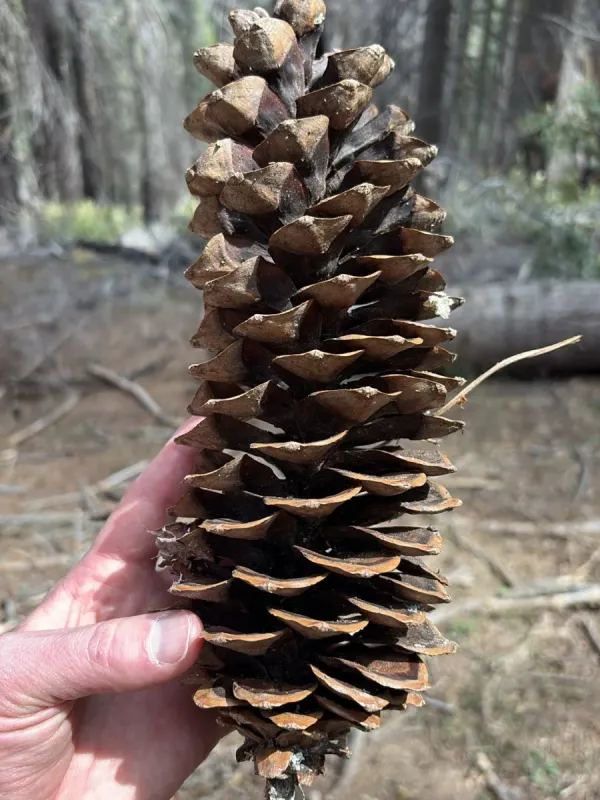
Description
Sowing dates
Propagation of the Sugar pine typically relies on natural seed dispersal, but managed cultivation requires specific procedures. Seeds should be collected from mature cones and undergo cold stratification for approximately 60 to 90 days to break dormancy.
In nursery settings, seeds are sown in well-drained, sandy loam substrates. Ensuring the proper depth of about 1 to 2 centimeters is crucial for consistent germination rates and the health of the emerging seedlings.
Seedlings are highly sensitive to environmental extremes, particularly moisture stress, during their first two years. Shading is often necessary in warmer climates to prevent desiccation and heat damage to the delicate root structures.
Transplanting requires careful attention to the root system, which is why container-grown seedlings are preferred for reforestation projects. This method minimizes transplant shock and ensures better establishment in the field.
Optimal spacing during the initial sowing phase helps reduce competition for nutrients and light. Monitoring the seedlings for vigor and density is essential for achieving the desired growth parameters in a forestry operation.
Growing requirements
The Sugar pine, known scientifically as Pinus lambertiana, is a member of the Pinaceae family and holds the record for being the world's tallest and most massive pine species. It is native to the mountain ranges of the Pacific Coast of North America.
This species thrives in deep, fertile, and well-drained soils. It exhibits poor tolerance for heavy, compacted soils or sites prone to waterlogging, which often result in root rot and decreased physiological performance.
Climatic requirements involve regions with moderate temperatures and reliable moisture levels throughout the growing season. While adaptable to various altitudes, the Sugar pine prefers environments that mimic its natural mountainous habitat.
High light intensity is required for optimal photosynthesis and crown development. Although younger trees can tolerate partial shade, the species is essentially light-demanding and performs best when given sufficient space to expand.
Management practices include maintaining soil health through organic mulching and ensuring adequate nitrogen levels during the early development stages. Careful site selection is the most significant factor in successful long-term cultivation.
Main diseases and pests
The most significant pathological threat to the Sugar pine is White Pine Blister Rust, caused by the fungus Cronartium ribicola. This disease has caused widespread mortality and remains a primary concern for foresters and conservationists.
Insects, particularly the mountain pine beetle, pose a persistent threat to mature stands. These pests exploit weakened trees, often leading to rapid decline during drought years or periods of poor forest health.
Integrated pest management strategies involve the removal of alternative hosts, such as currants and gooseberries, which are necessary for the fungus's life cycle. This spatial isolation is critical for preventing the spread of rust.
Sanitation cutting of infected trees is a standard procedure to slow the progression of diseases. Early detection through regular aerial and ground surveys allows for timely intervention before an outbreak becomes unmanageable.
Environmental stressors like climate change and altered precipitation patterns further predispose trees to infestations. Maintaining a diverse forest structure can enhance overall resilience against biological and environmental threats.
Harvesting
Sugar pine timber is highly prized for its exceptional quality, including straight grain, lightness, and stability. It is historically significant in the woodworking and furniture industries, making harvest operations quite lucrative.
Harvesting is conducted under sustainable forestry guidelines to ensure the longevity of the resource. Selective logging is preferred to maintain the forest ecosystem while extracting mature timber from the plantation.
The seeds of the Sugar pine are not only essential for reproduction but also possess edible qualities. While not a primary agricultural commodity, they are sometimes collected for niche markets and traditional uses.
Harvesting techniques for the cones involve climbing or using specialized equipment, as the cones can reach lengths of up to 50 centimeters. This makes manual collection a labor-intensive but rewarding process for seed bank maintenance.
Post-harvest management of the wood involves controlled drying to minimize warping and checking. The resulting lumber is favored for intricate carpentry, such as pattern-making and high-end cabinetry, due to its workability and resistance to shrinking.