
Aleppo pine
Pinus halepensis Mill.
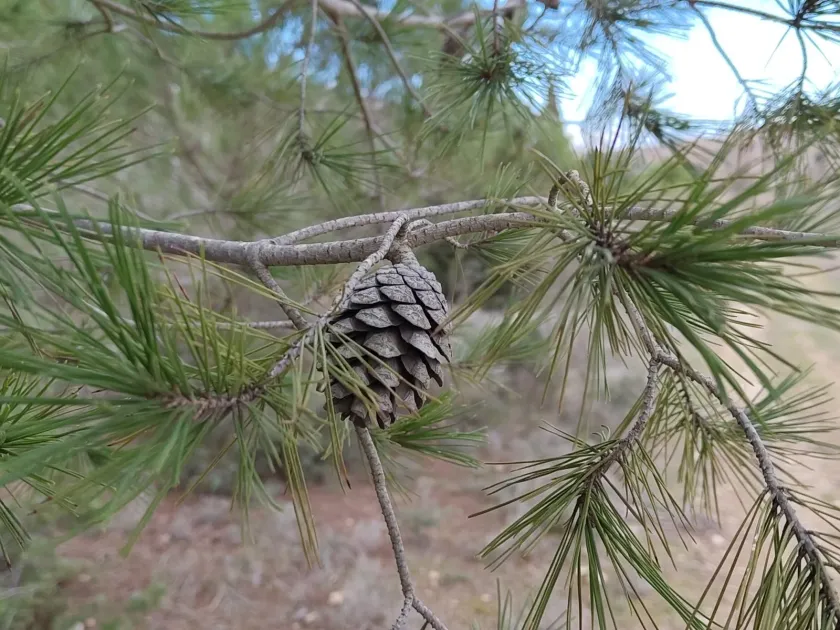
Description
Growing requirements
The Aleppo pine (Pinus halepensis Mill.) is a prominent member of the Pinaceae family. It is a thermophilic species native to the Mediterranean region, known for its ability to thrive in challenging environments where other coniferous species often struggle to establish.
Botanically, it is characterized by an irregular crown and a rapid growth rate in its youth. The tree is highly resilient to drought, which is facilitated by its deep-reaching root system capable of exploiting moisture from rocky substrates and steep terrains.
The species requires full sun exposure to flourish. While it exhibits great tolerance for diverse soil types, including alkaline and limestone-rich ground, it is strictly intolerant to poorly drained or waterlogged conditions, which lead to root asphyxiation and eventual decline.
Regarding climate, the Aleppo pine prefers mild winters and hot, dry summers. It is not frost-hardy in colder climates, which limits its commercial cultivation to coastal and Mediterranean-like geographic zones where temperature extremes are rare.
Economically, the Aleppo pine serves several industries. It is widely used in forestry for reforestation and erosion control, while its wood is processed for pulp, construction, and furniture. Additionally, it is a source of rosin and resins, which are essential components in various chemical industries.
Main diseases and pests
The most significant biotic threat to the Aleppo pine is the pine processionary moth (Thaumetopoea pityocampa). Larvae of this moth can cause extensive defoliation, leading to severe stress, stunted growth, and increased susceptibility to other pathogens.
Fungal diseases, such as Sphaeropsis sapinea (Diplodia blight), represent a major threat to the health of these trees. This fungus causes shoot dieback, especially in trees under water or heat stress, which negatively impacts the tree's vigor and commercial output.
Bark beetles are also a recurrent issue, particularly in stands that have been weakened by prolonged drought or fire. Once a tree is infested, it often declines rapidly, acting as a reservoir for further outbreaks within the forest area.
Effective management strategies include early detection through visual surveys and the use of pheromone monitoring systems. Maintaining adequate spacing between trees promotes better airflow, which inherently reduces the humidity levels that favor fungal development.
When implementing control measures, arborists prioritize sustainable practices. This includes the removal of infested branches and the promotion of natural predator populations to control pest levels, thereby ensuring the longevity of the pine stands.