
Lodgepole pine
Pinus contorta Douglas ex Loudon
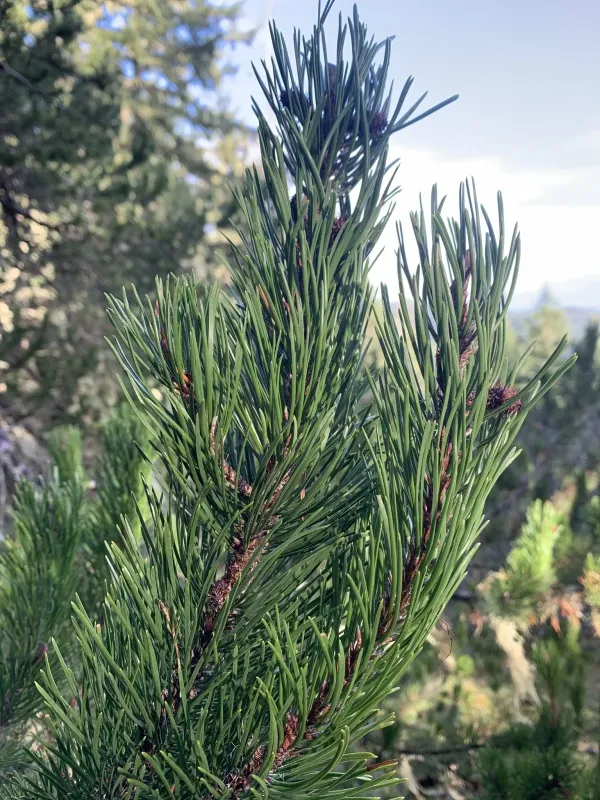
Description
Sowing dates
Lodgepole pine (Pinus contorta) is a prominent species in the Pinaceae family, native to western North America. In professional silviculture, seeds are typically sown in early spring following a cold stratification period of 30 to 60 days to maximize germination rates and uniformity.
The planting process involves either direct seeding in managed forest plots or the outplanting of nursery-grown seedlings. Seedlings are often grown in plugs to ensure a robust root system before being transferred to their final site, with planting densities adjusted according to the desired end-use, such as timber production or conservation.
Growing requirements
This species thrives in a wide range of soil types, particularly well-drained sandy or gravelly soils. While it exhibits remarkable tolerance for nutrient-poor sites, it reaches its maximum biological potential in acidic to neutral soils that do not suffer from waterlogging.
Lodgepole pine is characterized by its high demand for direct sunlight. It is an intolerant species, meaning it requires full canopy exposure to maintain vigorous growth and develop a straight, high-quality trunk. In shaded environments, individual trees may show stunted growth and increased susceptibility to stress.
The climate requirements for Pinus contorta include the ability to withstand extreme cold and varying precipitation levels. It is well-adapted to high-altitude and boreal-like climates, though protection from excessive soil moisture is essential to prevent physiological issues and root pathogens.
Yield
The productivity of lodgepole pine stands is highly valued in the timber industry due to the tree's rapid juvenile growth and straight, slender stem. Rotation cycles for timber harvesting typically range from 45 to 65 years, providing a consistent supply of wood for structural building applications.
Beyond traditional lumber, the wood is widely utilized in the production of poles, posts, and railroad ties. Additionally, it serves as a critical raw material for the pulp and paper industry, contributing significantly to the economic value of managed forest lands.
Main diseases and pests
The mountain pine beetle (Dendroctonus ponderosae) is the most significant biological threat to lodgepole pine populations. Periodic outbreaks can result in extensive tree mortality across vast forest landscapes, necessitating rigorous integrated pest management strategies.
Pathogenic threats include various forms of rust, specifically western gall rust and pine-to-pine rust, which can cause significant structural defects in the stem. Proper silvicultural practices, including thinning and the removal of infected trees, are essential to mitigate the spread of these diseases.
Harvesting
Harvesting operations are planned based on the age, density, and health of the stand. Modern mechanized logging techniques are employed to efficiently clear-cut or perform shelterwood harvests, ensuring that the timber is processed sustainably while preparing the site for regeneration.