
Canary Island pine
Pinus canariensis C. Sm.
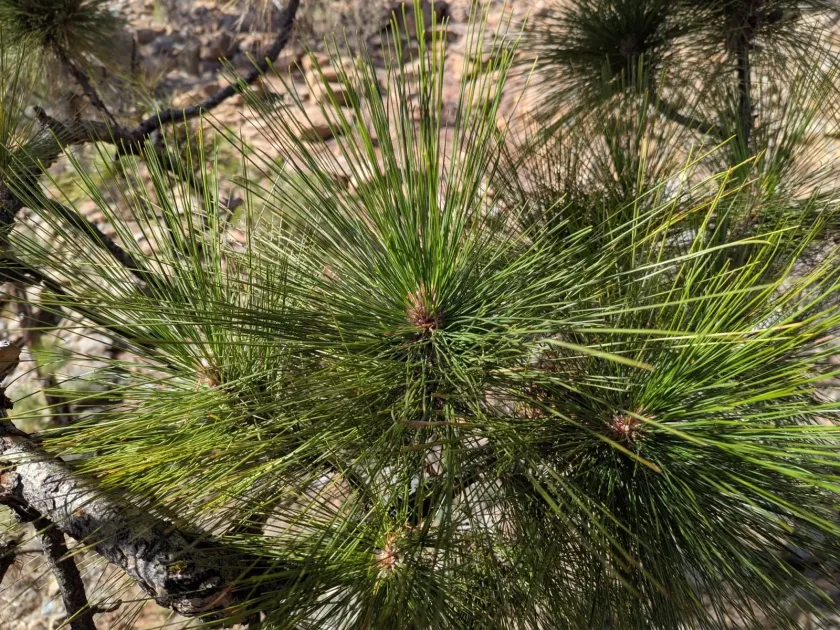
Description
Growing requirements
The Canary Island pine (Pinus canariensis) is a prominent species in the Pinaceae family, native to the higher altitudes of the Canary Islands.
This species is highly adapted to arid environments, possessing a deep root system that allows it to thrive in nutrient-poor volcanic soils.
It prefers full sun exposure and is strictly suited for temperate to subtropical climates where frost is rare or non-existent.
The soil must provide excellent drainage, as the tree is sensitive to waterlogged conditions that can cause root rot and physiological stress.
Proper agricultural management involves managing stand density to prevent competition and ensuring that saplings receive sufficient sunlight during their early growth stages.
Yield
The wood of the Canary Island pine is highly valued in timber production due to its exceptional hardness, durability, and resistance to decay.
It is widely used for high-quality furniture, construction, and specialized woodworking projects, making it a sought-after commercial forest resource.
Beyond its economic value, the tree is frequently utilized in ornamental forestry to enhance landscapes in suitable subtropical Mediterranean-like climates.
The species is unique for its epicormic branching, allowing it to recover quickly after forest fires, which ensures a sustainable regeneration cycle.
Strategic planting helps stabilize sloping terrain, protecting vulnerable environments from erosion while contributing to biomass production.
Main diseases and pests
The pine processionary moth represents the most significant pest threat, capable of causing massive defoliation and weakening forest stands.
Fungal pathogens can pose risks if cultural conditions, specifically soil drainage, are not properly managed during the establishment phase.
Environmental stress from prolonged droughts combined with secondary insect attacks can lead to the decline of vulnerable older trees.
Integrated pest management strategies are crucial for maintaining the health of plantations, focusing on early detection and prevention.
- Regular monitoring of needle condition.
- Sanitary logging of infected specimens.
- Biological control measures against larvae.