
Bristlecone pine
Pinus aristata Engelm.
Description
Growing requirements
The Bristlecone pine (Pinus aristata) is a remarkable member of the Pinaceae family, celebrated for its ability to live for thousands of years. Native to the high-altitude mountain regions of the Southwestern United States, it thrives in harsh environments where other trees fail to survive.
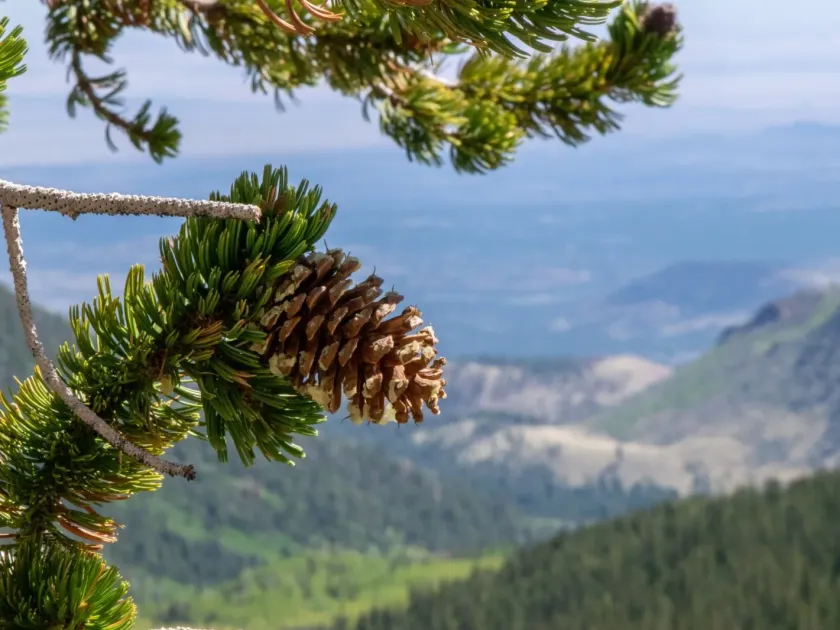
Botanically, it is defined by its slow growth and dense, resinous wood. The needles, which persist for up to two decades, are a deep green and often feature small white resin flecks that give the tree its unique, sparkling appearance in the sunlight.
To cultivate this species, one must mimic its natural rocky, alpine habitat. It requires exceptionally well-draining soil, typically preferring gravelly or sandy substrates. Growing it in heavy, water-retentive clay is a major mistake that often leads to root rot.
Climate-wise, the species is cold-hardy and drought-tolerant once established. It must be planted in full sun, as it lacks the plasticity to grow in shaded conditions. It performs best in regions with cool summers and distinct seasonal changes, matching its native ecological niche.
Agricultural management is minimal due to the tree's evolution in nutrient-poor soils. Fertilization is generally unnecessary and potentially harmful, as it forces rapid, weak growth that ruins the characteristic dense, aesthetic form of the pine.
Main diseases and pests
The most devastating threat to the species is white pine blister rust (Cronartium ribicola). This fungal pathogen enters through the needles and moves into the branches and stems, eventually killing the tree. Avoiding planting near Ribes species is the standard preventative measure.
Insect pests, such as pine aphids and scale insects, are common irritants that suck sap and weaken the tree. Their presence can often be identified by the black sooty mold that develops on the needles as a secondary consequence of the honeydew they excrete.
Sawfly larvae can cause significant defoliation if left unchecked. While the tree's slow metabolic rate makes it resilient to occasional pest attacks, a large-scale infestation on a young tree can lead to permanent damage or stunted growth patterns.
Fungal needle casts, often triggered by prolonged high humidity or poor air circulation, can cause needles to yellow and drop prematurely. Strategic pruning to open up the canopy helps maintain the health and vigor of the specimen in garden environments.
Integrated Pest Management (IPM) is strongly recommended for Pinus aristata. Early detection of symptoms and the use of horticultural oils for scale or specific fungicides for rust are the most effective ways to preserve these valuable, long-lived botanical specimens.