
Whitebark pine
Pinus albicaulis Engelm.
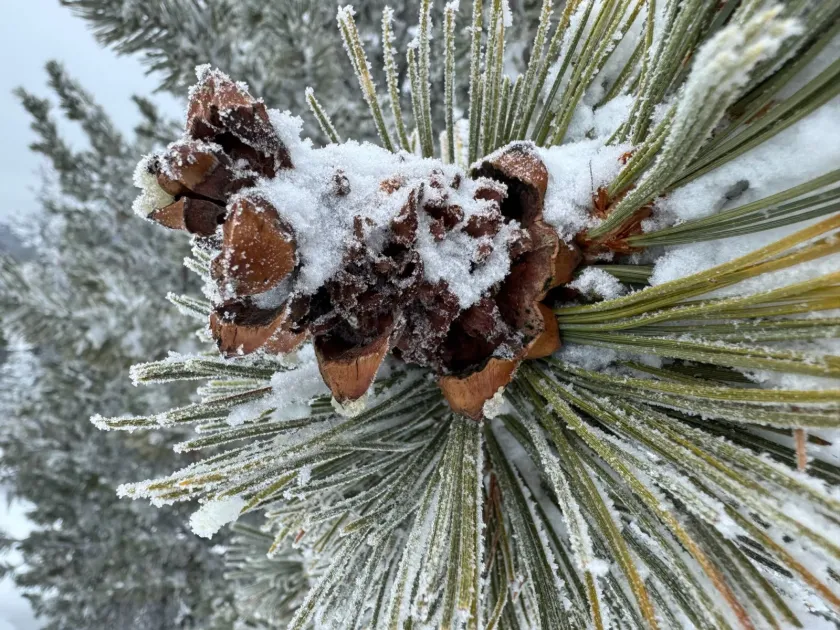
Description
Growing requirements
Whitebark pine (Pinus albicaulis) is a long-lived conifer belonging to the Pinaceae family, native to the mountainous regions of western North America. It is considered a keystone species, particularly in subalpine ecosystems where it serves as a crucial food source for various wildlife.
The tree thrives in harsh, high-altitude environments characterized by rocky, nutrient-poor, and well-drained soils. It exhibits remarkable physiological adaptations to withstand extreme cold, strong winds, and heavy snow loads that would be lethal to many other woody plants.
Cultivation of Pinus albicaulis requires full sun exposure, as it is highly intolerant of shade. Adequate air circulation is also essential to prevent the accumulation of moisture around the needles and branches, which helps mitigate the risk of fungal infections.
Agricultural management is challenging due to the species' slow growth rate. When establishing new plantations, it is vital to ensure minimal competition from faster-growing shrubs or trees that could overwhelm young seedlings during their establishment phase.
The economic and ecological utility of the whitebark pine is primarily centered on mountain slope stabilization and climate-resilient landscaping. It is highly valued by environmental restoration projects seeking to rebuild alpine forests after disturbances.
Main diseases and pests
The most significant threat to the whitebark pine is white pine blister rust, a disease caused by the non-native pathogen Cronartium ribicola. This fungus can devastate entire stands by girdling stems and branches, effectively cutting off nutrient transport.
Mountain pine beetles represent a major entomological threat, especially as warmer temperatures expand their habitable range into higher elevations. Outbreaks can result in widespread mortality, significantly altering the landscape structure.
Climate change is another critical stress factor, as rising temperatures allow for the encroachment of more aggressive, shade-tolerant tree species that outcompete the whitebark pine for available space and light.
Managing these threats requires integrated pest management strategies, including the identification and propagation of rust-resistant genotypes to ensure the longevity of future reforestation efforts.
Monitoring for signs of infestation or infection, such as branch flagging or distinct resinous cankers, remains the most effective way to protect existing trees and maintain the health of the population.