
Swamp mahogany
Eucalyptus robusta Sm.
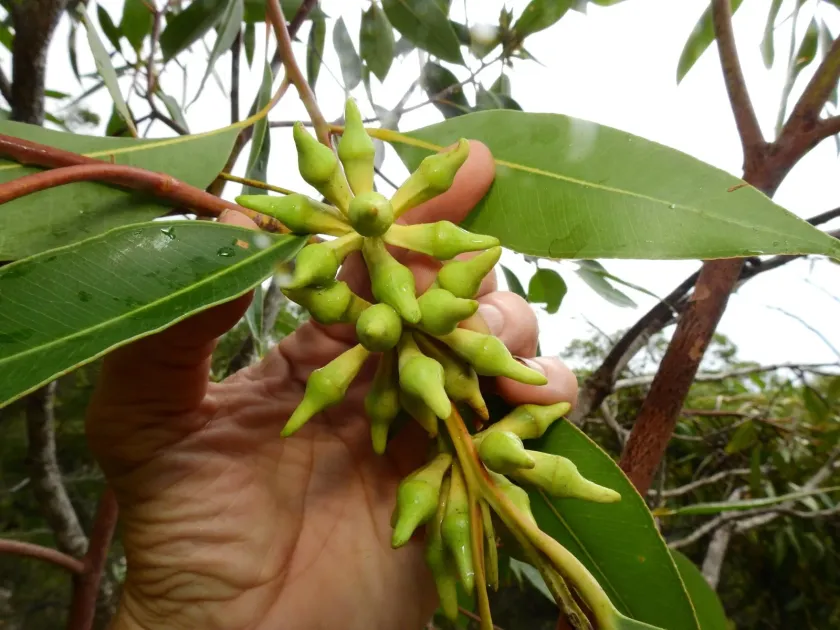
Description
Sowing dates
The propagation of Swamp Mahogany (Eucalyptus robusta Sm.) is primarily conducted through seed sowing in professional nurseries under controlled conditions.
Seeds are typically sown in early spring, utilizing a high-quality, well-draining substrate to facilitate germination and ensure healthy initial root development.
Before sowing, seeds may undergo stratification to improve uniformity and germination rates, ensuring a consistent growth pattern across the nursery bed.
Seedlings are nurtured for several months until they reach a robust height of 25–30 cm, preparing them for the transition to open-field plantations.
Successful establishment in the field requires well-timed planting during the rainy season to minimize transplant shock and encourage rapid root penetration.
Growing requirements
Belonging to the Myrtaceae family, this species thrives in humid subtropical environments and exhibits a remarkable tolerance for waterlogged soil conditions.
It prefers deep, fertile, and slightly acidic alluvial soils, making it an excellent choice for stabilizing sites near wetlands or coastal areas.
While tolerant of low-lying swampy terrain, the tree requires adequate light exposure to achieve its maximum growth potential and structural integrity.
The species is sensitive to extreme cold and frost, which limits its primary cultivation areas to regions with mild winter temperatures.
Adequate soil moisture is critical; however, once established, the tree demonstrates high physiological resilience even during periods of heavy rainfall.
Yield
Swamp Mahogany is widely recognized in forestry for its rapid growth rate, making it a highly productive choice for timber and paper pulp industries.
Plantations can yield significant volumes of wood, often reaching harvestable maturity within 10 to 15 years under optimal management practices.
The wood is dense, durable, and resistant to decay, finding extensive use in construction, fencing, and the manufacturing of furniture and specialty tools.
In addition to timber, the tree serves as an important honey-producing plant, contributing to apiary yields during its characteristic flowering seasons.
The leaves are harvested for their essential oils, which possess strong medicinal and industrial properties, adding value to the total crop output.
Main diseases and pests
The primary threats include root rot and fungal infections, particularly in areas where drainage is insufficient during peak growth seasons.
Pests such as the eucalyptus snout beetle and various defoliating insects can significantly impact growth rates and overall plantation vigor.
In tropical climates, termite infestation can weaken the lower trunks of mature trees, potentially leading to losses in commercial timber value.
Effective management strategies involve regular monitoring, the use of resistant genotypes, and integrated pest control measures to maintain health.
- Regular application of fungicides for nursery protection.
- Implementation of pest monitoring systems to detect early infestations.
- Strategic spacing to ensure proper airflow and decrease fungal risk.
Harvesting
The harvesting process typically involves clear-felling the plantation once the trees reach the desired market diameter for logs or pulpwood.
Modern forestry equipment is employed to efficiently process the timber, including debarking and sizing operations directly within the planting site.
One of the species' most valuable economic traits is its capacity to sprout from stumps, allowing for multiple rotations without the need for replanting.
Following a harvest, silvicultural thinning is performed on the regrowth to select the healthiest stems for the next production cycle.
Leaf harvesting for oil extraction is conducted through systematic pruning, which supports tree health and provides a steady source of raw material.