
Pear-fruited mallee
Eucalyptus pyriformis Turcz. x Eucalyptus macrocarpa Hook.
Description
Sowing dates
Propagation of Eucalyptus pyriformis (pear-fruited mallee) is primarily achieved through seeds sown in a controlled nursery environment. Seeds should be placed in a well-draining, sterile substrate rich in sand and perlite.
Germination requires consistent warmth, typically between 20°C and 25°C. Keeping the sowing medium consistently moist but not waterlogged is essential for the high success rate of seedling emergence.
Once seedlings develop two pairs of true leaves, they should be carefully pricked out into individual pots. Minimizing root disturbance during this process is crucial as the species is sensitive to transplant shock.
A hardening-off period of at least two to three weeks is recommended before moving young plants to an outdoor setting. This period helps the plants adapt to fluctuating environmental conditions.
For areas outside the native range, it is advisable to keep these plants in containers during their first year to protect them from extreme weather and to allow for easier management of their development.
Growing requirements
As a member of the Myrtaceae family, this species thrives in full sun exposure. It requires maximum light intensity to support the development of its large, characteristic fruits and flowers.
Soil drainage is the most critical factor for success. The plant naturally grows in sandy or gravelly soils and is highly intolerant of waterlogged conditions, which can lead to rapid root rot.
This eucalyptus is well-adapted to Mediterranean climates characterized by dry summers and mild winters. While drought-tolerant once established, it requires regular irrigation during the initial establishment phase.
The plant performs best in well-ventilated areas, as poor air circulation can encourage the proliferation of fungal pathogens. Protection from high-velocity, freezing winds is necessary in cooler climates.
Soil pH should ideally be neutral to slightly acidic. If the soil is too heavy, the addition of organic matter and coarse sand is required to improve structure and promote root aeration.
Yield
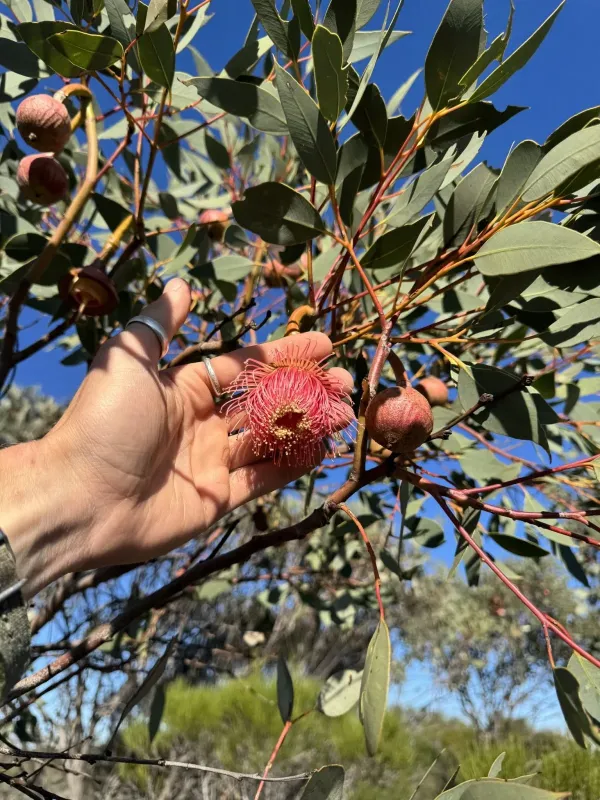
The primary economic value of this species lies in ornamental horticulture and landscape design. It is highly prized for its striking red or yellow flowers and large, pear-shaped fruits.
In the floral industry, there is a consistent market for the cut branches of this plant. The unique aesthetics of its blossoms make it a high-value item for exotic floral arrangements and event decorations.
While not traditionally harvested for industrial timber, the wood is extremely hard and dense, reflecting the characteristics of many eucalyptus species in arid regions.
Essential oil production from the leaves is a secondary potential use, although it is not as economically dominant as the horticultural demand for the plant itself.
The yield of decorative stems is dependent on judicious pruning and nutrient management. Consistent fertilization with low-phosphorus feeds is recommended to maintain plant health and bloom frequency.
Main diseases and pests
Spider mites represent a major pest risk, particularly in dry and poorly ventilated indoor or greenhouse conditions. Regular misting and the use of miticides help control their population.
Root pathogens such as Phytophthora are the most significant threat to plant survival. Prevention is far more effective than treatment, requiring meticulous drainage and avoidance of overwatering.
Powdery mildew may occur on the leaves if humidity levels are high and airflow is insufficient. Fungicidal applications are usually effective if the problem is detected at an early stage.
Sucking insects, including aphids and scale, can damage succulent new growth. Integrated pest management using biological controls or insecticidal soaps is preferred over harsh chemicals.
Chlorosis, indicated by the yellowing of leaves, is frequently a sign of micronutrient deficiency (often iron or magnesium). Soil pH adjustment and foliar fertilization can correct these symptoms rapidly.