
Blue gum
Eucalyptus globulus Labill.
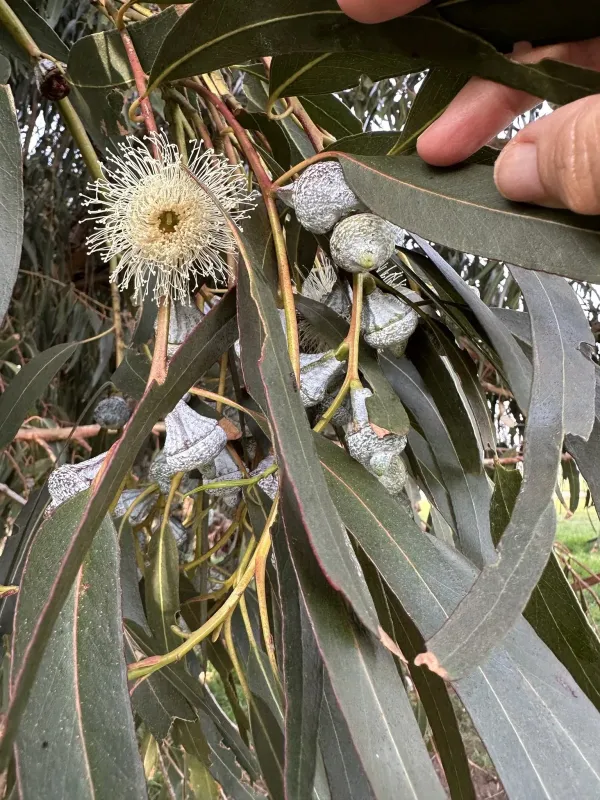
Description
Sowing dates
Eucalyptus globulus is typically propagated from seeds sown in greenhouse environments. The seeds are small and require a fine, well-draining seedbed, usually a mixture of peat and perlite, maintained at a consistent temperature of 20–22°C for successful germination.
Seedlings should be pricked out into individual containers once they develop their first set of true leaves. This promotes a strong root system, which is crucial for the survival of the tree after being transplanted to the plantation site.
Planting density depends on the final purpose of the crop; for timber production, densities typically range from 1,000 to 1,600 trees per hectare. For essential oil harvesting, higher densities might be employed, combined with frequent coppicing.
Initial establishment requires intensive care, including regular irrigation and weed control during the first two years. Once the trees achieve canopy closure, they become significantly more self-sufficient and resistant to environmental stress.
Spring is the preferred time for planting in most regions, providing the trees with a long growing season to establish deep roots before the potential challenges of winter or the dry season.
Growing requirements
The Blue Gum (Eucalyptus globulus) belongs to the Myrtaceae family and thrives in Mediterranean or humid subtropical climates. It is highly sensitive to severe frost and prefers areas with mild, wet winters and warm, dry summers.
The species is adaptable to various soil types but performs best in deep, fertile, and well-drained soils with a slightly acidic to neutral pH. It notoriously fails in soils that are waterlogged or severely compacted, as this restricts root aeration.
As a highly light-demanding species, Blue Gum requires full sun exposure to maintain its rapid growth rate. Areas with persistent cloud cover or shade will result in spindly growth and reduced yields of biomass and essential oils.
Eucalyptus trees have an exceptionally high rate of transpiration, which they use to manage water availability in their environment. This trait makes them ideal for land reclamation and draining swampy areas, provided the soil is not permanently anaerobic.
Nutrient management is essential for high-yield plantations. Nitrogen, phosphorus, and potassium are the primary macronutrients required for early development, while micronutrients may be necessary depending on local soil analysis.
Yield
Blue Gum is one of the most productive tree species globally, often yielding impressive volumes of timber and pulpwood. In optimal conditions, annual biomass increments can reach up to 30 cubic meters per hectare, making it a cornerstone of commercial forestry.
The foliage is the primary source for the extraction of eucalyptus oil, which is rich in 1,8-cineole. Industrial yields depend on the distillation technology, leaf age, and the harvest cycle, with commercial operations aiming for maximum oil concentration.
Harvesting timber from established plantations provides a steady income for growers. The wood is dense, durable, and sought after for furniture construction, flooring, and charcoal production, offering multiple revenue streams for plantation owners.
Coppicing is a standard management practice for Eucalyptus globulus. After the main trunk is harvested, the stump will produce new shoots, allowing for several harvest cycles without the need for replanting, which drastically lowers production costs.
The efficiency of essential oil extraction is closely linked to the time elapsed between harvest and distillation. Fresh leaves produce higher oil quality, as volatile components degrade rapidly when exposed to heat and air after being detached from the tree.
Main diseases and pests
Common pests include the Eucalyptus snout beetle and various leaf-eating insects. Integrated Pest Management (IPM), including the introduction of biological control agents, is widely used in commercial plantations to maintain pest populations at manageable levels.
Fungal diseases like leaf spot and root rot (Phytophthora) can be devastating in plantations with poor drainage or high humidity. Maintaining proper tree spacing and thinning the stand helps improve airflow and reduces the incidence of these pathogens.
Fire is the most significant threat to eucalyptus plantations due to the flammable nature of the oils present in the leaves and bark. Firebreaks and regular undergrowth clearing are essential components of plantation safety and maintenance protocols.
Frost damage can limit the northern or southern expansion of Blue Gum crops. In borderline climates, selecting genetically selected, cold-hardy varieties is critical for mitigating the risk of total loss during extreme weather events.
Proper biosecurity measures should be implemented to prevent the introduction of invasive pathogens. Regular monitoring and diagnostic testing of symptomatic trees are vital to ensure the long-term health and productivity of the plantation site.
Harvesting
Harvesting of timber is usually performed using professional logging equipment. The trees are felled and transported to mills for processing into logs, chips, or pulp, depending on the specifications of the industrial buyer.
Foliage harvesting for oil production involves cutting branches from the trees. This is often scheduled to optimize the content of medicinal compounds, which can vary throughout the year based on the tree’s phenological stage and local environmental factors.
Post-harvest handling is critical for maintaining oil quality. Leaves must be kept cool and processed as quickly as possible to prevent the evaporation of essential oils, ensuring the final product meets international pharmacopeia standards.
Transport logistics play a significant role in the overall profitability of the project. Processing facilities should be located in close proximity to the plantation area to minimize shipping costs of fresh, high-volume biological material.
After the final timber harvest, the area should be cleared of debris to prepare for the next rotation or land transition. Proper soil preparation after a long rotation ensures that the land remains productive for future agricultural or forestry cycles.