
Darwinia procera
Darwinia procera
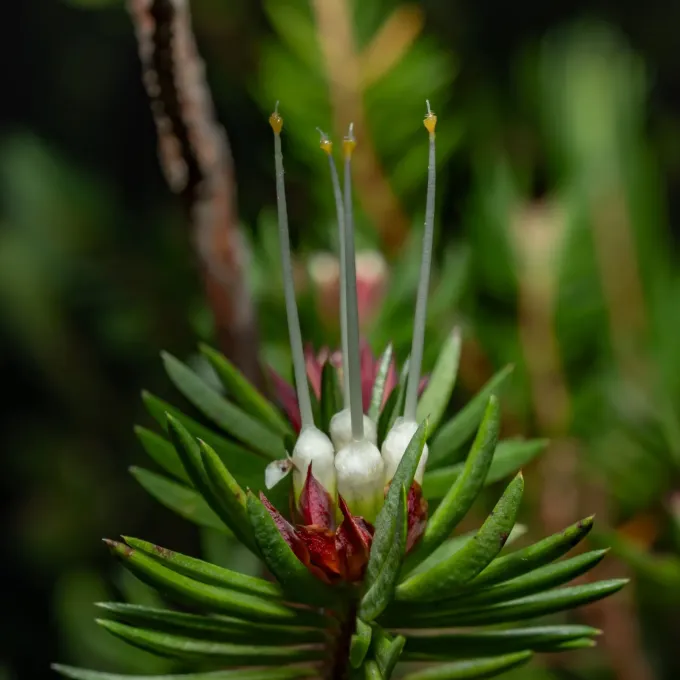
Description
Growing requirements
Darwinia procera is a distinct shrub belonging to the Myrtaceae family, native to the diverse landscapes of Australia. It is highly valued for its elegant foliage and unique floral structures that display remarkable botanical complexity.
Botanically, this species thrives in well-aerated, rocky, or sandy substrates. Its root system has adapted to environments with low nutrient availability, making it highly efficient in nutrient uptake but also sensitive to over-fertilization.
For successful cultivation, the soil must be free-draining to prevent root rot, which is a common challenge for this species. Providing a porous growing medium is essential for maintaining the health and longevity of the plant.
Environmental requirements include a stable, temperate climate. While it prefers full sun exposure, it is advisable to provide shade during the hottest parts of the day in warmer regions to prevent leaf scorching and excessive transpiration.
In terms of usage, Darwinia procera serves as an exceptional ornamental plant for botanical gardens and specialized container collections. It is primarily managed for its aesthetic appeal and scientific value within the Myrtaceae genus.
Main diseases and pests
The most significant threat to Darwinia procera is root rot caused by Phytophthora species. These soil-borne pathogens thrive in wet, stagnant conditions, making drainage control the most critical aspect of plant management.
Pests such as spider mites and mealybugs frequently attack the plant in greenhouse environments. These pests can rapidly proliferate if the air humidity is too low or if there is poor airflow around the foliage.
Effective management includes regular monitoring and the use of integrated pest management (IPM) techniques. Maintaining proper ventilation and preventing stress through consistent care significantly reduces the plant's susceptibility to infestations.
Chemical treatments should be used cautiously, as the plant may exhibit sensitivity to certain synthetic pesticides. Whenever possible, horticultural soaps or neem-based oils should be utilized to manage localized outbreaks.
Ensuring the plant is not over-crowded in planting areas is another key measure for preventing the spread of diseases. Proper spacing allows for adequate sunlight penetration and air movement, which are essential for overall health.