
Astartea fascicularis
Astartea fascicularis
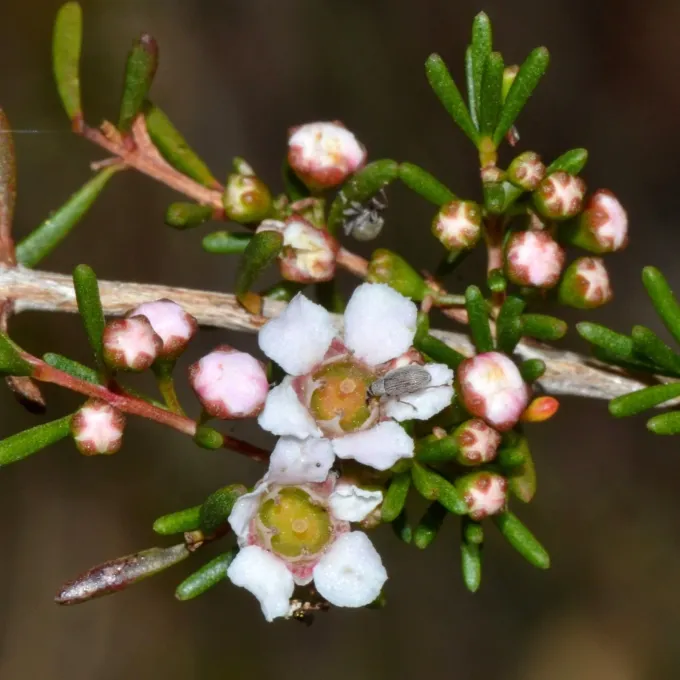
Description
Growing requirements
Astartea fascicularis is a charming evergreen shrub belonging to the Myrtaceae family. Native to the southwestern regions of Western Australia, it has gained popularity in various climates for its delicate appearance and dense growth habit.
The plant typically reaches a height of 1 to 2 meters. Its botanical structure features slender, branching stems covered in tiny, narrow leaves, which provide a graceful texture to any garden landscape or container arrangement.
Successful cultivation requires well-draining, sandy or loamy soil with a neutral to slightly acidic pH level. Since the plant is sensitive to waterlogged conditions, ensuring efficient drainage is the most critical aspect of site preparation.
It thrives in full sun, which promotes maximum flowering density. While it prefers temperate conditions, it requires protection from severe frost. In areas with harsh winters, growing it in containers that can be moved indoors is a recommended practice.
Agrotechnical maintenance focuses on consistent but moderate watering. Over-fertilization should be avoided; applying slow-release fertilizers specifically formulated for native or sensitive plants during the spring season is generally sufficient.
Harvesting
Astartea fascicularis serves primarily as an ornamental plant in landscaping. Its ability to form compact hedges or borders makes it a versatile choice for designers aiming for a Mediterranean or Australian-style garden aesthetic.
The plant is renowned for its prolific flowering phase, usually occurring in late spring and summer. The small, star-like flowers cover the branches, creating a stunning visual effect that attracts various pollinators to the area.
In the professional floral industry, branches of Astartea are valued for their durability and fine foliage. They are frequently used as botanical fillers in high-end arrangements, providing a light, airy contrast to larger focal flowers.
To maintain a healthy structure, annual pruning is essential. Trimming the shrub immediately after the flowering cycle finishes helps control its size, prevents "legginess," and encourages more vigorous blooming for the following season.
Propagation is most effective through semi-hardwood cuttings. Maintaining a humid environment and a stable temperature for the cuttings will significantly increase the success rate of root development before transplanting into individual containers.