
Watkins fig
Ficus watkinsiana
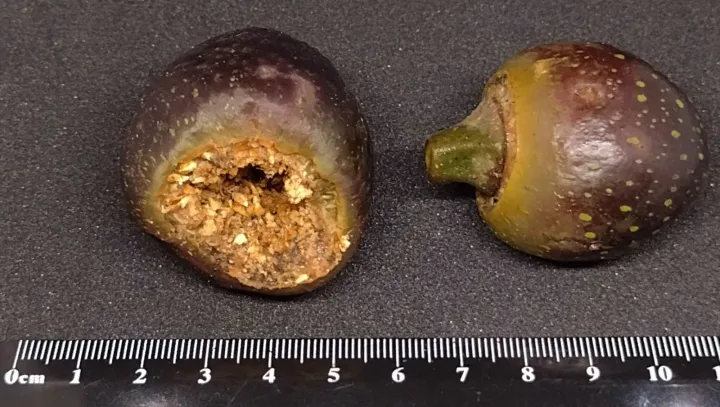
Description
Growing requirements
The Watkins fig (Ficus watkinsiana) is a significant evergreen tree belonging to the Moraceae family. Known for its distinct growth habit, it often starts as an epiphyte before developing into a massive tree capable of dominating its local environment.
Its natural distribution is primarily centered in the subtropical and tropical rainforests of eastern Australia. The tree is well-adapted to high-rainfall areas and thrives in environments where humidity and ambient temperatures remain consistently high throughout the year.
Agronomic requirements emphasize the need for nutrient-rich, well-draining soil structures. A proper substrate should incorporate organic matter while maintaining a slightly acidic to neutral pH balance to support vigorous root development.
Climatic preferences include protection from freezing temperatures, as frost can cause severe tissue damage to the canopy. Sufficient, indirect light is essential for maintaining the density and deep green color of the foliage in cultivated settings.
Regarding its primary use, the tree serves significant ornamental purposes. It is often used in landscape architecture for large public gardens or botanical collections where its expansive root systems and dense canopy can be fully appreciated.
Main diseases and pests
The primary biotic threats to Ficus watkinsiana include infestations by scale insects and spider mites, both of which thrive under conditions of inadequate airflow or low atmospheric humidity.
Root rot pathogens represent the most significant abiotic threat, usually triggered by improper irrigation practices that lead to waterlogged soil and subsequent oxygen deprivation for the roots.
Management involves rigorous observation and the implementation of Integrated Pest Management (IPM) strategies, which prioritize manual removal and targeted application of horticultural oils.
Ensuring adequate drainage and implementing a strict watering schedule are the most effective preventive measures against soil-borne fungal infections and bacterial wilt.
Regular sanitation, such as removing fallen leaves and debris around the base of the plant, reduces the risk of sheltering various pests and pathogens near the trunk.