
Paper mulberry
Broussonetia kazinoki
Description
Sowing dates
Propagation of Broussonetia kazinoki is primarily achieved through vegetative means, such as cuttings or root suckers, which the mother plant produces abundantly. Planting seedlings into the ground is best performed in early spring before active sap flow, or in autumn after leaf fall.
Seed propagation requires stratification of the material for one to two months at low temperatures. Optimal timing for seed sowing in greenhouse conditions or seed trays is March to April, with subsequent transplantation to the final location after one or two years.
Planting density depends on the intended end-use. For fiber production, high-density schemes like 50x50 cm are recommended to promote the growth of straight, unbranched shoots, which are easier to process into high-quality bast fiber.
Rooting of cuttings is conducted in a light, well-draining substrate consisting of sand and peat. Maintaining a stable temperature between 20–22°C ensures a successful rooting rate of over 80%.
Site selection is critical for success. The crop prefers well-lit areas sheltered from strong winds. Young plants require regular irrigation during the first few years to ensure a strong root system is established.
Growing requirements
Broussonetia kazinoki, a member of the Moraceae family, is a deciduous shrub renowned for its valuable bark. It is native to East Asian countries, including Japan, China, and Korea, where it has been cultivated for centuries.
The crop prefers deep, fertile, and well-drained loamy soils with a neutral to slightly acidic pH level. Waterlogging and poor drainage are detrimental to the root system and must be avoided during site preparation.
A moderately warm temperature range is ideal for optimal development. While the plant shows some frost resistance, young shoots may require protection in northern regions or sites with harsh winter microclimates.
Agronomic management includes regular weeding of the surrounding area and nitrogen fertilization in early spring to stimulate vigorous vegetative growth, which is essential for developing long, fibrous shoots.
The plant exhibits remarkable regeneration capabilities, which is the basis for its cultivation. Regular coppicing (cutting back to the base) allows for plantation renewal and stimulates the growth of new, soft, and flexible shoots.
Yield
The main economic use of Broussonetia kazinoki is the extraction of bast fibers from the bark of young shoots. These fibers are considered the industry standard for high-end "washi" paper, known for its exceptional strength and longevity.
Yield depends on planting density and the quality of field management. In commercial plantations, annual bark collection per hectare can result in several tons of dry raw material ready for processing.
Beyond paper production, the fibers are used in the textile industry to create fabrics with specific durability characteristics. These unique materials are increasingly appreciated in sustainable design and restoration work.
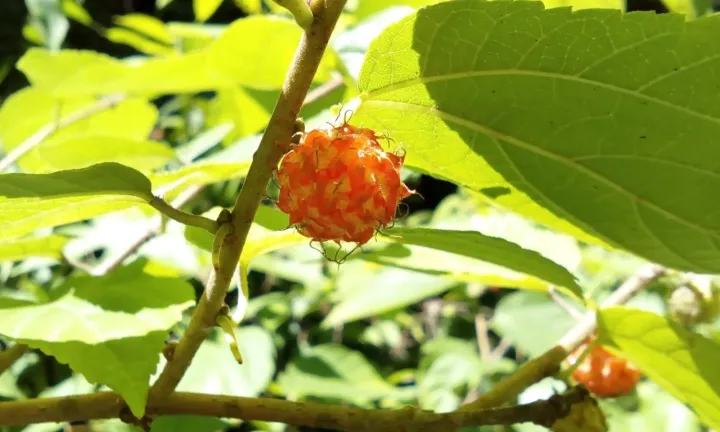
The plant also has aesthetic value. It is often used in landscape architecture as an ornamental specimen thanks to its attractive foliage and unique fruit structures that enhance garden biodiversity.
Residual wood after bark extraction can be utilized as a biofuel source or raw material for small-scale artisanal crafts, significantly improving the overall economic efficiency of the crop.
Main diseases and pests
Broussonetia kazinoki is relatively resistant to most diseases, though under conditions of excessive humidity, fungal infections like leaf spot or powdery mildew can occur. Proper spacing is essential to ensure good air circulation.
Common pests include aphids and leaf-eating caterpillars, which can damage new shoots during the spring growth period. Monitoring and early intervention are necessary to ensure the quality of the raw material.
Root rots become a significant problem if soil drainage is ignored. It is essential to ensure that the plantation site does not have areas of persistent waterlogging or stagnant groundwater.
Integrated pest management, including the use of biological insecticides and proper sanitation, is the recommended strategy for protecting the crop from potential outbreaks and damage.
General plantation health depends on timely maintenance. A well-managed plot with a healthy soil background is significantly more resilient to external threats and potential pest infestations.
Harvesting
Harvesting, which involves cutting the annual shoots, is conducted annually in late autumn after the growing season concludes. This timing is critical, as the bark contains peak concentrations of fiber-forming components.
Harvested shoots are sorted by size, followed by the separation of the bark from the inner wood. Methods such as steaming or boiling in alkaline solutions are often used to soften the tissues for easier mechanical extraction.
To obtain premium-grade white fiber, the outer layers of the bark are manually scraped off. While labor-intensive, this process ensures the high added value required for high-quality paper production.
The extracted fiber is then washed in clean water and sun-dried. Drying must occur in well-ventilated conditions or direct sunlight to prevent mold and preserve the integrity of the material.
Adherence to the harvesting schedule is vital. Delays can lead to a reduction in fiber strength and quality, potentially rendering the material unsuitable for fine paper production requirements.