
Heynea trijuga
Heynea trijuga
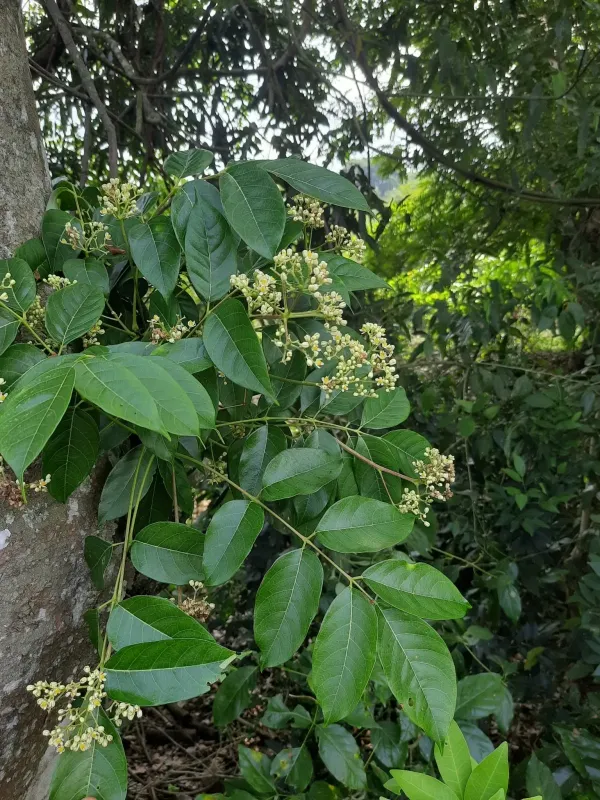
Description
Sowing dates
Propagation of Heynea trijuga is typically performed via seeds collected from mature fruits. Seeds should be sown as soon as possible after harvesting to maintain high viability rates.
Soaking the seeds in lukewarm water for several hours prior to sowing can significantly improve germination uniformity by softening the protective seed coat.
The seeds should be planted in a well-draining nursery mix, burying them at a shallow depth of approximately 1-2 cm. Maintaining a consistent temperature is crucial for early development.
Seedlings usually emerge within a month under optimal conditions of 25-30 degrees Celsius. Regular misting or watering is necessary to prevent the substrate from drying out completely.
Transplanting into the field should occur during the onset of the rainy season to ensure the root system establishes firmly before any potential drought conditions appear.
Growing requirements
Heynea trijuga belongs to the Meliaceae family and is native to the tropical forests of South and Southeast Asia. It prefers environments that mimic its natural forest habitat.
The tree thrives in deep, fertile soils that offer excellent drainage. While it is adaptable to different soil types, waterlogged conditions must be strictly avoided to prevent root decay.
This species is sun-loving but benefits from partial shade during the juvenile growth phase. Once established, it can withstand full sun exposure, which enhances its growth rate.
Climate requirements involve high temperatures and a frost-free environment. It is not cold-hardy, meaning cultivation is restricted to tropical and sub-tropical regions.
Regular maintenance, including mulching and weed control around the base of young trees, helps to retain moisture and provides the tree with necessary nutrients as the mulch decomposes.
Yield
The wood of Heynea trijuga is utilized for local carpentry and small-scale timber production. Its fine grain and moderate durability make it suitable for decorative woodwork.
Medicinal applications are a significant aspect of this plant's utility. Various parts of the tree are used in traditional medicine for their anti-inflammatory properties.
Seed oil extraction is another potential economic avenue. The oil possesses specific chemical compositions that are sought after in certain traditional cosmetic formulations.
In agroforestry systems, the tree acts as an effective soil stabilizer. Its deep root system prevents erosion on sloping lands, and its leaf litter contributes organic matter to the soil.
The tree also serves as an important floral resource for pollinators, supporting local biodiversity and contributing to the overall ecological balance of the plantation area.
Main diseases and pests
The species is generally robust, but it can be susceptible to fungal leaf spots if planting density is too high or if air circulation is insufficient within the canopy.
Pests such as leaf-eating caterpillars and aphids may occasionally attack the young shoots. Early detection and the use of integrated pest management are highly recommended.
Root rot remains the most serious threat, primarily caused by improper irrigation or poor soil drainage. Ensuring that the ground drains effectively is the best preventive measure.
Bark damage should be addressed immediately to prevent the entry of wood-boring insects or pathogens. Proper pruning techniques should be used to maintain tree health.
Monitoring for signs of nutrient deficiency or stress is essential during the rainy season when rapid growth places higher demands on the tree's physiological resources.