
Neem
Azadirachta indica A. Juss.
Description
Growing requirements
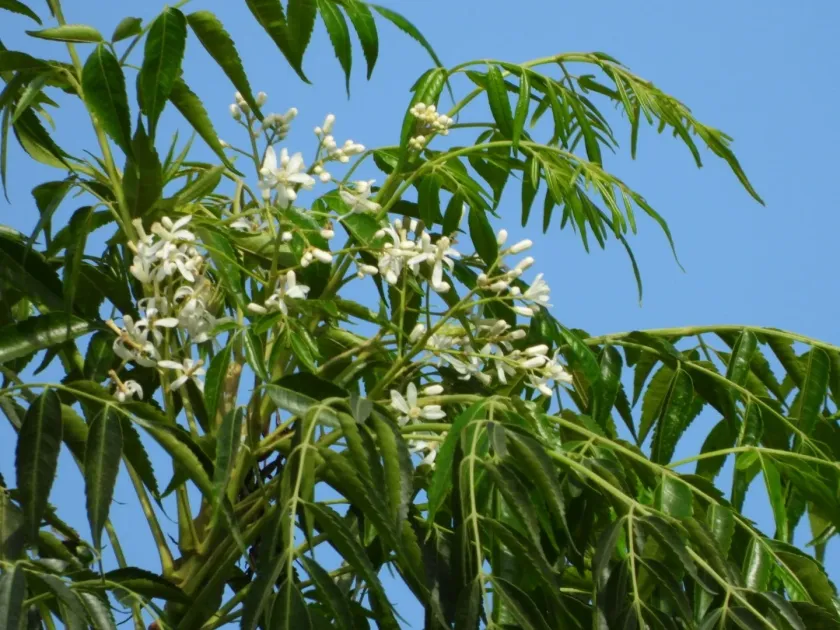
Neem (Azadirachta indica) is a prominent evergreen tree species belonging to the Meliaceae family, renowned for its wide range of medicinal and agricultural applications.
Native to the Indian subcontinent, the tree is now widely cultivated across tropical and subtropical regions globally for its rapid growth and adaptability.
Neem thrives in temperatures ranging from 20 to 40 degrees Celsius and requires plenty of direct sunlight for optimal development and oil yield.
While highly drought-tolerant, the tree requires well-draining soil and cannot survive in waterlogged conditions, which lead to root rot and systemic weakness.
The tree demonstrates significant resilience to various soil types, growing successfully in nutrient-poor and even slightly saline environments where other species fail.
Yield
The primary economic output of neem is derived from its seeds, which contain azadirachtin, a potent natural compound used globally in biopesticides.
The timber produced by the neem tree is highly valued in the furniture industry due to its natural resistance to wood-boring insects and decay.
Oil extracted from the kernels serves as a base for various soaps, cosmetics, and medicinal products owing to its antibacterial and antifungal properties.
Neem cake, a byproduct of oil extraction, is widely utilized as an effective organic nitrogen fertilizer that suppresses soil-borne pathogens.
In silviculture, the tree is frequently planted to reclaim degraded land and provide shade, effectively managing the local microclimate in agricultural landscapes.
Main diseases and pests
Although neem is naturally resistant to many pests, it can be susceptible to powdery mildew, especially in environments with high humidity and poor ventilation.
Root rot is the most common threat, often occurring in plantations with heavy clay soils that impede proper drainage during monsoon seasons.
Certain fungal pathogens can cause leaf spot diseases, which, if left unmanaged, may reduce the photosynthetic efficiency and seed production of the tree.
Young plants are particularly sensitive to extreme cold and frost, which can cause significant tissue damage and jeopardize the establishment of the plantation.
Careful spacing and routine sanitation of dead branches are essential practices to mitigate the risk of pathogen spread within dense neem stands.