
Aglaia argentea
Aglaia argentea
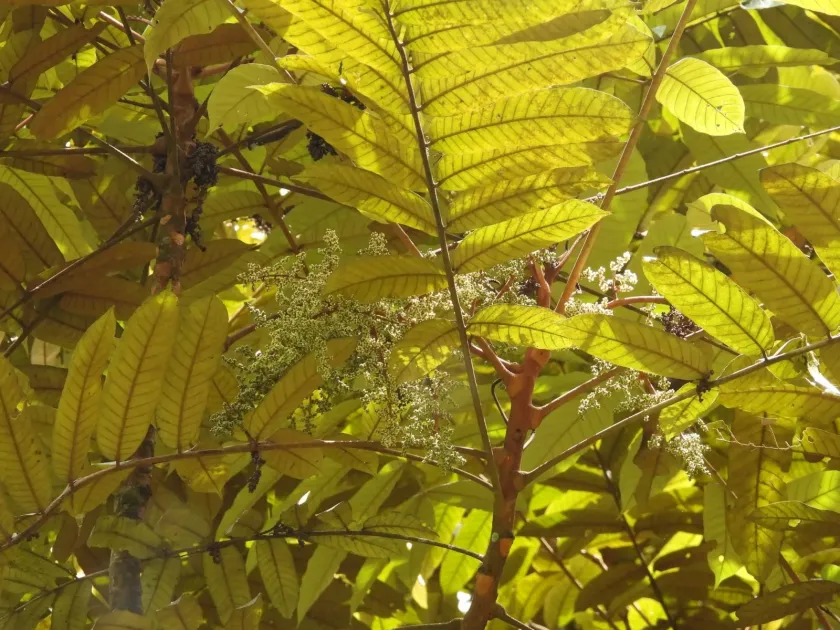
Description
Sowing dates
Aglaia argentea is a tropical tree species primarily propagated through seeds in nursery settings. Seeds lose viability quickly, so sowing must occur immediately after harvesting into well-drained, nutrient-rich substrates.
The optimal time to begin cultivation is at the onset of the rainy season, ensuring the high humidity levels required for successful germination. Temperature regimes should be maintained between +24 and +28 degrees Celsius.
To accelerate germination, seeds can be soaked in warm water for several hours before planting. Sowing is typically done in containers or prepared beds protected from direct midday sun.
Young seedlings require regular watering and partial shade until the root system becomes established. Transplantation to the final site is recommended when the sapling reaches a height of 30–50 centimeters, usually at 6–12 months of age.
Agronomists recommend maintaining specific planting density to ensure adequate airflow and sunlight penetration to the crown of each individual tree.
Growing requirements
Aglaia argentea, a member of the Meliaceae family, is native to the moist tropical forests of Southeast Asia. The plant prefers well-lit areas but requires moderate shading during the early stages of development.
The culture has moderate soil requirements, preferring fertile, loamy, or sandy substrates with excellent drainage. The optimal pH level falls within the slightly acidic to neutral range.
A crucial factor for development is consistent moisture; however, the tree does not tolerate waterlogging in the root zone. Under cultivation conditions, it is important to maintain air humidity at 70–80 percent.
The plant is highly sensitive to rapid temperature fluctuations and cannot withstand even short-term frost. The optimal annual climate is a humid tropical environment without a pronounced dry season.
For improved growth in nutrient-poor soils, organic fertilizers rich in nitrogen and potassium are applied during the active growth phase.
Yield
The primary economic use is the harvesting of timber, valued for its strength and resistance to environmental degradation. The wood is utilized in furniture production, interior finishes, and carpentry.
Secondary products include essential oils and chemical compounds extracted from the bark and leaves. Research supports the presence of bioactive compounds with potential applications in the pharmaceutical industry.
The period to reach commercial maturity in plantations ranges from 15 to 25 years, depending on growing conditions and the intended use of the raw material.
Biomass yield is assessed based on planting density per hectare and annual diameter increment. With proper maintenance, Aglaia demonstrates a steady growth rate of the trunk.
Harvesting of fruits and seeds for further propagation occurs annually during their peak biological maturity, ensuring the seed stock required for plantation expansion.
Main diseases and pests
Like many members of the Meliaceae family, Aglaia can be attacked by various pests, including leaf-roller caterpillars that damage young foliage.
Under high humidity conditions and poor crown ventilation, outbreaks of fungal diseases such as leaf spots or root rot may occur.
To protect plantations, regular sanitary inspections and the removal of affected plant parts are recommended. In industrial-scale operations, the use of biological insecticides is permitted.
Competition from weeds during the first years of growth can significantly slow down development, making regular weeding of the tree basin essential.
- Leaf-eating caterpillars
- Root rot (due to waterlogging)
- Fungal leaf infections
- Weed competition in nurseries