
Spicebush
Lindera benzoin
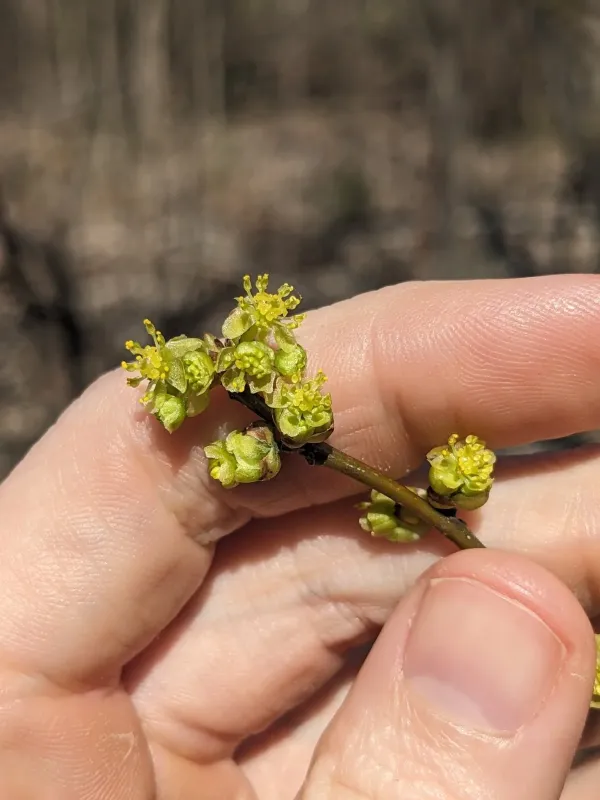
Description
Sowing dates
Propagation of spicebush is most commonly achieved through seeds or vegetative cutting. Seeds require mandatory stratification for 60–90 days at low temperatures, as they possess a significant dormancy period.
Outdoor sowing is recommended in late autumn, allowing natural winter conditions to prepare the seed material for spring germination. In commercial nurseries, container cultivation is preferred to maintain precise control over substrate composition and moisture levels.
Vegetative propagation utilizes semi-hardwood cuttings taken in late summer. To ensure successful rooting, it is vital to maintain high atmospheric humidity and utilize rooting hormones, as the species is sensitive to desiccation.
Planting density depends on the intended application: for hedgerows, specimens are spaced 1–1.5 meters apart. For commercial harvest operations, this spacing is increased to 2–2.5 meters to ensure adequate airflow and sunlight penetration.
A critical condition for initial growth is location selection; spicebush prefers light shade during its establishment phase. Consequently, young seedlings often require protection from direct harsh sunlight during the heat of the summer.
Growing requirements
Lindera benzoin is a deciduous shrub belonging to the Lauraceae family, native to North America. In its natural habitat, it thrives in moist forests and along riparian zones, which defines its biological requirement for consistent soil moisture.
The crop has specific soil preferences, performing best in fertile, humus-rich, and slightly acidic conditions. Excellent drainage is paramount, as waterlogging, despite the plant's affinity for moisture, can induce root rot and systemic failure.
The plant exhibits high cold hardiness and is capable of enduring the harsh winters of the temperate zone. However, tender new shoots may be susceptible to late spring frosts, making the selection of a sheltered site away from strong winds essential.
Regular mulching is required during the growth process, which mimics the natural forest floor and assists in maintaining a stable microclimate for the roots. This also suppresses weed competition and helps preserve soil structure over time.
Spicebush demonstrates high adaptability to varying light regimes, though the most fragrant and high-quality berries are typically produced when the shrub is cultivated in dappled shade or partial light conditions.
Yield
The agricultural utility of spicebush is focused on the extraction of essential oils, bark, and berries, which possess a unique spicy aroma reminiscent of a blend of citrus and clove.
Berries are harvested in late summer or early autumn when they reach their characteristic bright red color. During this physiological stage, the concentration of aromatic compounds in the fruit skin and pulp reaches its peak.
Leaves and young twigs are also utilized in culinary and pharmacological applications due to their content of camphor and benzaldehyde. Crop productivity is directly correlated with light levels and the consistency of irrigation during the berry development phase.
As a spice, Lindera benzoin is prized for its unique chemical profile, allowing it to serve as a high-quality substitute for ginger or allspice. Drying processes must be conducted at low temperatures to ensure the preservation of volatile aromatic compounds.
Economic viability is supported by the organic nature of the harvest and the increasing market demand for rare, natural flavoring agents within the food and cosmetic industries.
Main diseases and pests
Spicebush is considered a highly resilient plant, being rarely affected by common garden pests. This robustness makes it an excellent candidate for cultivation within organic agricultural frameworks.
Potential threats include fungal diseases, which predominantly emerge under conditions of excess humidity and poor air circulation within the shrub canopy. Timely sanitary pruning is effective in minimizing infection risks.
Occasional leaf damage from phytophagous insects may occur, but such events are rarely severe. Should pest pressure rise, the application of bio-insecticides based on botanical extracts is generally sufficient for control.
Special attention must be paid to the root system when planting in heavy clay soils. Chronic moisture retention can provoke root decay, which is difficult to treat once tissue damage becomes extensive.
Disease prevention strategies involve maintaining optimal planting density, ensuring adequate airflow through the crown, and implementing proper crop rotation if the plants are maintained in a large-scale nursery setting.
Harvesting
Harvesting spicebush requires a delicate approach to maintain the integrity of the berries and the oil-bearing glands present on the leaves. Hand harvesting remains the preferred method to prevent mechanical injury to the plant tissues.
Leaf harvest timing occurs during the active vegetative period, well before the onset of autumn leaf drop. Collected material must be transferred immediately to a shaded, well-ventilated space for drying.
To obtain maximum spice quality, berries are gathered only upon full maturity. It is important to avoid over-ripening, which can lead to a diminished intensity of the plant's characteristic aromatic properties.
Post-harvest, berries are sorted to remove debris and de-stemmed. For long-term storage, airtight containers are required to prevent the loss of volatile essential oil components.
Bark intended for medicinal purposes is harvested in minimal quantities from side shoots during routine rejuvenation pruning, allowing growers to combine necessary maintenance tasks with the collection of high-value raw material.