
Greenheart
Chlorocardium rodiei
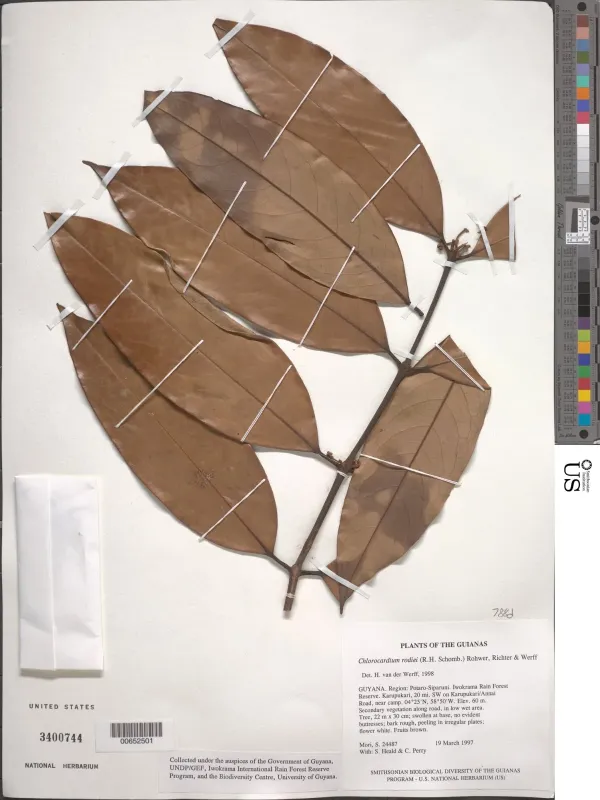
Description
Growing requirements
Chlorocardium rodiei, widely known as Greenheart, is a prominent member of the Lauraceae family. This large evergreen tree can reach heights of up to 30 meters in its native habitat.
The species is indigenous to the tropical rainforests of Guyana and surrounding South American regions, thriving in deep, well-drained soils with consistent moisture levels.
Greenheart requires a tropical climate characterized by high humidity and minimal temperature fluctuations, making it unsuitable for cultivation outside specific equatorial zones.
Botanically, the tree is noted for its extremely dense, heavy timber, which possesses natural anti-fungal properties and chemical compounds that prevent decay.
Due to its slow growth rate and environmental requirements, the tree is primarily managed through sustainable forestry rather than intensive agricultural cropping.
Harvesting
The economic utility of Greenheart stems from its superior mechanical properties. The wood is exceptionally hard, strong, and highly resistant to decay and insect attack.
Its primary industrial application is in maritime infrastructure. It is the preferred material for piles, dock fenders, and sea walls, as it withstands salt water degradation better than most materials.
The wood's resistance to marine borers is unparalleled, ensuring long-term structural integrity in underwater environments where typical timber would fail rapidly.
Beyond engineering, the timber is prized in high-end carpentry for its fine grain and durability, often used in specialized items like fishing rods and heavy-duty furniture.
Sustainable harvesting practices are essential for this species to ensure the survival of natural populations, as commercial demand remains high for its unique material qualities.