
Chinese Sycopsis
Sycopsis sinensis
Description
Growing requirements
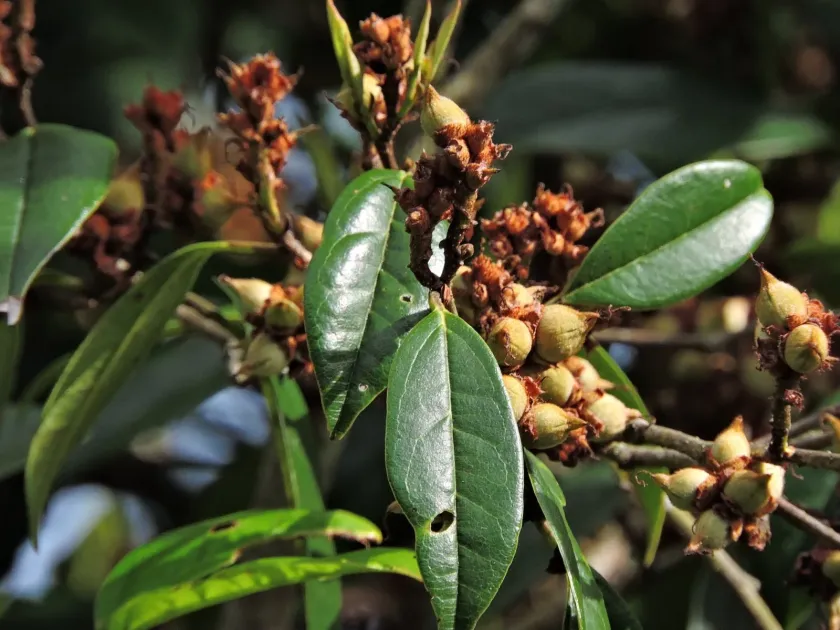
The Chinese Sycopsis (Sycopsis sinensis) is an evergreen shrub or small tree belonging to the Hamamelidaceae family. Native to the mountainous forests of Central and Western China, this species is highly valued for its dense, glossy, and dark green foliage.
Botanically, the plant is characterized by its slow growth rate and compact habit, making it an excellent candidate for formal and informal garden settings. The plant produces unique flowers in late winter or early spring, which consist of striking yellow stamens that provide a vibrant color contrast against the foliage.
For successful cultivation, Sycopsis sinensis requires rich, moist, and well-drained soil. It thrives in locations with partial shade to full sun, provided the soil remains consistently damp, as it does not tolerate prolonged periods of drought or waterlogging in the root zone.
The plant demonstrates moderate frost tolerance and is best suited for climates with mild winters. In areas with harsh climates, it is essential to provide wind protection and a layer of organic mulch around the base to insulate the roots from sudden temperature drops.
In landscaping, this culture is primarily used for its aesthetic qualities. Its evergreen nature and refined appearance make it a versatile addition to shrub borders, privacy screens, or as a focal point specimen that maintains visual interest throughout all four seasons of the year.
Main diseases and pests
Chinese Sycopsis is generally resistant to serious pests and diseases. However, in poorly drained or waterlogged soils, the plant may become susceptible to root rot, caused by various soil-borne pathogens. Maintaining proper soil structure and drainage is the most effective preventative measure.
Pest issues are rare but can include scale insects, which may attach to stems or the undersides of leaves. Regular monitoring and pruning of overcrowded branches help ensure adequate airflow, which prevents the build-up of moisture and discourages potential pest infestations.