
Valonia oak
Quercus ithaburensis Decne. subsp. macrolepis (Kotschy) Hedge & Yalt.
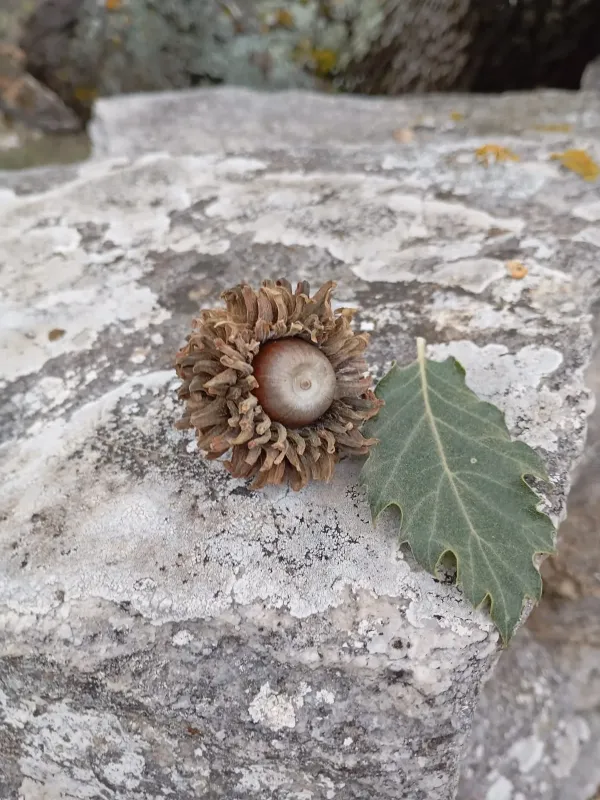
Description
Growing requirements
Valonia oak (Quercus ithaburensis subsp. macrolepis) is a member of the Fagaceae family, native to the Mediterranean basin and Western Asia. It is a slow-growing, deciduous or semi-evergreen tree.
The species is exceptionally well-adapted to Mediterranean climates, thriving in areas with hot, dry summers and mild, wet winters. It demonstrates high drought tolerance once established.
It prefers well-drained, deep soils but is frequently found growing on limestone slopes and rocky terrain. The root system is deep and expansive, allowing it to survive in nutrient-poor environments.
Proper cultivation requires ample spacing, as mature trees develop large, spreading canopies. Planting should be done in sunny locations with minimal competition from faster-growing species.
Management practices focus on site selection and initial protection of seedlings from livestock and extreme weather conditions, as the species is sensitive to frost in its juvenile stage.
Main diseases and pests
Powdery mildew is a common fungal disease affecting foliage, particularly in nurseries or young plantations where air circulation is restricted.
Various defoliating insects, including oak moth caterpillars, can pose a threat to the canopy, potentially reducing the tree's photosynthetic capacity during the growing season.
Root rot fungi can become an issue if the planting site is poorly drained. Avoiding waterlogging is the most effective preventative measure for long-term health.
Climate change and prolonged drought periods may weaken trees, making them susceptible to secondary infestations by bark beetles and wood-boring insects.
- Periodic thinning of canopy for air circulation
- Integrated pest management for defoliators
- Regular inspection for signs of fungal decay
Harvesting
The primary economic product of the Valonia oak is the acorn cup (cupule), which is covered in thick, woody scales. These cups are highly prized in the tanning industry.
Harvesting is conducted during the autumn months when mature acorns fall naturally. The cups must be collected, detached from the acorns, and dried quickly to maintain high tannin content.
Tannins extracted from the cups are used to produce high-quality leather. This makes the species an important component of agroforestry systems in its native regions.
Wood from the tree is dense and durable, making it suitable for construction, flooring, and high-quality charcoal production. It is highly resistant to rot and insect attack.
Sustainable harvesting is crucial to maintain tree vigor. Over-harvesting of acorns can hinder natural regeneration, which is vital for the preservation of oak woodlands.