
Holm oak
Quercus ilex L. subsp. ilex
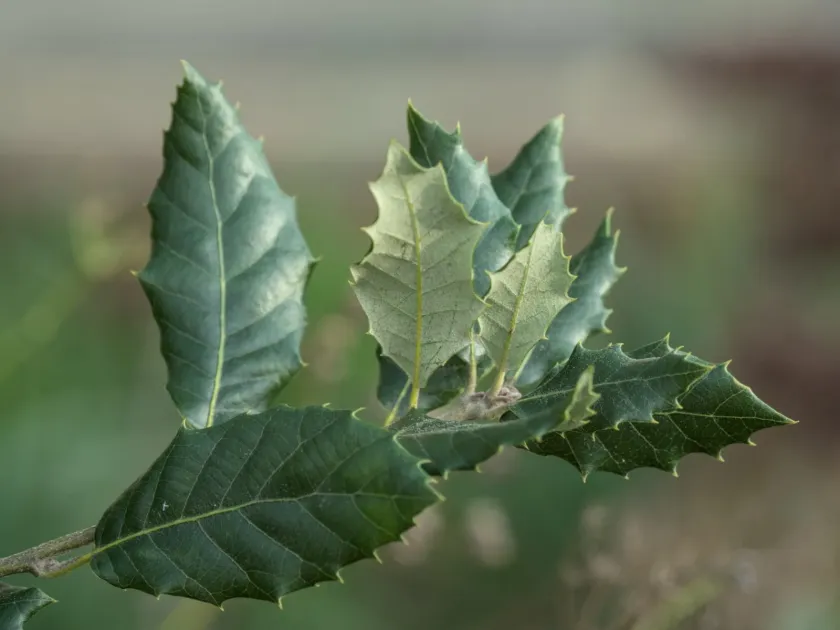
Description
Growing requirements
The Holm oak (Quercus ilex L. subsp. ilex) is a broad-leaved evergreen tree belonging to the Fagaceae family. Naturally occurring in Mediterranean climates, it has evolved to thrive in environments characterized by mild winters and dry, warm summers.
This species is highly adaptable regarding soil types, though it performs best in well-drained calcareous soils. Its remarkable drought tolerance makes it a highly valuable species for reforestation and agroforestry projects in arid and semi-arid regions.
As a light-demanding species, the Holm oak requires significant solar exposure to develop a dense and healthy crown. Proper spacing during plantation establishment is essential to prevent competition for light among individual trees.
While mature trees are relatively hardy, they can withstand temperatures as low as -15 to -18 degrees Celsius. Young saplings, however, require protection from frost and cold winds until they are well-established in the field.
Agrotechnical management must focus on soil aeration. Preventing waterlogging is crucial, as stagnant water in the root zone promotes fungal diseases, which can rapidly diminish the health and productivity of the entire plantation.
Yield
The Holm oak holds significant economic value, primarily for its exceptionally hard and durable wood. Known for its high density, the timber is a premium material for furniture making, construction, and high-quality charcoal production.
Acorn production is another pillar of its agricultural use. In the Iberian Peninsula, these acorns serve as a vital food source for livestock, particularly for free-range pigs, contributing to the quality of premium meat products.
Crop yields vary depending on the age of the tree and local climatic conditions. A mature, healthy tree can produce a substantial volume of acorns annually, which can be harvested for feed production or natural regeneration efforts.
Beyond timber and feed, the Holm oak serves as a multifunctional plant in agricultural landscapes. Its evergreen canopy provides windbreaks, protecting crops and soil from erosion while offering shade to livestock during hot summer months.
Furthermore, the tree acts as an excellent honey plant, contributing to the biodiversity of the agricultural ecosystem. Its leaf litter effectively enriches the soil, promoting long-term sustainability and fertility in managed landscapes.
Main diseases and pests
Phytophthora cinnamomi is widely recognized as the most severe threat to Holm oak populations. This root pathogen causes root rot, leading to the gradual decline and eventual death of the tree, often referred to as "oak decline."
Insect pests, such as the processionary moth, represent a major biological risk. Larvae can cause complete defoliation of the canopy, weakening the tree's immune system and making it susceptible to secondary infections.
Wood-boring beetles and bark beetles pose significant dangers, particularly in weakened stands. These pests compromise the structural integrity of the trunks and branches, necessitating rigorous sanitary measures and timely removal of infested wood.
Powdery mildew can affect young foliage, particularly in nurseries or high-humidity conditions. Proper plantation design, which ensures adequate air circulation and light penetration, is key to preventing the spread of this fungal disease.
Effective management requires an integrated approach that includes regular health monitoring, sanitary pruning, and the utilization of biological controls to maintain the productivity and longevity of the oak stands.