
Portuguese oak
Quercus faginea Lam. subsp. faginea
Description
Sowing dates
Sowing seeds of the Portuguese oak is best performed in the autumn, immediately after the acorns are harvested, as they lose viability quickly if allowed to dry out. If immediate planting is not feasible, acorns should be stored in moist sand at low positive temperatures until spring.
To improve germination rates, a cold stratification period of 30 to 60 days is recommended. Acorns should be planted at a depth of 5 to 8 centimeters, depending on soil texture, ensuring they are well-protected from dehydration.
In commercial nurseries, sowing into specialized containers or cassettes is preferred to develop a strong taproot system early on. This preparation reduces transplant shock and increases survival rates when the saplings are moved to their permanent locations.
Spacing for field sowing is typically maintained at 60–80 centimeters between rows to allow sufficient light and root expansion. Consistent irrigation during the first two years is essential to ensure the plant establishes a deep root system in its new environment.
Early spring is considered the ideal window for planting, provided the soil has warmed sufficiently, allowing the young roots to settle before the onset of the hot, dry summer months.
Growing requirements
The Portuguese oak, a member of the Fagaceae family, is a drought-tolerant species native to the Mediterranean region. It thrives in sunny environments and demonstrates high plasticity across various soil types, particularly limestone and stony substrates.
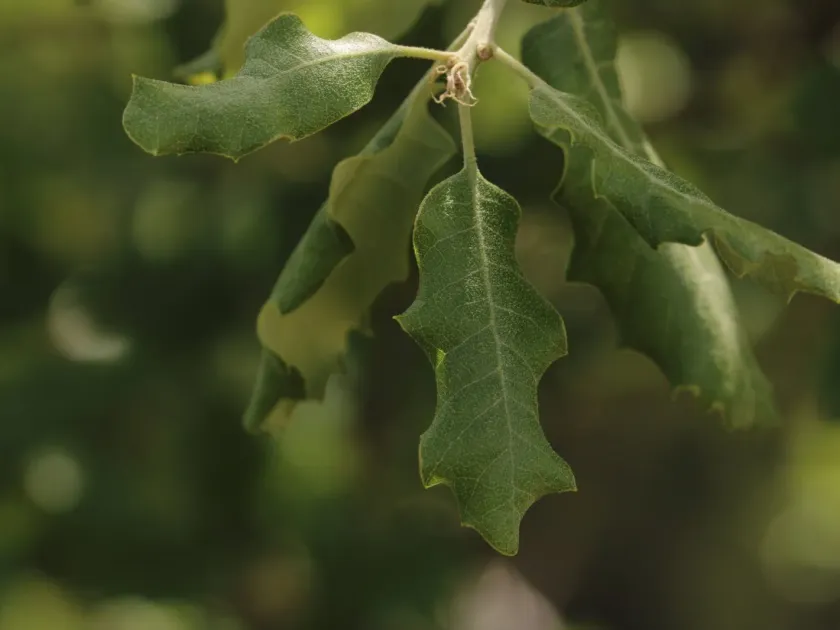
This species is well-adapted to Mediterranean climates characterized by mild, wet winters and hot, dry summers. Its coriaceous, leathery leaves are a key evolutionary trait that minimizes water loss, allowing the tree to persist in regions with limited rainfall.
While the tree is tolerant of poor, nutrient-deficient soils, it performs best in deep, well-drained soils with a neutral to slightly alkaline pH. It can grow at various altitudes, ranging from sea level up to nearly 1800 meters in mountain ranges.
Maintenance for established trees is minimal; however, young saplings benefit from weed control and mulching around the root zone to conserve soil moisture. The tree is generally considered long-lived and resilient once it has passed its initial growth stage.
In forestry, it is often utilized for its ability to stabilize thin soils and prevent erosion in hilly landscapes, acting as a cornerstone species in Mediterranean silvopastoral systems.
Yield
The economic value of the Portuguese oak is primarily derived from its high-quality, dense wood. This timber is highly prized in construction, flooring, and the manufacturing of durable furniture due to its strength and resistance to decay.
It is also a significant source for firewood and charcoal, which are valued for their high calorific output. Furthermore, the wood is frequently used for barrel staves in the aging of spirits and wines, contributing to the distinct character of the products.
In agricultural settings, particularly in dehesa systems, the acorns provide an essential feed source for livestock, especially pigs. This natural silvopasture method produces high-quality meat products while minimizing supplemental feeding costs.
The productivity of the tree in terms of biomass and mast depends on stand density and site quality. Proper management practices, including thinning and protection, can significantly enhance the long-term timber yield.
Beyond timber and feed, the tree provides significant ecosystem services, including carbon sequestration and the promotion of biodiversity within Mediterranean woodland habitats.
Main diseases and pests
Powdery mildew is one of the most common fungal diseases affecting young Portuguese oak trees, especially in humid environments. It primarily targets the foliage, which can cause leaf drop and stunt the development of saplings.
Various insect pests, including oak leaf rollers and weevils, can infest the canopy and damage fruits. Integrated pest management strategies are often implemented to monitor and control outbreaks before they cause widespread defoliation.
Root rot, caused by species of the water mold Phytophthora, poses a severe threat to the health of mature trees. Preventive measures focus on maintaining proper drainage and avoiding water stagnation in the root zones.
Predation of acorns by rodents and birds significantly limits natural regeneration in the wild. Protecting seed-bearing areas with physical barriers or targeted repellents is a standard practice in reforestation efforts.
- Powdery mildew
- Oak leaf rollers
- Oak weevils
- Phytophthora root rot
- Rodent predation