
Portuguese oak
Quercus faginea Lam.
Description
Growing requirements
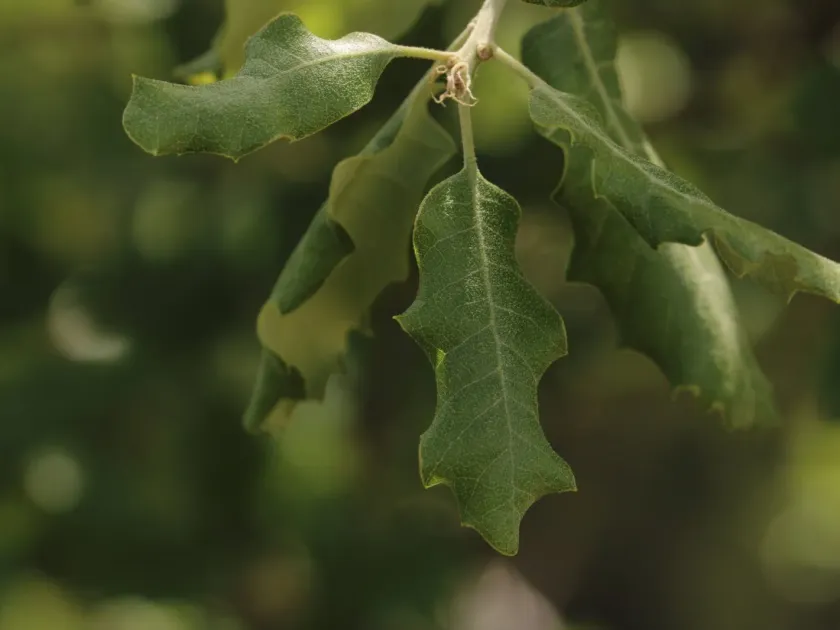
The Portuguese oak (Quercus faginea) belongs to the Fagaceae family. It is a deciduous tree capable of reaching heights of up to 20 meters, characterized by a dense canopy and lobed, toothed leaves that are typical for the Quercus subgenus.
The native distribution area of this species includes the Iberian Peninsula and parts of North Africa. The tree is perfectly adapted to Mediterranean climates, showing remarkable resilience to hot, dry summers and cool, rainy winters.
This species is relatively undemanding regarding soil quality, showing a preference for calcareous, limestone-based soils. It thrives in rocky terrain where many other hardwood species struggle to establish due to shallow or nutrient-poor substrates.
In silviculture and agricultural land management, the tree is highly valued for erosion control. Its extensive root system stabilizes slopes effectively, making it a key component in restoring degraded Mediterranean ecosystems.
The economic value of Quercus faginea lies in its high-quality timber, used in furniture manufacturing and construction. Furthermore, it supports agroforestry systems by providing acorns for livestock forage and serving as a raw material for charcoal production.
Main diseases and pests
Powdery mildew is a common fungal disease that affects Portuguese oak, particularly in dense stands with poor airflow and high humidity, leading to leaf damage.
Boring insects, particularly wood-boring beetle larvae, pose a significant risk to the tree's internal health by creating tunnels in the sapwood and heartwood, which weakens the trunk structure.
Root rot caused by Phytophthora species is a serious threat to the longevity of the tree, especially in waterlogged areas where poor drainage facilitates the rapid spread of the pathogen.
Defoliating insects, such as leaf rollers and various caterpillars, can cause significant stress to the tree during outbreak years, reducing its annual growth rate and overall resilience.
Environmental stress factors, such as improper grazing management or extreme climate shifts, can impair the tree's natural regeneration, necessitating protection of seedlings in the field.