
Kermes oak
Quercus coccifera L.
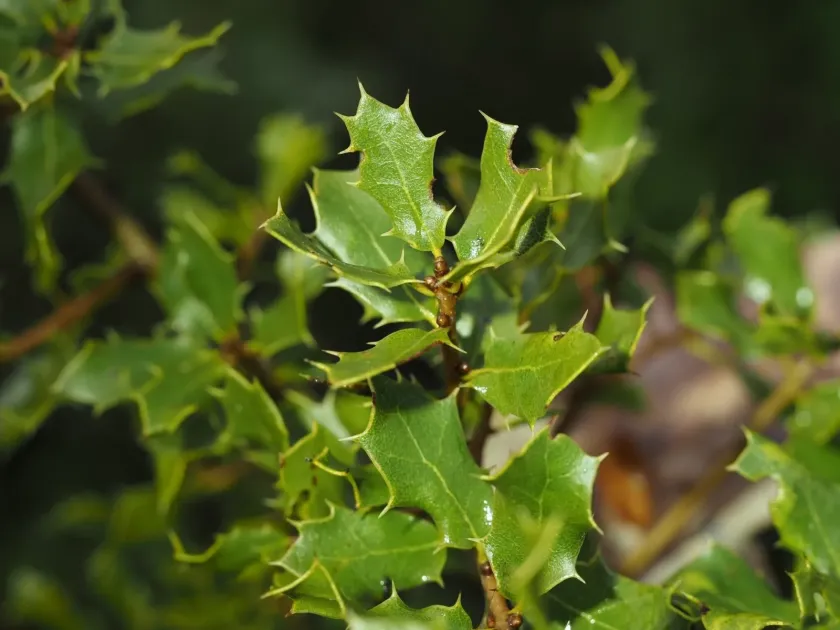
Description
Growing requirements
Kermes oak (Quercus coccifera L.) is an evergreen shrub or small tree belonging to the Fagaceae family. It is a quintessential species of the Mediterranean maquis shrubland, well-adapted to high temperatures and seasonal drought.
The native range of this species extends across the Mediterranean basin, from Portugal to the Middle East. It typically thrives in rocky or stony soils where other species struggle to establish themselves due to limited nutrient availability.
This plant is exceptionally drought-tolerant once established. It does not require frequent irrigation, as its deep root system is capable of accessing groundwater in difficult terrain, making it an excellent choice for erosion control.
When cultivating Kermes oak, site selection is crucial. It prefers full sun exposure and well-drained alkaline soils. While it tolerates poor soil conditions, providing basic organic amendments during planting can accelerate its initial growth rate.
In landscape architecture and agriculture, it is utilized as an ornamental hedge or as a windbreak. Its dense foliage provides essential habitat for local wildlife, supporting biodiversity in semi-arid environments.
Main diseases and pests
The most significant threat to the health of Kermes oak is root rot caused by Phytophthora species. This disease is exacerbated by poor drainage and waterlogging, which should be avoided in all cultivation scenarios.
Pest pressure often comes from specialized insects, including several types of scale insects like the Kermes vermilio. While these were historically harvested for dye, heavy infestations can weaken the shrub's branches and impede growth.
Defoliating insects, such as gypsy moth larvae or various leaf-miners, can cause significant damage to the canopy. Regular inspections during the spring growing season are recommended to detect and manage these pests early.
Wildfires pose a major risk to population stands. Although the species is adapted to regenerate from its roots after fire, frequent burning cycles can exhaust the plant's resources and reduce the density of the scrubland.
Effective management includes sanitation pruning of dead or diseased tissue to prevent the spread of fungal pathogens and maintaining adequate airflow between individual shrubs to mitigate the impact of parasitic outbreaks.