
Garry oak
Quercus garryana Douglas ex Hook.
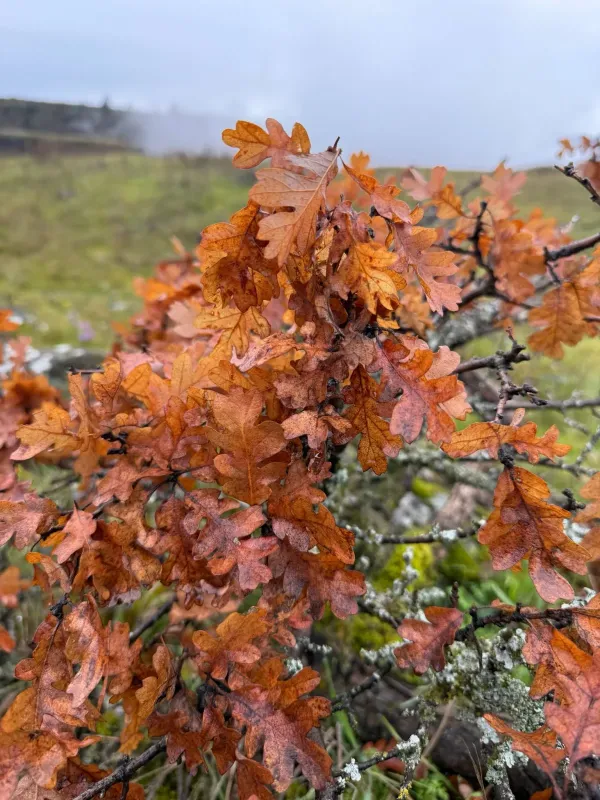
Description
Growing requirements
The Garry oak (Quercus garryana) is a deciduous tree belonging to the Fagaceae family, native to the western coastal regions of North America.
This species is well-adapted to environments with cool, wet winters and dry, warm summers, which are critical for its physiological development.
Garry oaks are obligate heliophytes, meaning they require full sun exposure and do not thrive in shaded environments or competition with canopy-dominant conifers.
Regarding soil requirements, the tree demonstrates high adaptability, growing successfully in deep loams as well as thin, rocky, or gravelly soils.
Deep root development is a defining biological feature that allows the tree to survive intense seasonal drought periods characteristic of its native habitat.
Yield
The primary economic output of this species is high-quality hardwood timber, prized for its durability, density, and aesthetic grain pattern.
In addition to timber production, these trees serve as vital components in agroforestry systems due to their ability to stabilize soil and provide shade.
While acorn production is not typically the main commercial focus, it is essential for wildlife habitat restoration and supporting local forest biodiversity.
Proper management of stands, including thinning and weed control, is essential to maximize the growth rate and timber quality over a multi-decade rotation.
Strategic planting of Garry oaks contributes significantly to ecosystem services, such as carbon sequestration and providing habitats for various avian species.
Main diseases and pests
Fungal pathogens represent the most significant threat to the health of these trees, often leading to heart rot or root decay in stressed environments.
Several insect species can cause significant defoliation, particularly in younger trees, which impacts the photosynthetic capacity and overall tree vigor.
Lack of periodic natural disturbances, such as fires, leads to encroachment by shade-tolerant species, which eventually shades out and kills the Garry oak.
Climate change poses a long-term risk, potentially altering the precipitation patterns necessary for the survival of younger, less established specimens.
- Implement regular health monitoring of the canopy and trunk.
- Ensure adequate spacing to prevent competition from invasive species.
- Use pruning to remove diseased branches and improve structural integrity.