
Holm oak
Quercus ilex L.
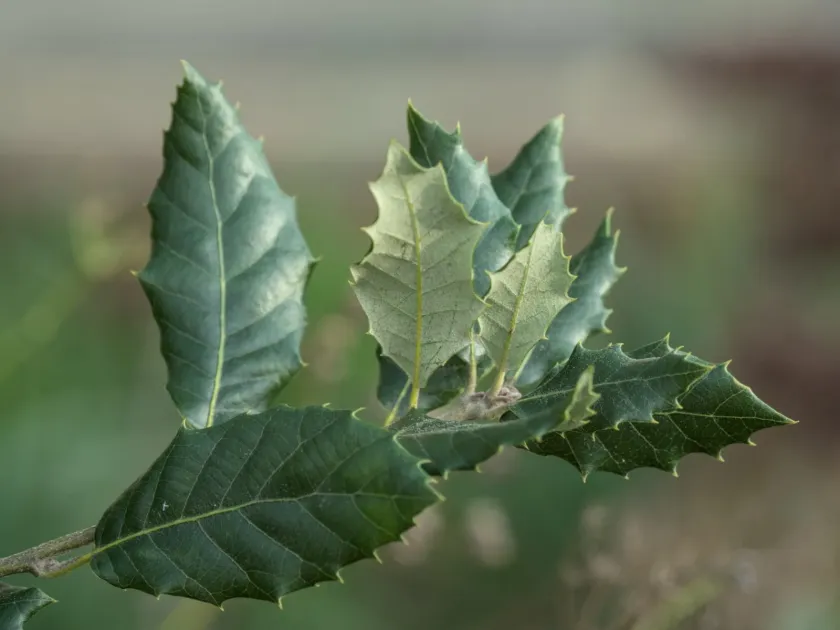
Description
Sowing dates
Sowing of Holm oak seeds is carried out in the autumn immediately after the acorns are harvested, as they quickly lose viability when dehydrated. If spring sowing is planned, acorns must be stored in moist sand at low positive temperatures.
The optimal planting depth for the seeds is 5–8 centimeters. To improve germination, seeds can be pre-soaked in growth-stimulating solutions for several hours before planting.
When grown in nurseries, the distance between rows is about 40–60 centimeters to ensure adequate sunlight exposure and space for root system development.
Germination occurs in the spring when soil temperatures reach +10 to +15 degrees Celsius. It is crucial to maintain moderate soil moisture during the first months of seedling life.
Young saplings should be transplanted to their permanent location 2–3 years after sowing. Early planting allows the tree to adapt better to local conditions and establish a robust taproot.
Growing requirements
The Holm oak is an evergreen tree belonging to the Fagaceae family, native to the Mediterranean region. It prefers a mild climate and is sensitive to severe frosts, although mature trees can tolerate brief temperature drops down to -15 degrees Celsius.
The tree is not overly demanding regarding soil type; it can grow in rocky, calcareous, and dry soils. Optimal growth is observed in deep, well-drained soils with a neutral or slightly alkaline pH.
It is a light-loving plant, so it is important to avoid heavy shade when establishing plantations. It is highly drought-tolerant due to its deep root system, which reaches deep soil horizons.
For successful growth in agricultural settings, moderate air humidity is required. In its youth, the tree is sensitive to waterlogging, therefore drainage systems are mandatory on sites with heavy clay soils.
A vital factor for development is the presence of specific mycorrhizae, which help the oak absorb nutrients. During planting, it is recommended to add a small amount of soil from under mature trees to establish the necessary microflora.
Yield
The primary yield of the crop consists of acorns, used as animal feed, notably for raising the Iberian pig. In agroforestry systems (dehesa), acorn yield is a key indicator of ecosystem productivity.
The timber of the Holm oak also holds economic value, characterized by its high density and hardness. It is traditionally used to produce high-quality charcoal and various woodworking products.
The Holm oak is highly sought after in truffle farming. Its root system serves as an ideal substrate for cultivating black truffles, making these plantations an economically viable agricultural enterprise.
Harvesting begins after the tree reaches the age of 15–20 years, though peak productivity occurs significantly later. Total yield depends on the stand age and specific seasonal climate conditions.
Due to its high leaf biomass, the Holm oak also plays a significant role in land reclamation, helping to enrich the soil with organic matter and preventing erosion on slopes.
Main diseases and pests
The most dangerous disease for this crop is root rot caused by Phytophthora species. This infection leads to crown dieback and tree death, particularly in waterlogged areas.
Among pests, insects that damage acorns, such as the acorn weevil, pose a serious threat. They can destroy up to 80% of the seed bank, which is critical for natural regeneration and reforestation efforts.
Defoliating insects, such as the gypsy moth, can cause massive branch denudation. Although the oak is capable of regenerating foliage, frequent pest outbreaks significantly weaken the tree's immunity.
Powdery mildew may affect young shoots and leaves in high humidity conditions. To prevent this, regular pruning of dense branches and ensuring good air circulation is recommended.
To protect plantations from pests, biological control methods are used, including the introduction of natural predators of insects, alongside regular sanitary inspections of the groves.