
Downy oak
Quercus pubescens Willd.
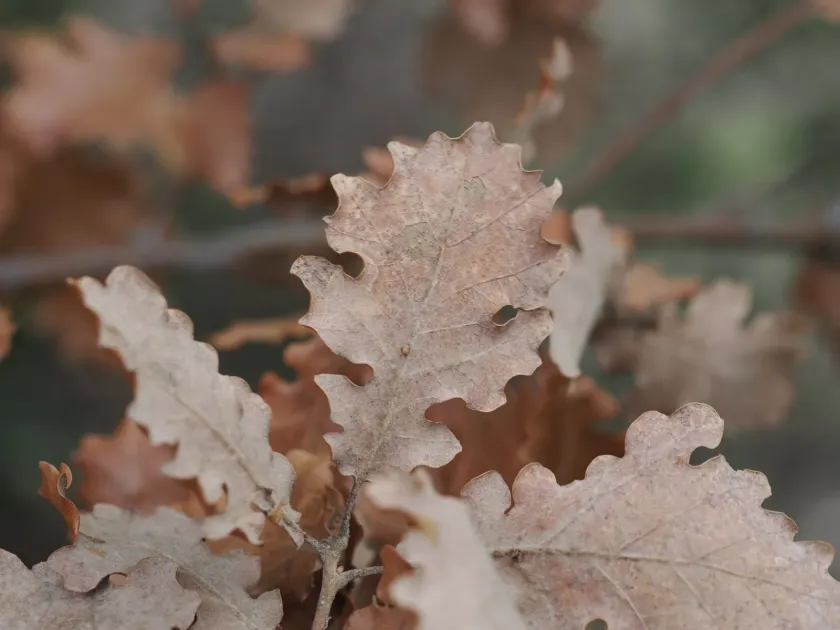
Description
Sowing dates
Direct sowing of Downy oak acorns should ideally occur in the autumn, immediately following seed maturation, to avoid the rapid loss of viability common in dried-out acorns.
In nursery settings, spring sowing requires pre-stratification of acorns in sand at low temperatures to break dormancy and ensure uniform germination across the bed.
Acorns should be planted at a depth of 5 to 8 centimeters, which protects them from desiccation and significantly reduces the risk of predation by rodents and birds.
Proper irrigation during the first growing season is crucial for establishing a robust root system, even though the species is drought-tolerant once fully mature.
Weed control in the initial years is vital to prevent young seedlings from being shaded out, as this species is extremely sensitive to light competition.
Growing requirements
The Downy oak, a member of the Fagaceae family, is a deciduous tree known for its exceptional adaptation to harsh, arid, and calcareous environments.
It thrives in full sunlight and is considered a heliophilous species, making it unsuitable for planting in dense stands or under the canopy of faster-growing trees.
This species is highly tolerant of poor, stony, and shallow soils, frequently dominating in areas where the bedrock is exposed and water retention is minimal.
Downy oak prefers a climate with hot, dry summers and mild winters, exhibiting physiological mechanisms that prevent excessive water loss during drought.
The soil pH preferred by this tree is generally neutral to slightly alkaline, which correlates with its natural occurrence on limestone and dolomite formations.
Yield
The economic value of the Downy oak lies primarily in its dense and durable timber, which is highly sought after for artisanal woodworking and specialty construction.
In silviculture, the tree serves a critical role in reforestation projects, particularly in mountainous and Mediterranean climates where soil stability is a priority.
Although it grows slower than pedunculate oak, its wood density makes it a premium product for long-term timber investments and high-quality fuel production.
The acorns produced by this tree are an essential food source for wildlife and livestock, contributing to the biodiversity and productivity of the woodland ecosystem.
As a conservation species, it provides significant environmental benefits by preventing erosion on steep, sensitive slopes that cannot support more demanding timber crops.
Main diseases and pests
Insect pests, particularly various species of leaf-rollers and gall wasps, frequently cause significant aesthetic and physiological stress to younger trees.
Fungal infections, most notably powdery mildew, are common during cool, damp springs and can weaken the tree's vigor if left unmanaged.
Large mammals such as deer and wild boar can cause severe damage by browsing young terminal shoots and scraping bark, which serves as an entry point for disease.
Root pathogens and environmental stresses related to extreme temperature fluctuations can lead to canopy dieback in mature stands during prolonged dry cycles.
- European oak leaf-roller (Tortrix viridana)
- Oak powdery mildew (Microsphaera alphitoides)
- Gall wasps (Cynipidae family)
- Root-rotting fungi