
Cork oak
Quercus suber L.
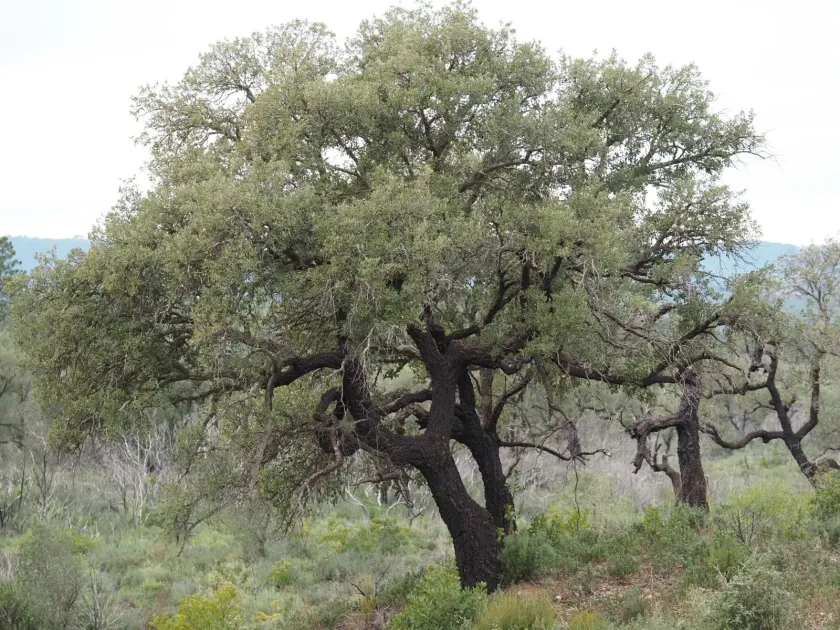
Description
Sowing dates
The cork oak (Quercus suber L.) is a member of the Fagaceae family, widely cultivated in Mediterranean regions for its unique and sustainable bark properties.
Propagation is primarily achieved through acorns, which must be sown immediately after harvesting as they lose viability rapidly if allowed to dry out.
In nurseries, seedlings require controlled moisture levels and well-drained soil to develop a robust root system before being transplanted into the field.
Standard planting density is managed to ensure each tree receives adequate sunlight and space, which is essential for uniform bark development over time.
Young trees are sensitive to weed competition and require consistent maintenance during their first two years to establish effectively in their new environment.
Growing requirements
Cork oak requires a Mediterranean climate with mild, wet winters and warm, dry summers to thrive and produce high-quality cork layers.
The tree prefers acidic, well-drained soils, typically thriving in sandy or granitic terrains while showing poor tolerance for waterlogged areas.
It is a highly resilient species adapted to drought, utilizing its deep root system to access water deep within the soil profile during dry seasons.
Optimal growth occurs at low to moderate altitudes, where humidity levels from coastal proximity provide necessary hydration for the tree's physiological processes.
Protection from extreme frosts is critical for younger specimens, as the species is sensitive to temperatures that drop significantly below freezing for prolonged periods.
Yield
The primary economic output is the bark, which can only be harvested once the tree reaches maturity, typically around 25 to 30 years of age.
The first harvest, known as "virgin cork," is generally of lower commercial quality and is used for insulation or decorative purposes rather than wine stoppers.
Following the first stripping, the tree regenerates its bark, allowing for subsequent harvests every 9 to 12 years throughout the tree's long lifespan.
Yield efficiency is determined by the thickness, elasticity, and porosity of the bark, which improve with the age and health of the individual tree.
The harvested cork is essential for various industries, including the production of high-end wine closures, flooring, acoustic insulation, and sustainable fashion components.
Main diseases and pests
Root rot and various fungal infections represent significant risks, often exacerbated by poor drainage or damage to the tree's root system by machinery.
Wood-boring insects and other pests can damage the inner tissues of the trunk, significantly lowering the market value and quality of the future cork harvest.
Wildfires pose a constant threat to cork oak plantations, potentially destroying decades of tree development in a single uncontrolled fire event.
Environmental stress, such as extreme multi-year droughts, can weaken the trees and make them more susceptible to widespread pathogens and pest outbreaks.
Proactive management involving forest hygiene, regular inspections, and controlled removal of diseased individuals is essential to maintain the plantation's health.
Harvesting
Harvesting is a highly skilled manual process where specialists use a specialized axe to carefully slice through the outer bark layer.
Precision is mandatory; the harvester must stop exactly at the phellogen layer to prevent permanent damage to the tree and ensure future regrowth.
The work is performed during the peak of the growing season when the bark separates more easily from the trunk without causing structural damage.
After collection, the bark is stacked and left to dry in the open air for several months, a process necessary to stabilize its internal chemical structure.
Finally, the raw cork is boiled in vats to increase its flexibility and remove impurities, making it ready for industrial processing into final goods.