
Canyon live oak
Quercus chrysolepis Liebm.
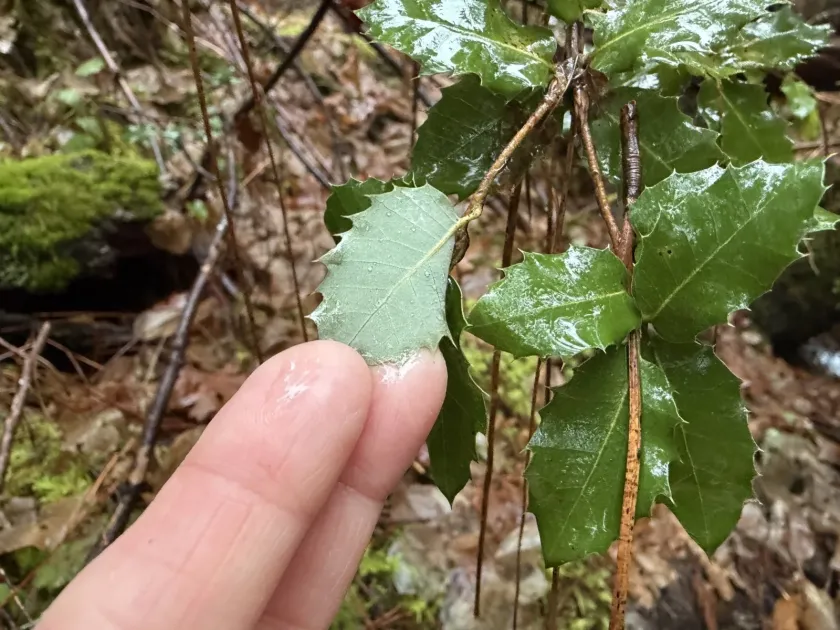
Description
Sowing dates
Propagation of the Canyon live oak is primarily achieved through acorns, which require cold stratification for 1 to 3 months to break dormancy successfully.
Seeds should be sown in deep containers or directly in prepared soil at a depth of approximately 3 to 5 centimeters during the early spring months.
It is critical to avoid root disturbance during transplantation, as the species develops a deep taproot early on that is vital for survival in its native rocky habitats.
Seedlings need protection from intense heat and excessive drought during their first growing season to ensure healthy establishment in the field.
Soil management involves ensuring a loose, well-draining substrate that mimics the tree's natural mountain slope environment, preventing root rot from water stagnation.
Growing requirements
Quercus chrysolepis, commonly known as the Canyon live oak, belongs to the Fagaceae family and is native to the diverse landscapes of Western North America.
This species is highly adaptable, thriving in areas with Mediterranean-like climates characterized by warm, dry summers and cool, moist winter seasons.
It prefers well-drained, neutral to slightly acidic soils and often occupies rocky slopes, canyons, and stream banks where it demonstrates significant drought tolerance.
The tree requires full to partial sun exposure for optimal growth, although young individuals can tolerate shade from canopy cover during their initial developmental stages.
Proper airflow is essential for this species to remain healthy, especially in regions with high humidity levels which may encourage fungal development.
Yield
The Canyon live oak is economically valued primarily for its extremely hard and dense wood, which has been historically used for tool handles and heavy construction.
The acorns produced by this tree are a significant source of nutrition for wildlife and were traditionally harvested by indigenous populations as a staple food source.
As a slow-growing but long-lived species, it contributes to forest biodiversity and soil stabilization on steep hillsides, providing long-term ecological value.
Managed forests can utilize this oak for sustainable hardwood production, provided that harvest cycles are planned to match its slow maturation rate.
The tree also serves as an important ornamental and shade species in large landscapes due to its evergreen foliage and robust, spreading canopy.
Main diseases and pests
The most significant threat to Quercus chrysolepis populations is the pathogen Phytophthora ramorum, the causal agent of Sudden Oak Death, which causes bark cankers.
Acorn weevils pose a frequent challenge to seed production, as they bore into the nuts and destroy the embryos, drastically reducing natural regeneration potential.
Powdery mildew and various leaf-spotting fungi may affect the foliage, particularly in nurseries or densely planted stands with poor air circulation.
Scale insects and wood-boring beetles can target weakened trees, necessitating proper forest hygiene and removal of dead or dying wood to prevent infestations.
Sustainable management requires regular monitoring of canopy health and implementation of integrated pest management strategies to protect the long-term vitality of the stands.