
Sweet chestnut
Castanea sativa Mill.
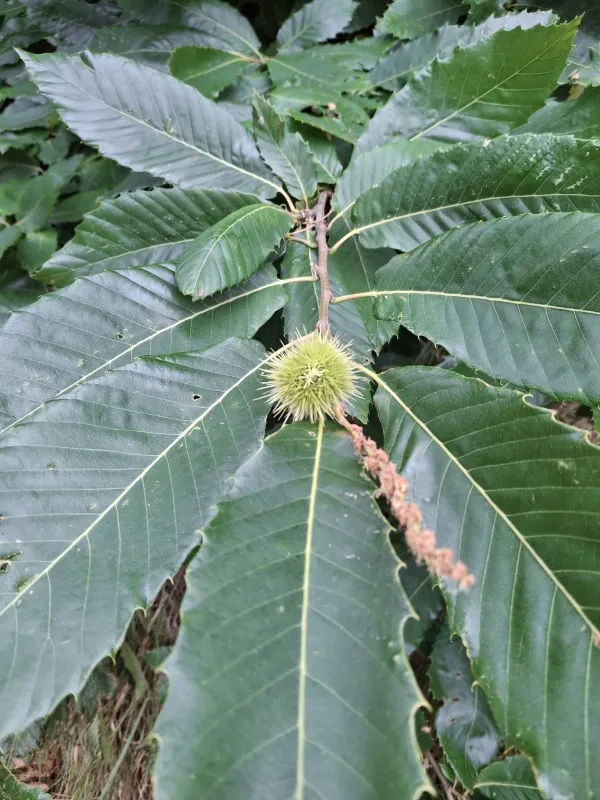
Description
Sowing dates
The Sweet chestnut (Castanea sativa Mill.), a prominent member of the Fagaceae family, is typically propagated through seeds or grafting superior varieties onto rootstocks. Seeds lose viability quickly, so sowing should ideally occur in the autumn immediately after harvest to ensure successful germination.
For spring sowing, seeds require stratification at temperatures between 0 and 5 degrees Celsius for 3–4 months in a moist medium. The optimal planting depth is approximately 5–8 centimeters to ensure the seeds are protected from dehydration while having enough energy to emerge.
Commercial orchards rely heavily on two-year-old nursery-grown saplings, which provide a significant head start in growth compared to seedlings. Planting is performed either in early spring before bud break or in late autumn, allowing the roots to settle before the following season.
Spacing requirements vary based on the cultivar and rootstock, typically ranging from 8x8 to 10x10 meters. Providing adequate space is crucial to allow for the development of a broad canopy and extensive root system, which are necessary for high long-term yields.
Choosing the right site involves selecting slopes with good exposure to sunlight, avoiding frost pockets. Proper positioning on the landscape minimizes the risk of damage to young shoots from spring frosts and optimizes the photosynthetic period for nut development.
Growing requirements
Sweet chestnut trees are sensitive to temperature and climate conditions, thriving in temperate climates with long growing seasons. While they can tolerate moderate winter cold, extreme drops below -20 degrees Celsius can cause significant damage to young or vulnerable wood.
The tree prefers deep, loose, and well-draining soils with a slightly acidic pH. It is strictly calcifuge, meaning it will suffer from chlorosis and fail to thrive in alkaline or limestone-rich soils, making pre-planting soil analysis an essential step for orchard establishment.
Adequate moisture is required, especially during the nut-filling stage, but the tree cannot withstand waterlogged conditions. Poor drainage often leads to root rot and other systemic diseases, highlighting the need for sites with excellent internal soil permeability.
Sunlight is a key factor in chestnut productivity; the trees are highly photophilous and require full sun for optimal nut production. Shaded environments lead to sparse canopies and reduced vigor, which directly impacts the quality and volume of the annual harvest.
Mulching the root zone of young trees is highly recommended to retain soil moisture and stabilize soil temperature. This practice also helps improve soil structure over time by encouraging beneficial soil microorganisms, supporting the overall health and growth of the trees.
Yield
Yield capacity depends on the variety and orchard management practices. Grafted trees typically begin bearing nuts within 4–6 years of planting, whereas seed-grown trees may take over a decade to reach their first productive, reliable harvest phase.
A mature, well-maintained tree in full production can yield between 50 and 150 kilograms of nuts per season. High-yielding orchards utilize strategic pruning to manage canopy architecture, ensuring that light penetration remains high throughout the fruit-bearing branches.
Cross-pollination is essential, as most chestnut cultivars are self-incompatible. Planting at least two or more compatible varieties ensures efficient pollination, which results in more nuts per burr and greater individual nut mass for commercial sale.
Pruning is performed in the dormant season to remove dead or diseased wood and to thin out dense canopy sections. This promotes better airflow, reduces the incidence of fungal diseases, and makes the manual or mechanical harvest process much more efficient.
Sweet chestnuts have high culinary value, being rich in starch, vitamins, and minerals. They are widely used in roasted form, as flour for gluten-free baking, and in various confectionery products, making them a high-demand agricultural commodity.
Main diseases and pests
Chestnut blight, caused by the fungus Cryphonectria parasitica, is the most severe disease affecting the species. It targets the bark and cambium, creating cankers that eventually girdle and kill branches or entire trees, necessitating strict sanitation and resistant selection.
Ink disease, caused by Phytophthora species, primarily affects the roots and collar area. It thrives in wet, poorly drained soils and leads to severe decline or death, making site selection and water management the primary defensive strategies against this pathogen.
The Oriental chestnut gall wasp (Dryocosmus kuriphilus) is a major pest that creates galls on leaves and stems. This damage suppresses growth and significantly reduces crop yield, requiring the use of biological control agents like parasitic wasps for sustainable management.
The chestnut weevil is another common threat, as the larvae feed on the developing nut kernel within the burr. Post-harvest sanitation and timely collection are critical to reducing the carry-over of pest populations from one growing season to the next.
Integrated Pest Management (IPM) is the standard approach, combining regular monitoring, pruning of infected branches, and the use of resistant or tolerant cultivars to minimize reliance on chemical interventions while maintaining orchard health.
Harvesting
Harvesting usually occurs in the autumn when the nuts ripen and fall naturally to the ground inside their spiny burrs. Daily collection is essential because nuts left on the ground quickly degrade in quality, especially under damp conditions, and become prone to insect damage.
Post-harvest processing involves removing the husks and sorting the nuts by size and quality. Removing diseased or insect-damaged nuts ensures a uniform product, which is necessary for meeting market standards and extending the shelf life of the remaining harvest.
Proper storage is vital to maintain quality; chestnuts have a high water content and can easily dehydrate or mold if not kept in cool, well-ventilated conditions. Specialized cold storage units are often used to prolong the market availability of fresh nuts.
Hydrothermal treatments, such as dipping nuts in warm water for a set duration, are commonly used to kill weevil eggs and larvae inside the shell. This process significantly improves the marketability and shelf life of the crop without damaging the nut's nutritional quality.
Dried chestnuts are a stable, long-term storage product. By reducing kernel moisture content to below 12 percent, producers can mill the nuts into flour, creating a value-added product that extends the economic viability of the harvest beyond the peak season.