
American chestnut
Castanea dentata (Marshall) Borkh.
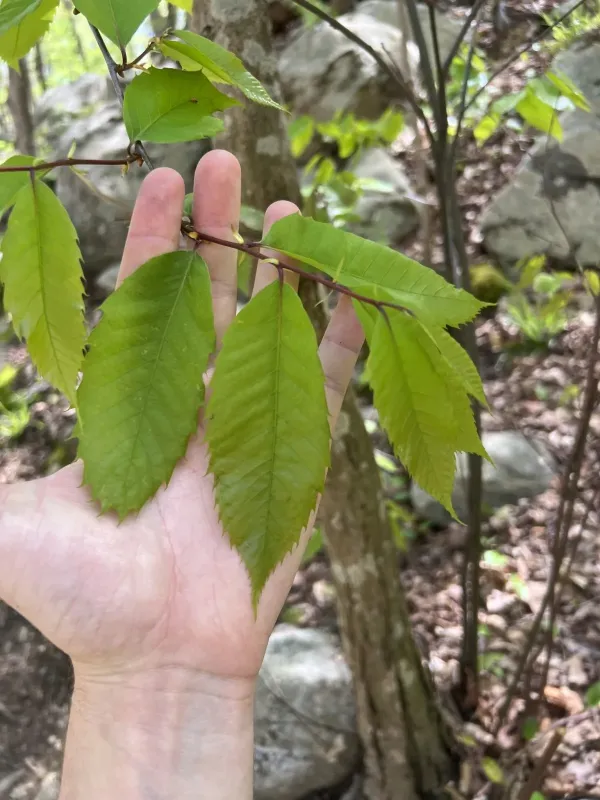
Description
Sowing dates
The American chestnut (Castanea dentata), a member of the Fagaceae family, is typically propagated through seeds that require careful preparation.
Seeds must undergo a period of cold stratification, lasting approximately 60 to 90 days at temperatures between 0°C and 5°C, to break dormancy before planting.
Planting depth should be roughly 3–5 cm in well-draining, slightly acidic soil, ensuring proper contact between the seed and the growth medium.
Seedlings require protection from browsing animals such as deer and rodents, often utilizing mesh cages or specialized tree tubes during the establishment phase.
Spring planting is preferred, allowing the young trees to establish deep root systems before the onset of the first winter season.
Growing requirements
Castanea dentata thrives in deep, well-drained, sandy loam soils with a pH ranging from 4.5 to 6.5, avoiding heavy clay or alkaline soils.
The tree requires a climate with moderate precipitation and exposure to full sun, though young saplings may benefit from partial shade during their first years.
Site selection is crucial: slopes with good air drainage are ideal to reduce the risk of frost damage to young blossoms and tender shoots.
The American chestnut is sensitive to high salt concentrations and waterlogged conditions, both of which can significantly stress the root system.
Mulching is a standard practice in agricultural management, as it retains soil moisture and mimics the natural forest floor conditions beneficial for growth.
Main diseases and pests
The primary constraint to the cultivation of the American chestnut is the chestnut blight, caused by the fungus Cryphonectria parasitica.
This pathogen enters through bark fissures, creating cankers that girdle the stem, effectively cutting off the tree's vascular supply and causing branch dieback.
Pests such as the chestnut weevil (Curculio spp.) infest developing nuts, significantly reducing the market value and viability of the harvest.
The Asian chestnut gall wasp (Dryocosmus kuriphilus) represents another major concern, causing abnormal growths that inhibit leaf and fruit production.
Management strategies involve rigorous pruning of infected limbs and ongoing efforts in breeding blight-resistant hybrids to restore the species' status.
Harvesting
Harvesting typically occurs when the burrs begin to open and fall, revealing the mature, dark-colored nuts inside, usually starting in early autumn.
Nuts must be collected promptly after dropping to prevent infestation by weevils and to minimize decay caused by soil-borne pathogens or excessive moisture.
Post-harvest processing involves immediate removal of the spiny husks and cooling the nuts to preserve their high starch and sugar content.
Proper curing (drying) is essential to extend shelf life, ensuring the internal moisture level is balanced to prevent molding during storage.
Beyond culinary use, the wood of the American chestnut is highly prized for its durability, straight grain, and natural resistance to rot.