
Shorea thorelii
Shorea thorelii
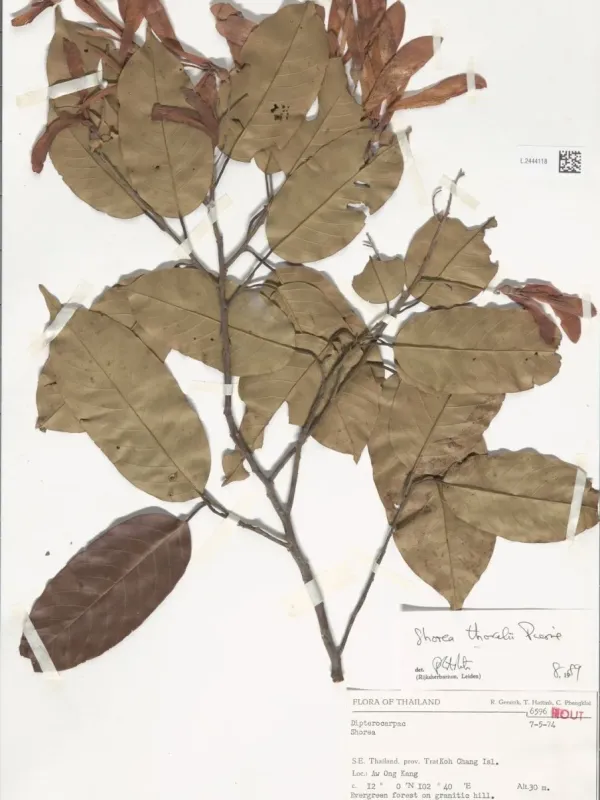
Description
Growing requirements
Shorea thorelii is a large tree species belonging to the Dipterocarpaceae family, native to the tropical rainforests of Southeast Asia. It is highly regarded for its ecological role and the economic value of its timber products.
The species thrives in humid tropical environments characterized by high annual precipitation and consistent temperatures. It requires a climate that supports year-round vegetative growth, avoiding long periods of environmental stress.
Optimal soil conditions for this culture include deep, fertile, and well-drained soils. Avoiding waterlogged areas is essential for the healthy development of the root system and to prevent physiological stagnation during the rainy season.
The biology of the tree is adapted to competitive light environments, where it grows vigorously after the initial seedling stage. Its structural properties make it a prominent member of the canopy layer in intact forest ecosystems.
In terms of agricultural and forestry use, Shorea thorelii provides high-quality hardwood. This material is widely utilized in architectural joinery, furniture crafting, and heavy-duty construction due to its durability and aesthetic appeal.
Main diseases and pests
Major threats to Shorea thorelii populations include wood-boring insects which compromise the structural integrity of the trunks. These pests represent a significant challenge for plantation management and timber quality control.
Fungal pathogens can affect tree health, especially when trees are stressed by environmental shifts or mechanical injuries. Proper silvicultural practices, including selective thinning and site maintenance, are crucial for disease prevention.
Habitat loss due to land-use change remains the most significant threat to the species in its natural range. Fragmentation restricts natural pollination and seed dispersal, leading to reduced genetic viability over time.
Soil degradation and erosion within managed forests can weaken the trees' resilience, making them more susceptible to opportunistic diseases. Protecting the forest floor and maintaining soil organic matter are essential conservation measures.
Climate instability, particularly changing rainfall patterns, poses a risk to the long-term sustainability of forest operations. Strategic planning and monitoring of forest health are vital for protecting the future of this timber resource.