
Shorea roxburghii
Shorea roxburghii
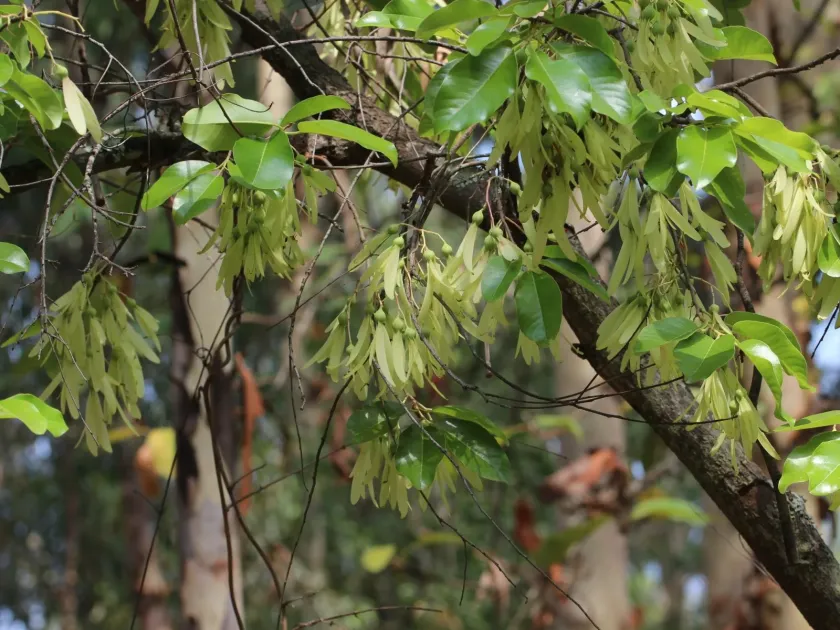
Description
Growing requirements
Shorea roxburghii is a large evergreen tree belonging to the Dipterocarpaceae family. In its natural environment, this species can reach impressive heights, developing a robust trunk and a wide, dense canopy.
The culture originates from the humid tropical regions of Southeast Asia. It thrives in areas characterized by a distinct monsoon climate, where high rainfall patterns coincide with consistent warm temperatures.
This species is highly demanding regarding soil drainage quality. It performs best in deep, fertile loamy soils that possess the ability to retain moisture while preventing waterlogging, which is detrimental to its root system.
Successful cultivation requires high atmospheric humidity levels. The tree is sensitive to sudden temperature fluctuations and frost, which limits its natural and agricultural distribution strictly to tropical zones.
From an agrotechnical perspective, providing shade for young saplings is a crucial requirement. During the initial years of growth, the tree struggles under direct, intense sunlight and requires partial protection from canopy cover.
Harvesting
The primary economic use of this species involves the production of high-quality timber. Forestry management practices for this tree are strictly regulated to ensure sustainable harvesting and species preservation.
The wood of Shorea roxburghii is known for its high density, excellent mechanical strength, and natural resistance to decay. It is highly valued in the construction industry, furniture manufacturing, and interior design.
Beyond timber, the plant is a significant source of natural resins. These substances are widely utilized in the chemical industry, specifically in the production of high-grade varnishes, industrial coatings, and adhesives.
The tree reaches its commercial maturity several decades after planting. Professional harvesting requires long-term planning to guarantee that forest stands remain productive and capable of natural regeneration.
Collecting seeds for reforestation must occur immediately after maturation, as the seeds have a very short viability window. Proper handling and storage of the seed material are essential for achieving optimal germination rates.