
Shorea kunstleri
Shorea kunstleri
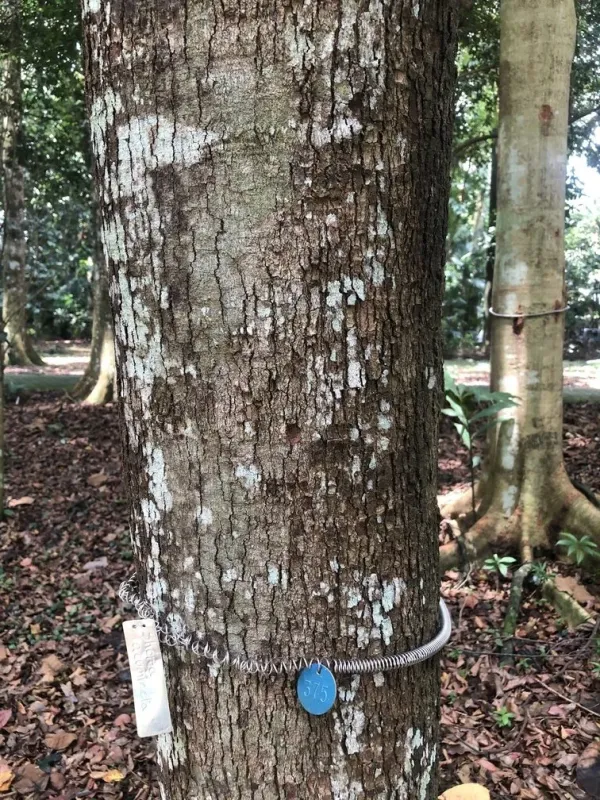
Description
Growing requirements
Shorea kunstleri is a large evergreen tree belonging to the Dipterocarpaceae family. It is native to the lowland tropical rainforests of Southeast Asia, thriving in high-humidity environments.
The tree requires a tropical climate characterized by constant warmth and significant annual rainfall. It does not tolerate prolonged dry seasons or extreme temperature fluctuations, which can affect its physiological development.
The optimal soil conditions for this species are deep, nutrient-rich, and well-drained loams. Good soil aeration is essential for the tree's deep root system, as it is highly sensitive to waterlogging and soil compaction.
Botanically, it is known for its massive trunk and impressive buttress roots that provide stability in the thin, competitive forest floor soils. The tree canopy is dense, adapted to compete for sunlight in the complex rainforest structure.
Economically, Shorea kunstleri is highly valued for its durable and hard timber, categorized as heavy hardwood. It is widely used in heavy construction, boat building, and structural applications where resistance to decay is required.
Main diseases and pests
The primary threat to the survival of this species is habitat fragmentation and large-scale deforestation. The loss of old-growth forests prevents the natural regeneration of this slow-growing tree species.
Biological threats include various pathogens, specifically root rot fungi, which become problematic in disturbed forest areas. These infections can severely impact tree health and timber quality over time.
Wood-boring insects present a significant challenge to the growth of young trees. In artificial plantation settings, pests can devastate young seedlings if integrated pest management strategies are not applied.
Climate-induced forest fires pose an increasing danger to the species. The trees are not fire-adapted, and even low-intensity fires can result in permanent damage to the cambium and root systems.
Successful silviculture requires maintaining a complex mycorrhizal network in the soil. Without this symbiotic relationship, seedling survival rates are extremely low, making reforestation of this species a complex task.