
Shorea johorensis
Shorea johorensis
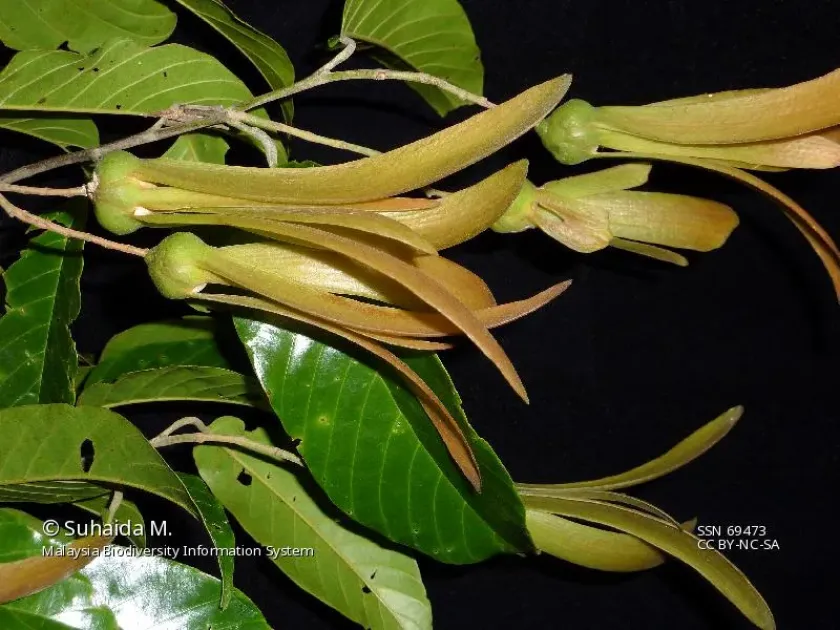
Description
Growing requirements
Shorea johorensis is a prominent member of the Dipterocarpaceae family, native to the tropical rainforests of Southeast Asia. This majestic tree is highly valued for its role in both the ecosystem and the regional timber industry.
The species thrives in warm, humid tropical environments where annual rainfall is consistent throughout the year. It requires deep, well-draining soils that maintain moisture without becoming waterlogged, typically found in alluvial river valleys.
In terms of climate, Shorea johorensis prefers temperatures consistently between +22 and +30 degrees Celsius. It is highly sensitive to cold weather and drought, both of which can lead to severe stunting or mortality in young plantations.
Light management is a critical factor for successful growth. While mature trees are canopy-emergent and require full sun, saplings need managed shade levels to prevent leaf scorching and desiccation during their initial developmental phases.
Successful silviculture requires active soil management and the protection of saplings from competing vegetation, as the tree relies on rapid vertical growth to compete in its natural rainforest habitat.
Yield
The primary economic output of Shorea johorensis is its high-quality timber, marketed globally as a variant of Red Meranti. This wood is prized for its attractive grain, ease of woodworking, and excellent dimensional stability.
Industrially, the wood is utilized extensively in furniture manufacturing, high-grade plywood production, cabinetry, and interior finishing. It is one of the most commercially significant timbers in the Asian trade sector.
Productivity is measured over long time horizons, with timber harvesting occurring after 40 to 60 years of growth. Sustainable yield depends on thinning practices that allow the strongest trees to reach maximum girth and height.
Beyond timber, the species contributes to forest carbon sequestration and soil erosion control, providing essential ecosystem services that are increasingly valued under modern environmental certification schemes.
Current forestry models emphasize enrichment planting, where Shorea johorensis is planted within logged-over forest areas to restore canopy cover and economic value simultaneously.
Main diseases and pests
Primary biological threats include wood-boring beetles and other xylophagous insects that target the trunk and heartwood of the trees. These pests can significantly reduce the timber's quality if left unmanaged.
Fungal pathogens such as Phytophthora species can affect root health, particularly in stagnant or poorly aerated soil conditions, leading to internal decay and reduced tree vitality.
Competitive suppression by fast-growing pioneer weeds remains the greatest challenge during the first five years of growth. Regular weeding and site maintenance are essential to ensure the saplings establish a dominant position.
Habitat fragmentation and the loss of natural seed dispersers are significant indirect threats that prevent natural regeneration and decrease the genetic diversity of plantation stocks.
- Stem-boring insect infestations.
- Root rot caused by pathogenic fungi.
- Competition from invasive tropical vines and grasses.