
Shorea hopeifolia
Shorea hopeifolia
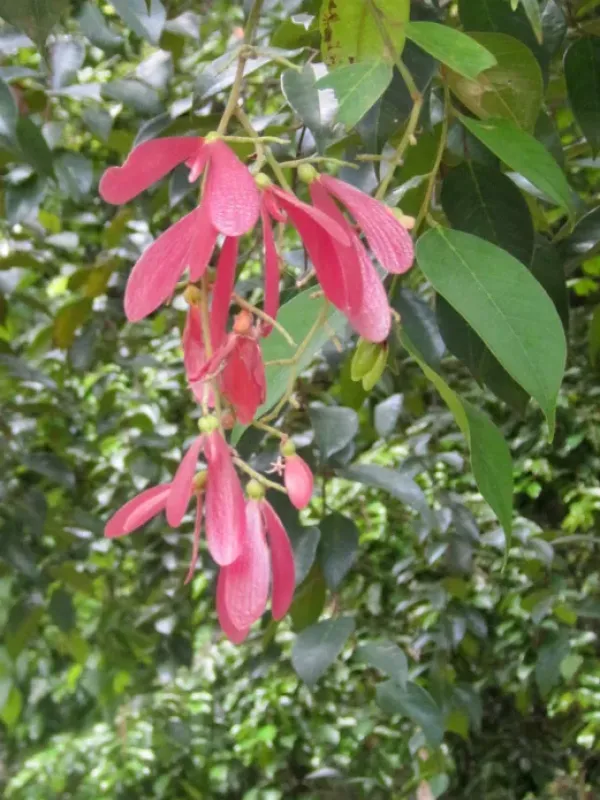
Description
Sowing dates
Planting Shorea hopeifolia is primarily conducted within its native range, as the seeds lose viability very quickly after maturation. Agronomists recommend sowing seeds immediately after collection to ensure high germination rates.
In nursery settings, seeds are planted in specialized containers with well-drained, organic-rich substrates. Maintaining high humidity is essential to mimic the forest floor environment for successful sprout emergence.
The optimal time for transplanting seedlings into the field is the onset of the rainy season, which provides the necessary moisture for root system establishment. Rapid rooting is crucial for survival.
Applying rooting stimulants during the transplant process helps reduce transplant shock in young plants. Standard agricultural practices require careful monitoring of planting density to ensure access to sunlight.
Young trees require partial shading, as excessive direct sunlight can damage the leaves. As the tree matures, it becomes more resilient to full sun exposure, adapting to the forest canopy level.
Growing requirements
This species belongs to the Dipterocarpaceae family and is a large tropical tree typical of moist evergreen forests. It prefers deep, well-drained alluvial soils that are rich in organic humus.
Shorea hopeifolia is highly sensitive to temperature fluctuations and cannot tolerate frost. Its ideal environment is characterized by heavy, year-round rainfall and stable tropical warmth.
The tree is sensitive to water table levels; waterlogged soils lead to root rot, while drought conditions significantly slow metabolic processes. Optimal soil pH ranges from slightly acidic to neutral.
High atmospheric humidity is essential for the healthy growth of this species. In plantation or forest restoration projects, maintaining a dense surrounding forest structure is vital for creating a stable microclimate.
The plant has specific requirements for mycorrhizal associations. When cultivating on degraded land, it is highly recommended to supplement the soil with substrate from natural forests to ensure the presence of beneficial microbes.
Yield
The productivity of Shorea hopeifolia is measured through biomass accumulation and wood quality. As a slow-growing species, the harvest cycle spans several decades, requiring long-term management.
The total yield of high-quality timber depends on proper canopy management and maintaining optimal planting density. The wood is highly valued for its durability and resistance to biological decay.
Seed production plays a vital role in forest regeneration efforts. Fruiting is periodic and directly correlated with regional climatic patterns and seasonal rainfall shifts.
Growth rates, particularly in stem diameter, can be increased through regular thinning of the stand, allowing the most dominant individuals to access more nutrients and light.
The economic efficiency of the culture is validated by its success in large-scale forest restoration programs, where its value lies in its ecological contribution to biodiversity.
Main diseases and pests
The primary biological threats to Shorea hopeifolia include fungal infections that thrive in stagnant water or at wound sites on the trunk. Pathogens can lead to severe heart rot in mature trees.
Insect pests, particularly borers and leaf-eating caterpillars, can cause significant damage to young plantations. Continuous phytosanitary monitoring is necessary to prevent outbreaks.
Competition from invasive or fast-growing weeds is critical during the initial years of development. Regular weeding around the base of the saplings is required to prevent growth suppression.
Climatic risks include severe tropical storms capable of damaging the crowns of mature trees. Forest fires represent a catastrophic threat to the entire ecosystem where this species grows.
Human-induced factors, such as unsustainable logging practices, remain the primary threat to natural populations. Sustainable forestry requires strict adherence to legal standards for reforestation.
Harvesting
Timber harvesting is carried out according to selective logging principles, which are designed to maintain forest integrity. The timing of harvest depends on the tree reaching its marketable stem diameter.
The felling process requires specialized equipment to minimize mechanical damage to surrounding vegetation. This ensures natural recruitment of the stand and reduces environmental disturbance.
Following felling, the timber undergoes primary processing to remove branches before transport. Proper storage conditions are essential to prevent wood splitting and fungal development before shipment.
Seed collection is performed manually during the peak maturation period. Because the seeds lose viability within a few days, they must be processed and sown immediately in nursery beds.
Logging logistics must be carefully planned to prevent soil erosion, which is a major risk factor in tropical zones where this species is harvested.